


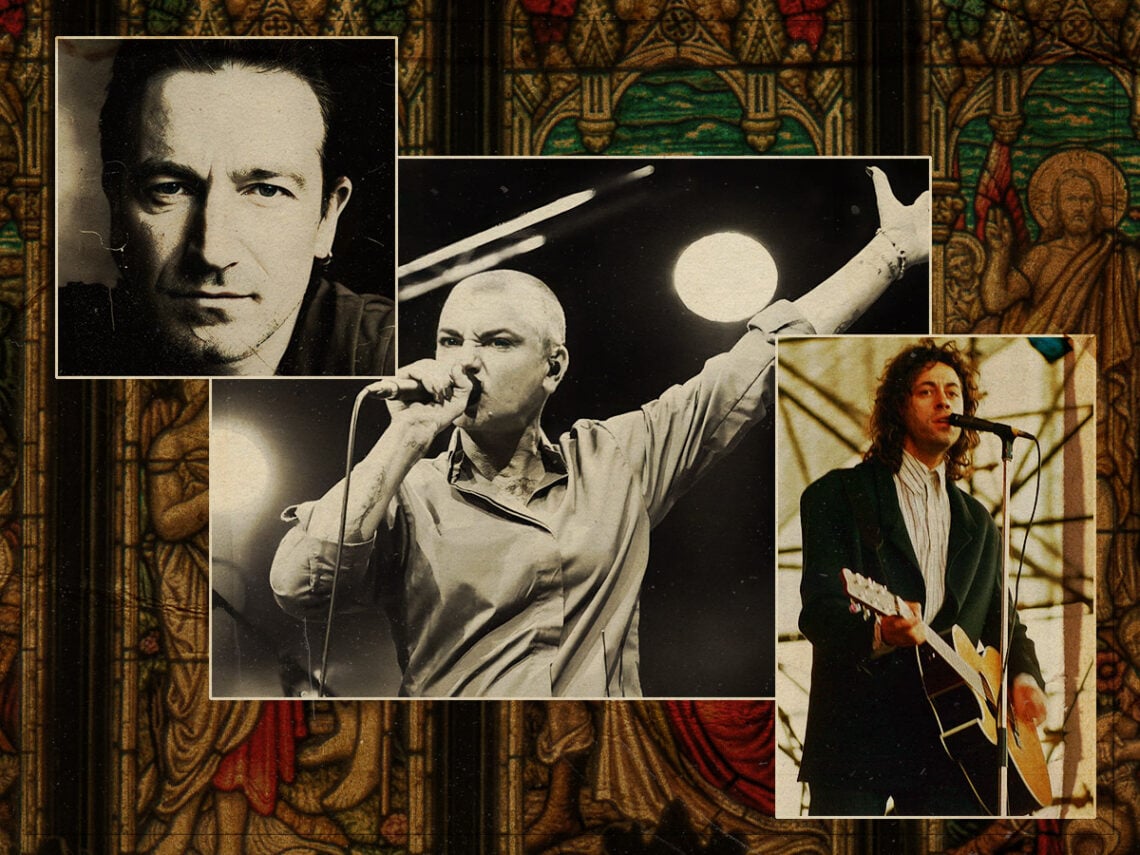
Bono, the Pope, and Bob Geldof: Sinéad O’Connor’s call to arms on ‘VIP’

Did Sinéad O’Connor ever tire of having the weight of the world’s protest spirit on her shoulders? It was possible. But, at least in an outward-facing capacity, she never let this die from the heart of her sonic brand because she knew intrinsically that more than the surface-level success of chart-topping sonics, music possessed the capability to turn heads and change minds – and if she didn’t manage that through every beat of her discography, it wasn’t going to be worth her while.
Perhaps nothing ever expressed that so steadfastly, even at the extremes of O’Connor’s career, than the song ‘VIP’, the closing track to her penultimate album, How About I Be Me (And You Be You)?, in 2012. Railing against the preconditions and conventions of the Catholic church once again, as she had famously done so many times before, O’Connor also took aim at the notion of celebrity within this, raising unsaid questions and problems masterfully in her midst.
Rumours swirled at the time of the album’s release that ‘VIP’ was rooted in U2 frontman Bono having had a picture taken with the Pope, despite having spun a career out of the notion of anthemic tunes and protest attitudes. However, O’Connor had the foresight to claim that the issue didn’t just lie squarely at the Dublin rocker’s door, as she noticed the realms of celebrity and political crossover becoming increasingly twisted and muddy over the years.
Reflecting on the song, she told Spin in 2012: “The song’s not just about Bono. It was inspired by conversations that I’d had with Bono and [Bob] Geldof. But it’s not really all about them. It’s about artists, generally. It’s just asking a series of questions about, you know, where are we at? Shaking tits and ass is important. But it used to be that artists had other roles as well as entertainers — we stood for things and we expressed things on behalf of people who had a hard time expressing them.”
O’Connor continued: “In the ’80s and the ’90s, we all gave a shit, and we put our careers on the line for shit. But it’s all about fame and fortune now.” This is not to be confused with the singer’s entire perception on the purpose of music, however, as she noted: “I don’t want to come across like I think we should be serious the whole time, because I don’t. I really think the tits and ass is almost more important. We all need our minds taken off the bullshit. But I’m also saying that we are in crisis times.”
‘VIP’ channelled this precise, but often unrealised, crossroads – that whether they like it or not, famous musicians hold a celebrity power that they are responsible for, and in the right moments, this has to stand for something in society to make an impact. It’s a paradox that O’Connor took heed of ever since the 1980s, and if she were still here now, you can bet she would be even louder in beating the drum than before.
O’Connor was always upfront about the fact that she wanted to be a protest singer more than a popstar, and in many ways, chart and commercial prosperity was never a major benefit in her sights. Even if it made her unpopular, O’Connor was always bound to call out whatever she felt was a blight on society – and if that happened to be Bono and Bob Geldof, then so be it.
