


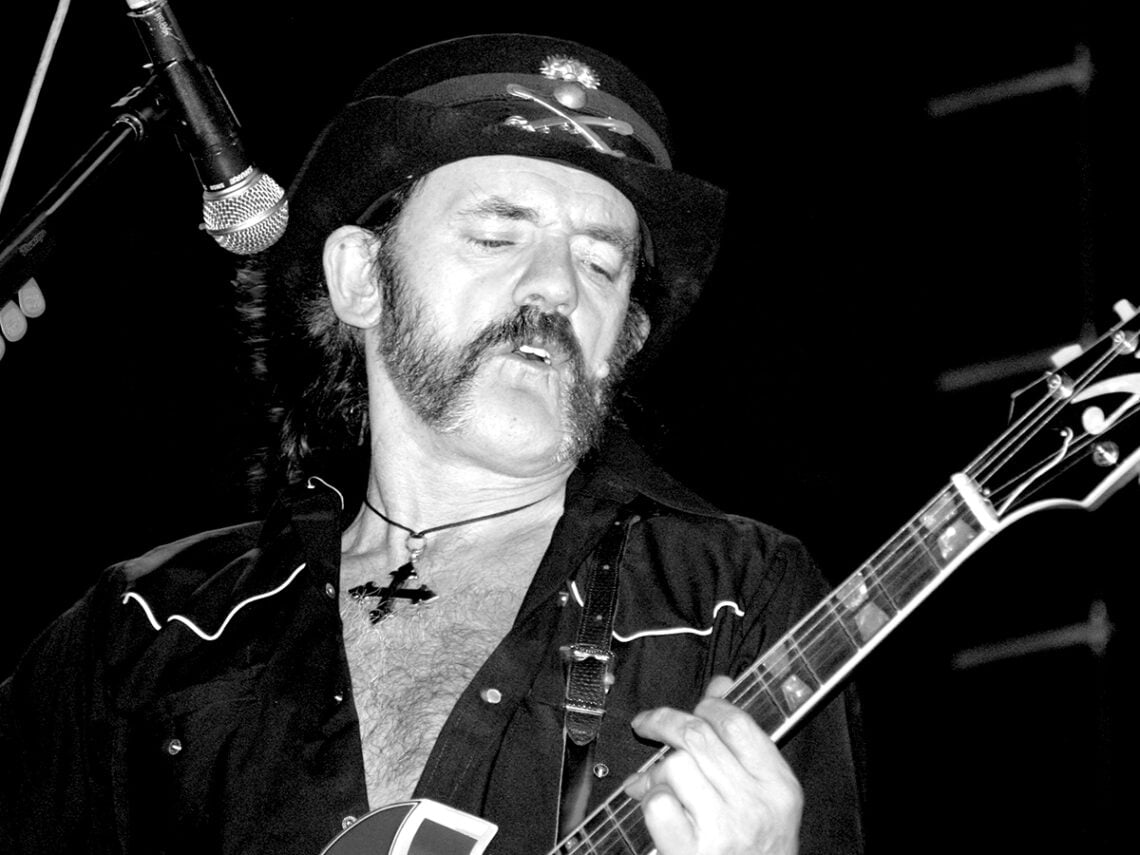
‘Silver Machine’: The song that launched Lemmy Kilmister into the stratosphere

Lemmy Kilmister was, without doubt, the quintessential rockstar – a prototype of sex and drugs and rock and roll, the original screeching screamer, and an all-round icon. But before the wild days of Motörhead, which dominated the majority of his life and career, he also took up a short stint in the band Hawkwind, where he sampled his first taste of success.
It was absolutely true that Lemmy had one of the most distinctive voices in the rock music canon – but even long before that was the status attached to him, he was still turning heads whenever he opened his mouth. Take Hawkwind’s song ‘Silver Machine’, for example, which was the rocker’s first shot at electrifying the airwaves as well as the band’s first – and last – grab at gold.
The tune had initially been penned by Hawkwind’s real frontman, Bob Calvert, while guitarist Dave Brock sorted the composition. Calvert’s lyrics were said to have been inspired by the “cosmic space travel machine” he had come across in an Albert Jarry short story – fitting for a psychedelia metal group – but instead he decided to turn his attention to his new silver racing bike.
But where does Lemmy come into the picture? It was in a moment not without its controversy – unfortunately, at the time of the track’s recording Calvert was in hospital managing manic depression, and feeling generally that his vocal wasn’t up to par anyway, manager Doug Smith decided to give him the boot in favour of Lemmy. To say Calvert wasn’t best pleased was perhaps the understatement of the century.
Smith clearly saw a spark in the then unknown rocker, because he justified that: “Lemmy had a high voice but it was just very much more powerful, he had a gruffness with it, so we decided to use his vocal.” In many ways, he was right, even despite giving Calvert a bit of a kick in the teeth. The song went to number three in the UK charts, marking Hawkwind’s only major hit, but nonetheless launching stand-in frontman Lemmy into the stratosphere.
As it turns out, during this period, the later Motörhead icon saw stars in more ways than one. After all, this was when he truly first became a rockstar – you don’t think his breakneck reputation came from nowhere, did you? At the Greasy Truckers Party concert in 1972 at London’s Roundhouse, which helped to launch Hawkwind, Lemmy and the band’s keyboardist Dik Mik had indulged themselves in a cocktail of drugs before hitting the stage. In Lemmy’s admittedly hazy recollection, he claimed: “That was one of the best gigs we ever taped. The jamming between me and [leader Dave] Brock was great. We got ‘Silver Machine,’ our only hit […] from that gig!” It may have all worked out, but we can’t exactly say it’s a technique we recommend.
Lemmy departed Hawkwind in 1974 – ahem, kicked out – instead setting his sights on forming his own rock fraternity off the back of the attention he’d received from his stand-in stint. The result of that vision was Motörhead, and it doesn’t need to be explained how much of a thunderous success that was. In many ways, Lemmy’s first launch into the stratosphere was the perfect summation of his character – he might not have played by the rulebook, but somehow, he still made it shine.
