


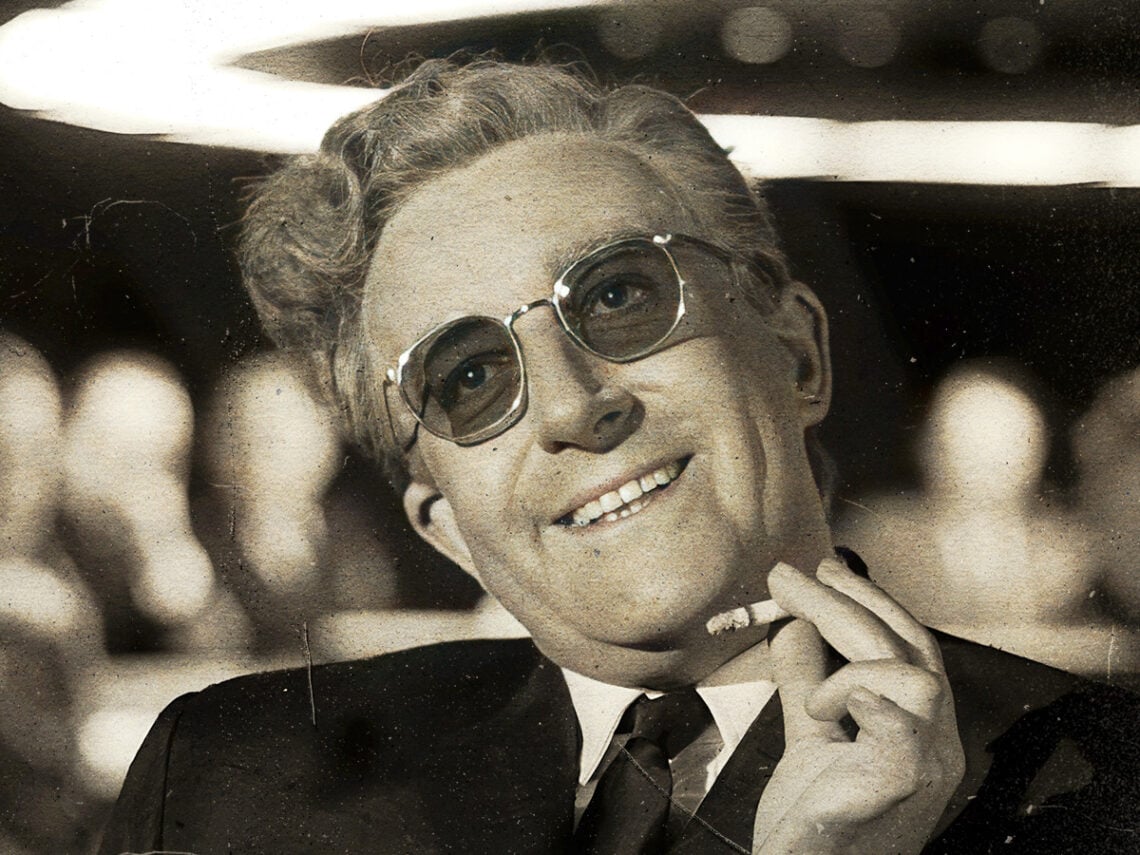
“I wish we had one of them doomsday machines”: Exploring the significance of gum in ‘Dr Strangelove’

Comedy is a film genre which is much-maligned by certain cinematic elitists, but do not be fooled: just because something is funny does not mean it cannot also be profound. Perhaps the greatest argument in support of that point comes in the form of the 1964 film Dr Strangelove or: How I Learned to Stop Worrying and Love the Bomb. Directed by Stanley Kubrick and featuring a storming performance (or, more accurately, three performances) from Peter Sellers, the film is a true comedy classic, yet it contains a wealth of profound moments of commentary on politics and human nature, too.
For the uninitiated few among you, Dr Strangelove cuts to the heart of Cold War conflict, focusing on a potential nuclear holocaust which is thrust into reality by a crazed Air Force general, Jack D Ripper, who gives fabricated orders to drop nukes onto various targets inside the Soviet Union. While not a conventional setting for a comedy film, Sellers’ astounding performances in the film held up a mirror to the ridiculous, farcical nature of Cold War politics and the endless struggle between East and West.
Stanley Kubrick was meticulous in his craft; if something is visible on screen in a Kubrick flick, it likely holds some level of significance to the story, whether it is noticeable to the viewer or not. As you can imagine, with a film boasting such a heavy subject matter as nuclear war, Dr Strangelove is chock full of small details and throwaway lines which hint at a much bigger and more profound music on global geopolitics, war, and human nature. One such element, which could very easily slip you by upon initial viewing, is the unwavering presence of chewing gum throughout the film.
Chewing gum might seem an inconsequential thing to focus on, but its prevalence throughout the film is simply too consistent to be meaningless. Its presence largely revolved around General Buck Turgidson, the Air Force leader tasked with finding a way to recall the bombers sent to the USSR by General Ripper.
Turgidson is the archetypal American general, obsessed with the idea of getting one over on the Russians, and often more interested in his bikini-clad girlfriend than the future of the planet. During the majority of his appearances on screen, the general is seen chewing gum.
Indeed, one of the first things he does upon sitting down in the ‘war room’ is placing a pack of gum on his desk. As he becomes more nervous, with the president breathing down his neck and the situation becoming increasingly hopeless, more and more gum is stuffed into his mouth.

What’s more, the ‘survival kit’ handed out to pilots on the bombers – presumably decided upon by Turgidson himself – contains nine packs of chewing gum, alongside various other items, including three pairs of nylon stockings, a condom, and a miniature combination Russian phrase book and bible. “Shoot, a fella could have a pretty good weekend in Vegas with all that stuff,” in the words of Major Kong.
So, what does it all mean? As with the bulk of filmography, Kubrick never revealed the secrets behind his work. However, there are a few theories surrounding the gum in Dr Strangelove that seem to ring true. One possibility is that chewing gum is representative of the capitalist society and the United States as a whole.
Going back to the days of World War II, chewing gum became a recognisable aspect of virtually every US soldier; the army practically introduced chewing gum to Europe. You could argue, therefore, that Turgidson’s constant chewing of gum is his way of retreating into the comfort of America. This is certainly supported by the uptake in his chewing after the Russian ambassador is invited into the war room.
It could also be argued that chewing gum is as superfluous a foodstuff as they come – it offers no nutritional value, and the taste (particularly back in the 1960s) leaves a lot to be desired. Turgidson’s chewing of gum, therefore, could be seen as just another example of him prioritising unnecessary things rather than attempting to save the world from a nuclear holocaust.
Further, the gum might represent the military’s priority issues in general, with the gum included in the survival kit taking up space that much more useful, essential tools could easily hold. The General is not only hiding behind the safety of chewing gum but also forcing his airmen to be similarly naive to the harsh realities of life and war by leaving them unprepared for life behind enemy lines.
Chewing gum is one of countless details and nuances present in Dr Strangelove, which – as well as being one of the greatest comedy films ever made – is among the most profound and enduring reflections of war, politics, and the farcical characters that are often left in charge of such issues. Because, in the end, when Vera Lynn plays, and mushroom clouds enshroud the planet, Trugidson’s chewing gum is never going to save him.
