


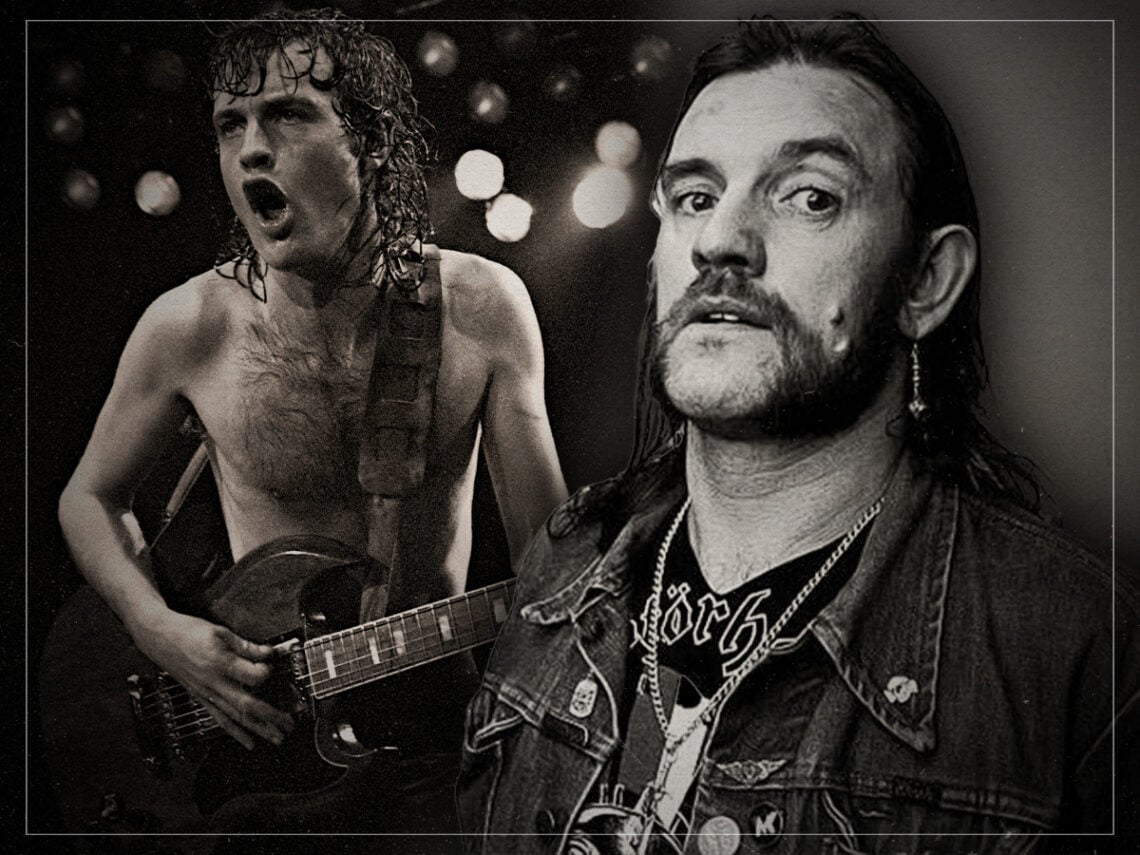
The 1976 show in a Kensington pub that assured Lemmy that AC/DC were “going to be huge”

If you’re a regular live music attendee who likes to catch bands in small venues in the hope that you’ll stumble across a new favourite, then you’ll almost certainly have had the experience of thinking that a band is destined for greatness despite only playing to a small crowd.
I distinctly remember a friend of mine returning from a trip to New York in 2016, where he saw a little-known act called Big Thief opening a three-band bill, and he told me that they were going to be the next indie act to go stratospheric. I’ll admit, I scoffed at the idea initially, but it didn’t exactly take me long to be proven wrong about this assessment, and their popularity has only increased exponentially in the decade since this prediction.
Sometimes, a band that you may have seen perform to a room where you can count the audience members on one hand might blow up in a more unexpected fashion. While this is definitely more of a common occurrence within local scenes, where you’ll have been blessed with the opportunity to witness an act in their infancy, sometimes it will come as a result of complete fortune.
This is part of the reason why small venues need to be protected at all costs, because save for those who are able to get an immediate leg up and skip the grassroots circuit, rooms where there’s less than ample space to swing a cat are where the vast majority of acts end up cutting their teeth.
This has been true for decades at this point, and pretending that there’s no joy in watching the support act is indicative of someone who treats live music as a commodity that can be taken for granted. The support act you spent half an hour avoiding in the smoking area might end up being the band that takes over your listening habits in a few years’ time, and you were too busy gassing away to watch them in an intimate space. Granted, they might also be shit, but you won’t know unless you see for yourself.
While he had already had a decent amount of success by the mid-1970s, following a stint playing with space rock outfit Hawkwind, Lemmy had already shifted his focus towards his own project by 1975, with Motörhead being a far more raucous, punk and hard rock-driven act. However, while they didn’t release their own first album until 1977, one act caught his eye in the interim, and he knew within an instant that they would set the benchmark for the style of music he wanted to be playing.
In April 1976, AC/DC embarked on their first-ever tour of the UK, having just reissued their debut album, High Voltage, outside of Australia for the first time. Little was known about the group at this early stage of their career, but when Lemmy managed to catch them in London, he was instantly assured of the fact that they’d go on to dominate the genre.



Speaking of the instant kinship he felt with the band, Lemmy recalled his experience of seeing them for the first time during a 2015 interview. “I went to see them at a pub – I saw Sex Pistols there as well – The Nashville in West Kensington. That was a great place, and everybody played there. They were over from Australia for a tour, and Bon Scott did the running round the boozer with Angus Young on his shoulders. It was obvious they were going to be huge.”
Though they may have only been entertaining a small handful of people, AC/DC knew that they needed to put on a show regardless of the size of the venue they were playing at, and it’s this attitude that helps small bands climb the ladder to stardom. Lemmy’s predictions came true rapidly, and who knows, the next band you happen upon in the back room of a pub could have the same trajectory.
