


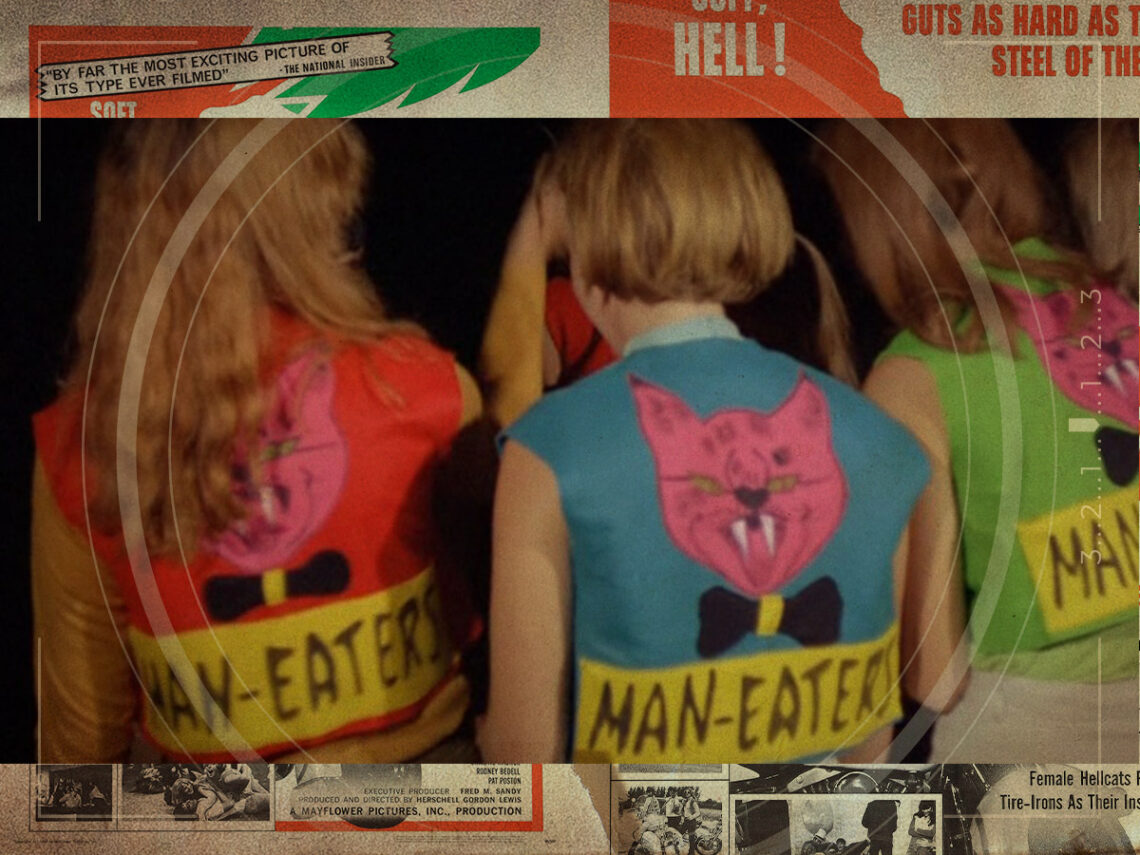
‘She-Devils on Wheels’: a truly bizarre female biker movie from the exploitation era

During the middle of the 20th century, exploitation cinema became a popular form of low-budget filmmaking, focusing on specific niches, such as women in prison, blaxploitation, nudist films, sexploitation, or biker gangs. The biker movie trend extended beyond exploitation cinema, of course, with movies like The Wild One and Easy Rider becoming successful in the mainstream, but under the direction of truly wild and unrestrained filmmakers like Herschell Gordon Lewis, the subgenre produced some incredibly bizarre films, like She-Devils on Wheels.
It seemed that during the 1960s – a time when depictions of sexuality were becoming more visible, although society, as a whole, was still rather traditional – a certain subsection of cinema-goers wanted to see movies about ruthless girl gangs. Thus, a trend emerged, with titles like The Mini-Skirt Mob, Faster Pussycat! Kill! Kill!, The Hell-Cats, and Switchblade Sisters depicting groups of women, some more sexualised than others, with a penchant for violence and sticking together.
We have to be real here – the men who directed these films likely didn’t set out to create empowering tales of female friendship and fighting back against male oppression. That’s not to say that each of these titles was made with the sole intention of objectifying the women in them and crafting a strange kind of male fantasy that involves strong, powerful women who can dominate and kill (even in mini-skirts or booby little tops!), but most of them fall into this category, at least a little bit. However, it’s a subgenre that a lot of women have taken to, loving the campiness of these cheaply-made pictures, even if they feature questionable acting and cheesy dialogue.
Out of all of these girl gang movies, She-Devils on Wheels is arguably the weirdest. It’s like a fever dream, with Lewis flipping gender roles and making sure that the women get the last laugh each time. The movie follows a gang of motorcycle-riding women known as The Man Eaters who have a thirst for competition and devout solidarity with one another. They hold a weekly race to determine who gets the first pick of their male groupies, who gather in their hang-out spot and act as nothing more than objects for the women to play with. The acting is terrible, the characters are all unlikeable, but the outfits are fabulous, and you can’t help but get sucked into this crazy world where jobs, relationships, and normality are exchanged for violence, sex, and riding bikes.
It’s interesting – the women essentially do what many male gangs have done on screen for years, channelling just as much ruthlessness and selfishness, but the film forces us to question why we find it so unusual and taboo to watch women fulfilling these roles. Perhaps because, especially during the ‘60s, a woman doing anything other than carrying out her expected womanly duties was hugely frowned upon, and even with the dawn of second wave feminism, depicting women as brazenly violent and in charge of their sexuality as they are in She-Devils on Wheels was quite unusual (they even decapitate a man).
In the film, one of the characters, Karen, is asked to return home by an ex-boyfriend, Ted, who eventually infiltrates their mob of male groupies in an attempt to lure her back to safety. He represents suburban life – if she were to leave with him, perhaps she could raise a family and live normally – but she can’t stand the idea of subscribing to these predetermined societal expectations. The gang don’t back down, even when the police get involved, leaning into intimidation tactics to scare the locals. They’ll do whatever it takes to maintain their positions as The Man Eaters, free from family, husbands, and jobs.
So, while She-Devils on Wheels might not be a technically well-crafted film full of strong acting performances or a consistently engaging narrative (there are certainly moments where you feel like a bystander to their gang hangouts), the themes it explores were rather ahead of their time. Brutal and unforgiving, the film highlights that, sometimes, the only way women can truly feel free is to go to the absolute extreme.
