


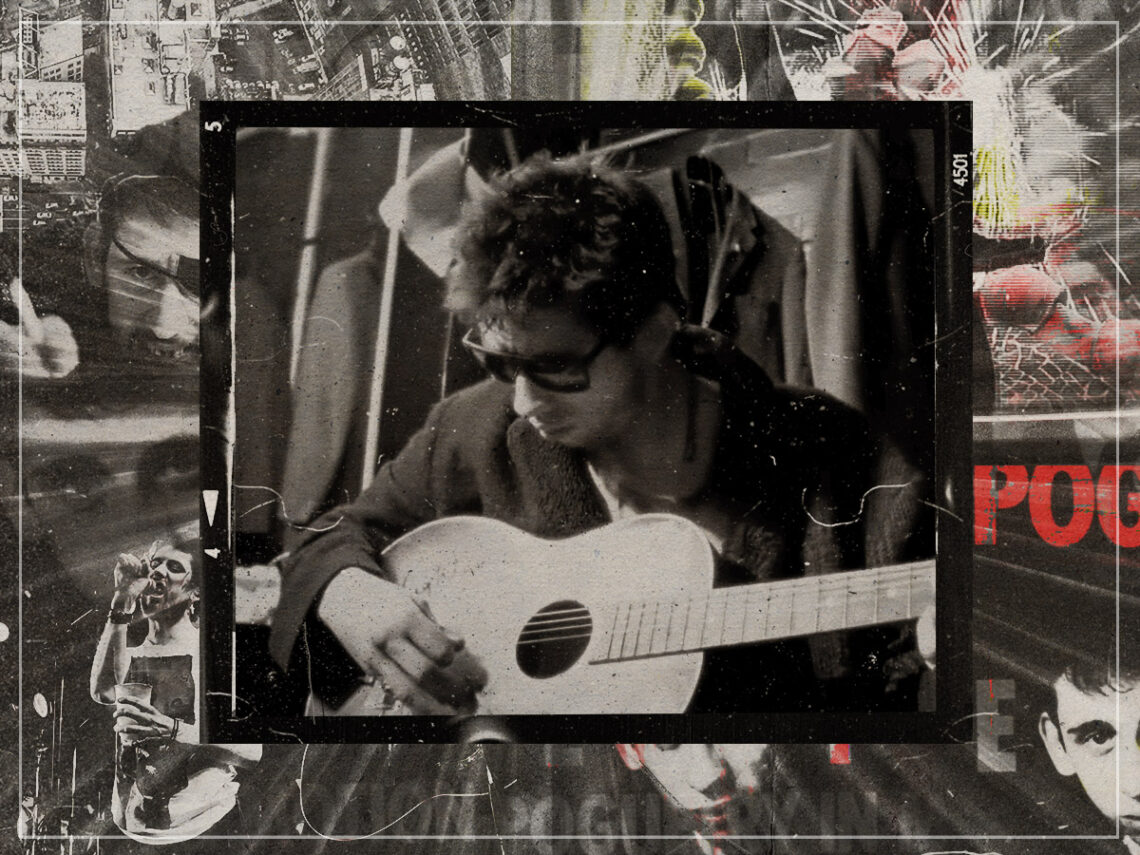
Shane MacGowan: The Pogues’ punk poet laureate

Although The Pogues leader Shane MacGowan might have been as famous for his hell-raising lifestyle as his music, he was an elemental force for popular culture. Taking the punk ethos and running off into the distance, MacGowan was, in many ways, the British Isles’ punk poet laureate of this generation. Fusing a perceptive Irish writing style in the vein of James Joyce and an unrelenting lifestyle that even the great writer would have been proud of — but in a modern context, until the end, MacGowan continued to resonate.
What most people forget about MacGowan is that alongside the musical mastery that he carried, symbolically, he was incredibly significant. Born in Pembury, Kent, on Christmas Day 1957, he, like many of his generation, was stuck between two distinct and warring worlds.
Born to Irish immigrants in the Garden of England and raised across the southeast, he was closely in touch with his Irishness, as his music would later convey. However, as the second generation regularly was, MacGowan was reminded that he was not born in Ireland, a criticism brought to the fore by Irish purists when fronting The Pogues. However, with a surname like his own, MacGowan could not escape his family background in England. This profound cultural friction fuelled his work and his tenacity to keep going.
In the late 1970s and 1980s, the Irish community was met with as much suspicion and bigotry as those who had moved to the country from further away climes of the Empire, as The Troubles raged on across the Irish Sea and spilt over into the homeland, with the IRA carrying out retaliatory bombing across England.
From the outset – given his day of birth and background – and armed with rare talent, MacGowan was destined to strike a path that diverged from the traditional one. Irish, but growing up in the quintessentially British southeast of England, he would also be private schooled, a luxury that not many from the Irish community would be afforded. In 1971, MacGowan earned a scholarship to the highly prestigious Westminster School, yet, in another reflection of his life’s divergent course, he was kicked out in his second year for drug possession.
At this point in his short time on the earth, he was already well-versed in the raucous life he would become known for. MacGowan later claimed that he started drinking at age five. If true, the way his life panned out was certainly forged in childhood.
“My accent changed,” MacGowan told The Irish Post of his time at Westminster in 1998, outlining the duality of worlds he inhabited. “There were a few others like me at Westminster. They let in a bit of rough now and then. I’d already had one huge culture shock coming over here, so I was getting used to culture shock. There were huge anti-Irish feelings at the time.”
MacGowan was hospitalised at 17 due to his abuse of Valium, a dire indicator of things to come. Afterwards, he would become something of a “roustabout” like his father, picking up various jobs across London town. Frequenting the febrile London vicinity of Soho and entering fully into a hedonistic life like the writers and musicians who inspired him, this period, set amongst the backdrop of sclerotic Britain on its knees socio-economically, would be formative, and before too long, MacGowan would find a home in the burgeoning punk movement.

Famously, MacGowan’s introduction to the punk underbelly was at a show by The Clash in 1976, a time when he was photographed with blood pouring from his earlobe, and Joe Strummer’s band were forced to deny claims of cannibalism at their concerts due to the sensationalist headline, “Cannibalism at Clash Gig”. Later that year, Clash joined the band The Nipple Erectors as vocalist and songwriter, which would see him hone his now famous style on tracks such as ‘King of the Bop’, which fused punk and psychobilly in a way that pointed to how The Pogues would later dabble in this style.
By 1981, The Nipple Erectors had taken a break, and MacGowan concentrated on working with The Millwall Chainsaws, a band featuring future Pogues members Peter ‘Spider’ Stacy and Jem Finer. In 1982, the trio converged with former Erectors member James Fearnley and formed Pogue Mahone. They played their first show at The Pindar of Wakefield on October 2nd, 1982, and later in the month, added bassist Cait O’Riordan and drummer Andrew Ranken, playing a resounding set at the home of punk, The 100 Club. They later became The Pogues.
From then on, MacGowan and The Pogues moved into their future headfirst. Their debut single, ‘Dark Streets of London’, arrived in 1984. It is brimming with the darkly comedic poetry of the frontman, such as the verse: “And every time that I look on the first day of summer / Takes me back to the place where they gave ECT / And the drugged up psychos with death in their eyes / And how all of this really means nothing to me”. This was the start of the band establishing a dedicated fan base, and they released their debut, Red Roses for Me, in 1984.
Following this – and a raucous appearance on the tastemaking show The Tube – The Pogues enlisted new wave hero Elvis Costello to create their masterpiece, 1985’s Rum Sodomy & the Lash. The record is bursting with the band’s collective verve and boasts definitive tracks such as their version of ‘Dirty Old Town’ and ‘A Pair of Brown Eyes’. Referencing the likes of Johnny Cash and Philomena Begley, the latter is one of MacGowan’s most foolproof lyrical moments, with the following segment particularly profound: “In blood and death neath a screaming sky / I lay down on the ground / And the arms and legs of other men / Were scattered all around”.
It’s not hard to see where later acts, such as The Libertines, for example, would take some of their cues as they, too, fused an old-world take on poetry with a penchant for living life on the edge. This notion is extended when analysing MacGowan’s highlights reel further, with the likes of the profoundly personal ‘A Rainy Night in Soho’ and the 1990 upbeat celebration of the libertine lifestyle, ‘Sunny Side of the Street’ two standouts.
Of course, Shane MacGowan’s cultural legacy with The Pogues was cemented when they collaborated with Kirsty MacColl on the global Christmas hit ‘Fairytale of New York’ in 1987. The song affirmed just how potent his romantic grasp of the English was. Comedic and dramatic, with a strong dose of punk thrown in, it proved to be a magic formula, which secured MacGowan a seat at the table amongst the very best.
Whilst he may have seemed like a toothless drunken vagrant, do not let the notorious stories of hedonism dilute his story. Shane MacGowan was the definition of not judging a book by its cover. A truly modernistic Irish Rover, he dodged the many obstacles in his way with unfettered character and artistic grandeur.
