


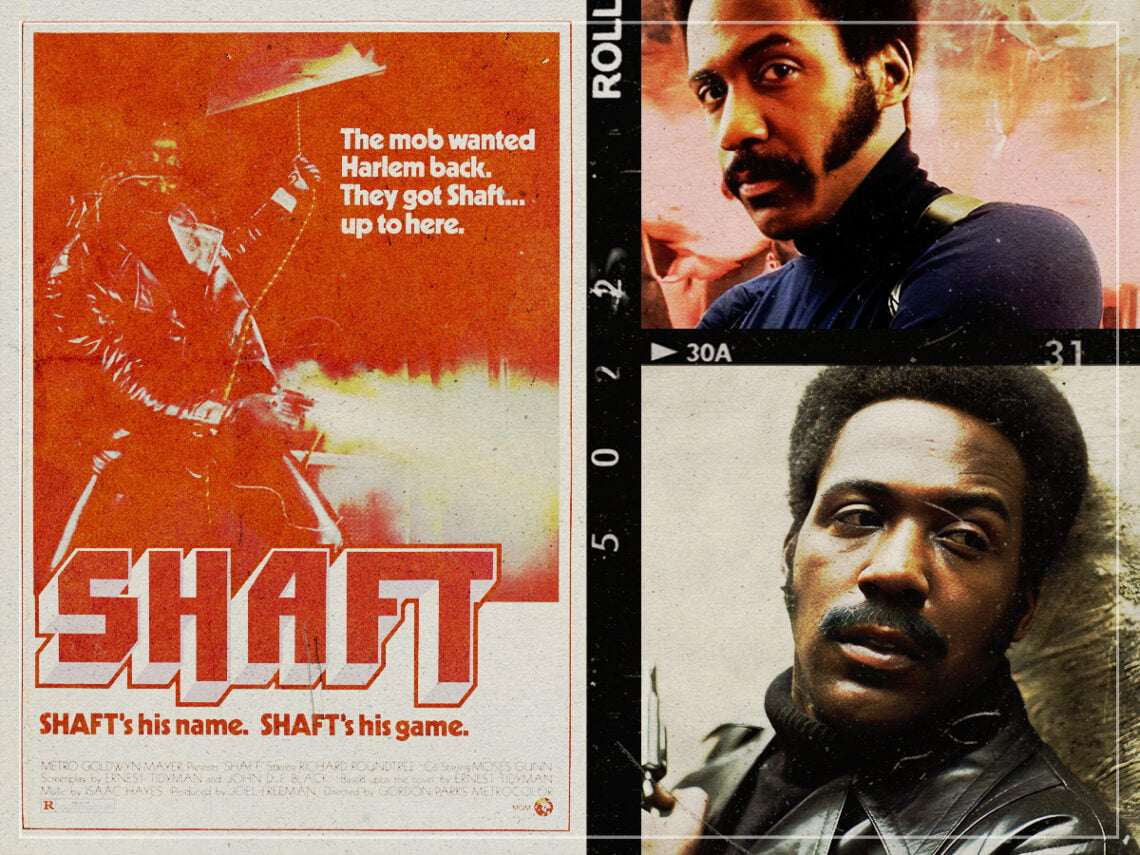
‘Shaft’ and the birth of blaxploitation

After the Civil Rights Movement and the emergence of the Black Panther Party, it became apparent that Black voices and stories were rarely being told on screen. With Black characters so often relegated to stereotypical minor roles, there was a dire need for change. As activists advocated for Black power, certain filmmakers, such as Gordon Parks, knew it was essential to use the cinematic medium to assist this cultural shift and make change happen.
Parks began his career as a photojournalist, documenting the lives of African Americans for magazines such as Life and Vogue. Then he transitioned to filmmaking, releasing the coming-of-age drama The Learning Tree in 1969. Yet his 1971 action movie Shaft would change everything for Parks, kickstarting one of the most influential subgenres: blaxploitation.
Shaft follows the detective John Shaft, played by Richard Roundtree, as he fights crime, interacting with both Black and white criminals. The movie is violent and sexy, with Shaft embodying pure cool as he remains powerful and strong throughout his quests. The film was Roundtree’s first role, and he imbued his character with such sophistication that he earned a Golden Globe nomination for ‘New Star of the Year’.
Parks created the film with the aim of presenting the “Black guy winning”, giving a cinematically underrepresented group a chance to achieve on-screen autonomy. By allowing Black characters to appear in leading roles, defying stereotypes and having fun, Parks hoped that he could help alter the cultural perceptions of Blackness that were necessary to incite widespread change. Although the film was made under the mainstream studio system – with Parks becoming one of the first Black filmmakers to direct a Hollywood movie – Shaft doesn’t sanitise itself for the sake of white audiences, celebrating Black culture and language through its soundtrack, dialogue and visuals.
The film saved MGM from going bankrupt, suggesting that Black-led movies had mass appeal. Subsequently, it helped spawn a wave of blaxploitation movies that came to be incredibly influential over cinema and even music, inspiring many hip-hop artists in the following decades. Filmmakers like Spike Lee, John Singleton and Quentin Tarantino have openly discussed the influence of blaxploitation over their own work, with the latter paying significant homage to the genre with his 1997 film Jackie Brown.
Shaft was released the same year as the low-budget Melvin Van Peebles movie Sweet Sweetback’s Baadasssss Song, which is also credited with beginning the genre. However, the mainstream success of Shaft launched blaxploitation to the forefront, and soon, movies such as Super Fly, Hammer, Blacula, Coffy, Ganja & Hess and Trouble Man came to define the genre.
Blaxploitation movies unapologetically showcased Black culture for the first time in American cinema history, often emphasising Black power and advocating for class consciousness. The genre allowed for the championing of Blackness, which had previously been relegated to the sidelines in popular cinema.
However, the genre wasn’t welcomed by everyone with open arms. Some Black activists worried that the genre actually perpetuated negative stereotypes surrounding Black culture, suggesting the blaxploitation movies associated Blackness with crime, violence and excessive sexuality. In 1972, the Coalition Against Blaxploitation was formed, with members of organisations such as the NAACP and National Urban League campaigning for the demise of the genre. While blaxploitation movies continued to be made during the 1970s after the establishment of the Coalition Against Blaxploitation, by the following decade, they were much harder to come by.
The genre remains somewhat controversial, aided by some of the questionable subgenres that arose from blaxploitation, such as slavesploitation. Yet, the genre certainly had its positives, giving Black characters a chance to thrive in Hollywood for the first time. Cinema is one of the most important vehicles for changing cultural attitudes – representation is essential – and Shaft remains an important landmark in the depiction of Blackness on screen.
For the first time, cinema depicted a Black action hero. Although there is a long way to go in terms of cinematic representation – the industry still remains overwhelmingly white and androcentric – developments such as these are fundamental to the progression of the medium.
