


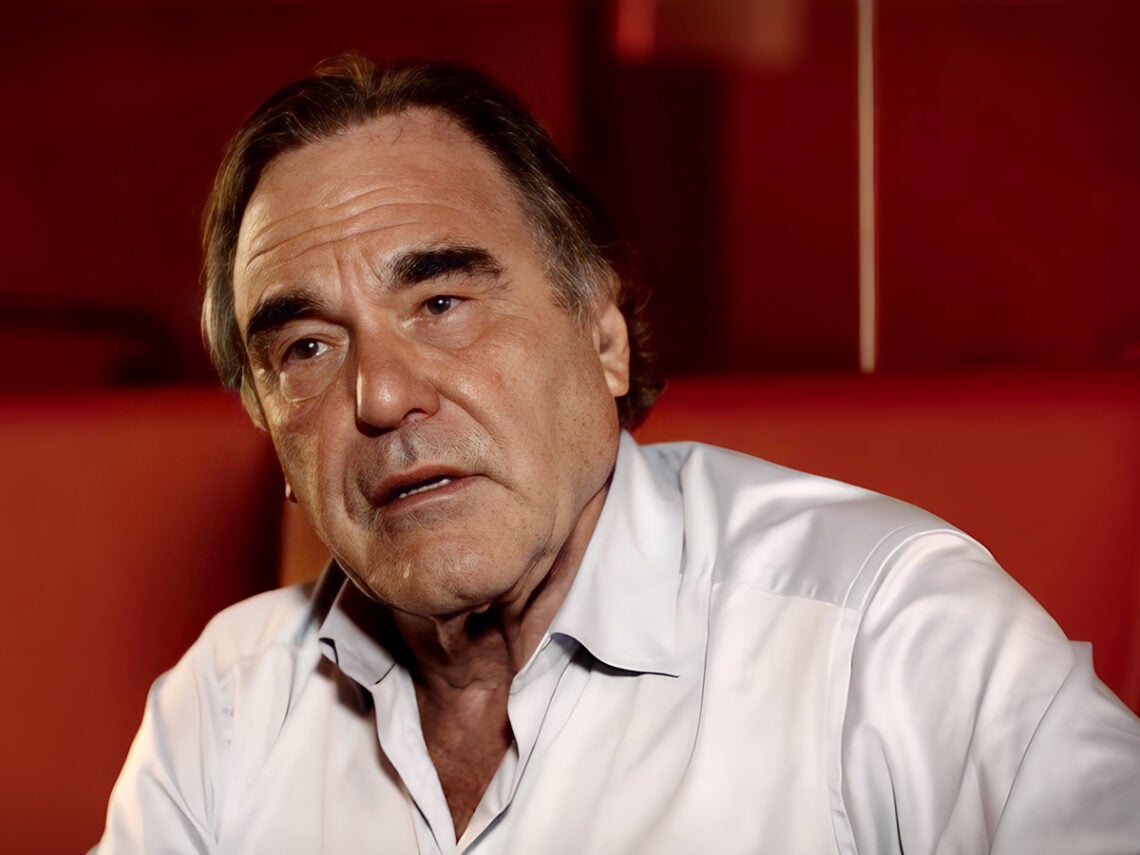
The series Oliver Stone thought was “ahead of its time”

Having focused his creative efforts on executive producing a string of documentaries in recent years that tick the thematic boxes audiences have to expect from him over the decades, including All Governments Lie, JFK Revisited: Through the Looking Glass, and Nuclear Now, Oliver Stone hasn’t directed a feature since 2016’s Snowden. And yet, it was his first foray into small-screen storytelling with the 1993 miniseries Wild Palms that the filmmaker thought was “ahead of its time”.
Proving himself to be in front of the industry curve, the five-episode mystery thriller was both a lavish prestige “event series” in an era where the format was a great deal more uncommon than it is today and a comic book adaptation, with Bruce Wagner creating and writing the live-action adaptation of his strip that had first appeared in the pages of Details magazine in 1990, where Stone served as executive producer.
Roping in an esteemed and eclectic ensemble that included James Belushi, Robert Loggia, Angie Dickinson, Kim Catrall, Ernie Hudson, and Brad Dourif, Wild Palms unfolds in the near future of 2007. With a right-wing group called Fathers overseeing swathes of the political and multimedia sectors, an opposing libertarian movement dubbed the Friends rises up to oppose the government, utilising guerrilla tactics at the behest of Loggia’s California senator Tony Kreutzer, who additionally acts as the figurehead of the Church of Synthiotics religious movement, as well as the owner of the titular media group.
It’s easy to see why Stone viewed Wild Palms as one of his projects that can be called ahead of its time, given that the overarching themes of politicians weaponising mass media and virtual reality in an effort to manipulate society to their advantage are as prescient and relevant know as they were 30 years ago when the miniseries premiered, despite the narrative’s “present day” setting having long since passed.
Stone had originally wanted to adapt Wagner’s novel Force Majeure but ended up being drawn in by Wild Palms instead, as he revealed to Entertainment Weekly at the time of its release: “It was such a fractured view of the world. Everything and anything could happen. Maybe your wife isn’t your wife, maybe your kids aren’t your kids. It really appealed to me.”
Wild Palms isn’t as well known as Stone’s most famous and seminal movies, but the four-time Academy Award winner nonetheless deemed it as being “wonderfully ahead of its time” during a Reddit AMA, where a user posed the question: “Can you tell me anything about the experience creating Wild Palms? There was so little internet in 1993; not many of the cool conversations or stories came out. It remains a great piece.”
Reflecting on the series’ unexpected origins and ultimate inability to connect with viewers meaningfully, Stone offered that “Bruce Wagner came to me with the idea, and we actually sold it to ABC, can you believe it?” While he did admit “the ratings were not as great” as he would have hoped, the Platoon and Born on the Fourth of July director did take solace in noting that “many people remember it”.
Stone may have risen to prominence with his incendiary anti-establishment thrillers and contributions to genre classics like Midnight Express, Conan the Barbarian, and Scarface, but the thematic driving forces behind his overlooked small-screen debut in Wild Palms have only continued to increase in cultural relevance as the years passed.
