


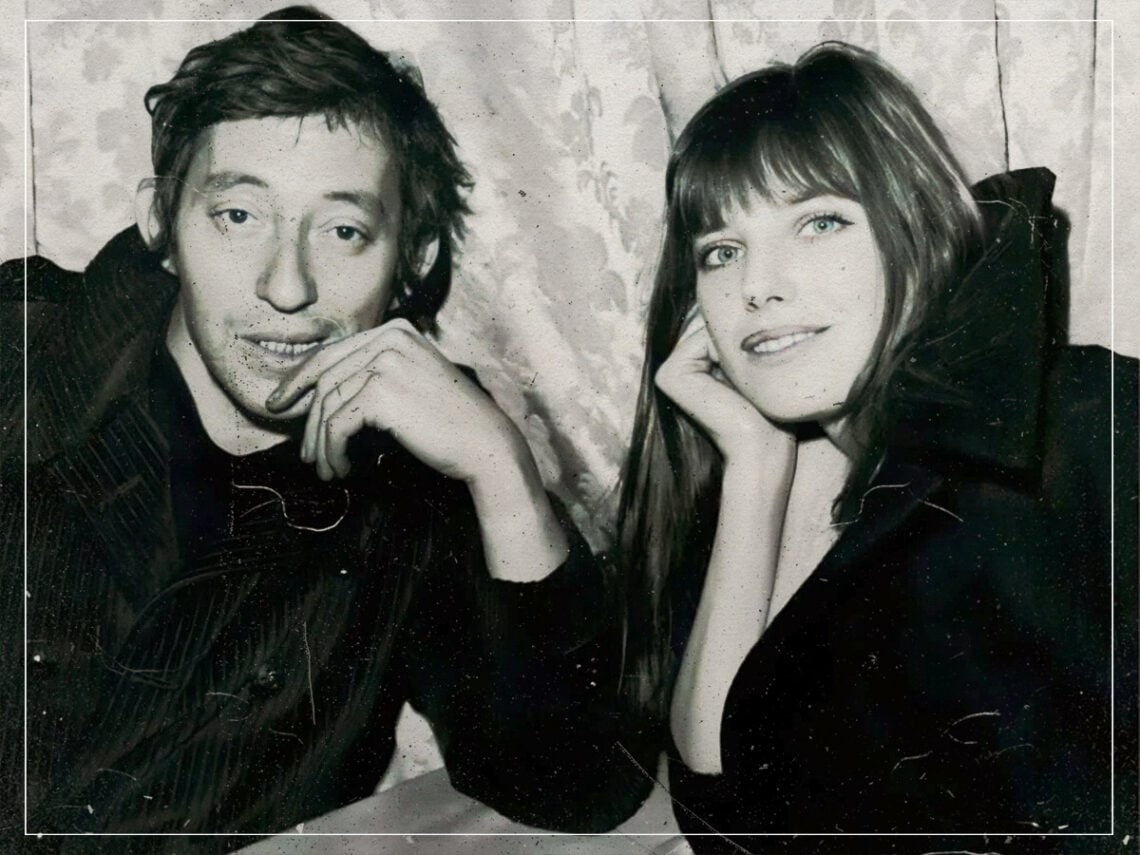
Sex Sells: How did Serge Gainsbourg get away with the most erotic number one in UK history?

Serge Gainsbourg made ugliness work in all its forms. As he once put it, “Ugliness is, in a way, superior to beauty, because it endures.” With that in mind, he never shied away from grit. Instead of indulging in the usual flowery platitudes of his era, he gave us soot-covered sonnets with a sultry edge.
This was all part of his image. If a man were ever synonymous with an inanimate object, it would be Gainsbourg and the burning cigarette perpetually balanced on his bottom lip. Much like the cigarette, he was smouldering, ashy, bad for you and unapologetic, but indelibly entwined with culture and stood as an ineffable eff you to some undefined established constitution. Gainsbourg was a man who had no care for genre, decency or timidity, and he made controversy seem like a benign companion.
In his early career, he traversed the paths of various French underground movements before arriving at rock ‘n’ roll in his early 40s. Above all, despite being described by one French journalist as looking “like a drowsy turtle”, he was a sort of counterculture sex icon. A large swathe of his work seems to feature a scantily clad actress or singer draped over his shoulder and purring along with his baritone slur.
This stylistic choice heralded a new age for the scruffily sartorial songsmith as he abandoned the stuffy old chanson scene and foraged into the more seductive circuit of rock ‘n’ roll. By the mid-1960s, he had arrived at his niche. Songs like ‘Bonnie And Clyde’ and the eponymous soundtrack to sex scenes ‘Je T’aime Moi Non Plus’ – a piece so gloriously lewd and overt that it seems like some imagined take on sexual encounters by a romantic midlife virgin – were true acts of originality and captured the daring spirit of the zeitgeist.
‘Je t’aime… moi non plus’ and Gainsbourg’s sexual revolution
The latter piece of baroque pop was so erotic that it was actually deemed offensive and banned in many countries, but the version with Jane Birkin still managed to reach number one in the UK. The story of how this came to be is one that almost defines the output of this smoking Svengali of sonic sex.
In her diaries, Birkin bemoans the years that she was simply labelled Jane ‘Blow-Up’ Birkin, the scantily clad “it girl”, as opposed to the legitimate actor making steps towards liberation, and then suddenly with ‘Je t’aime… moi non plus’, the quivering jazzy half-notes of husky French tones launched her as a serious chart-topping artiste. In truth, there is a novelty aspect to the sultry song that is groaned more so than sung, but upon release, it proved revolutionary. It was banned from the radio but still managed to top the UK charts. That’s a gorgeous underground feat and a consummate victory for the libertines of this world.
And Birkin has no problem admitting that this career-defining moment was fuelled by simple envy. Serge Gainsbourg had originally recorded the song with a rival face on the French scene, Brigitte Bardot, but Birkin set about out-sexing the starlet that they called ‘The Sex Kitten’. “Jealousy drove me to perform the song,” Birkin told Vogue, who was with Gainsbourg at the time. “I didn’t want him to end up in a telephone box with a beautiful girl recording another version of ‘Je t’aime… moi non plus’, as he’d done with Bardot. When he suggested I do it, I agreed immediately.”
The song was a scandalous revolution sequestered in a million bedrooms. People might see heavy metal as a daring step as the 1960s moved on, but feather-soft tones of femininity were proving just as progressive in the world of music, and it managed to be even more transcendent, too. This 1969 track was, in fact, the forgotten precursor to many things that followed. The song made Birkin the pinnacle of French artistry and further films, albums and photoshoots were forgone inevitabilities, however, they were now more often than not on her terms. The same can be said for many female stars taking dominion over their own sex appeal and wielding it against the patriarchy.
Listening to this song on headphones invites two singers to gyrate directly in your ear canals; sometimes, you feel like pausing it and telling the pair to get a room. Likewise, it is almost unplayable out loud for anyone with a degree of a gag reflex about them. Quite frankly, it is hard to think of a hit song that has been more openly sensual than this. Still, beneath all the groans, moans, and churlish eroticism is an unmistakable sense of fun and a JG Ballard-Esque tongue-in-cheek amoral disregard for decency.
As for Birkin and Gainsbourg? Well, the pair continued to work together throughout the 1970s and, when looking back in 2013, she humbly declared: “[It was] very flattering to have the most beautiful songs, probably, in the French language written for [you]. [But] how much talent did I really have? Perhaps not that much.” Humility aside, what Birkin did have was not just ‘the look’, but the keen eye to revel in the style of the zeitgeist. Even Gainsbourg’s famous eight-day beard had been her idea.
While Birkin and Gainsbourg may have split in 1980 after the birth of their daughter, Charlotte (another star with performance in her blood), when the troubadour’s drinking became too much, the pair would remain friends, and Gainsbourg would continue to write songs for her until his death.
Her affection for him even cost her relationship with Jacques Doillon, who left her as she couldn’t let go of Gainsbourg even after he had passed away. Birkin was asked about her famous love affair with Gainsbourg frequently in the following years, which she proudly chronicled, profoundly ending with, “Our friendship went on until his dying day. He rang me in London to say he bought me a big diamond because I had lost one that he’d given me. I said, ‘Oh, stop drinking, Serge’.”
