


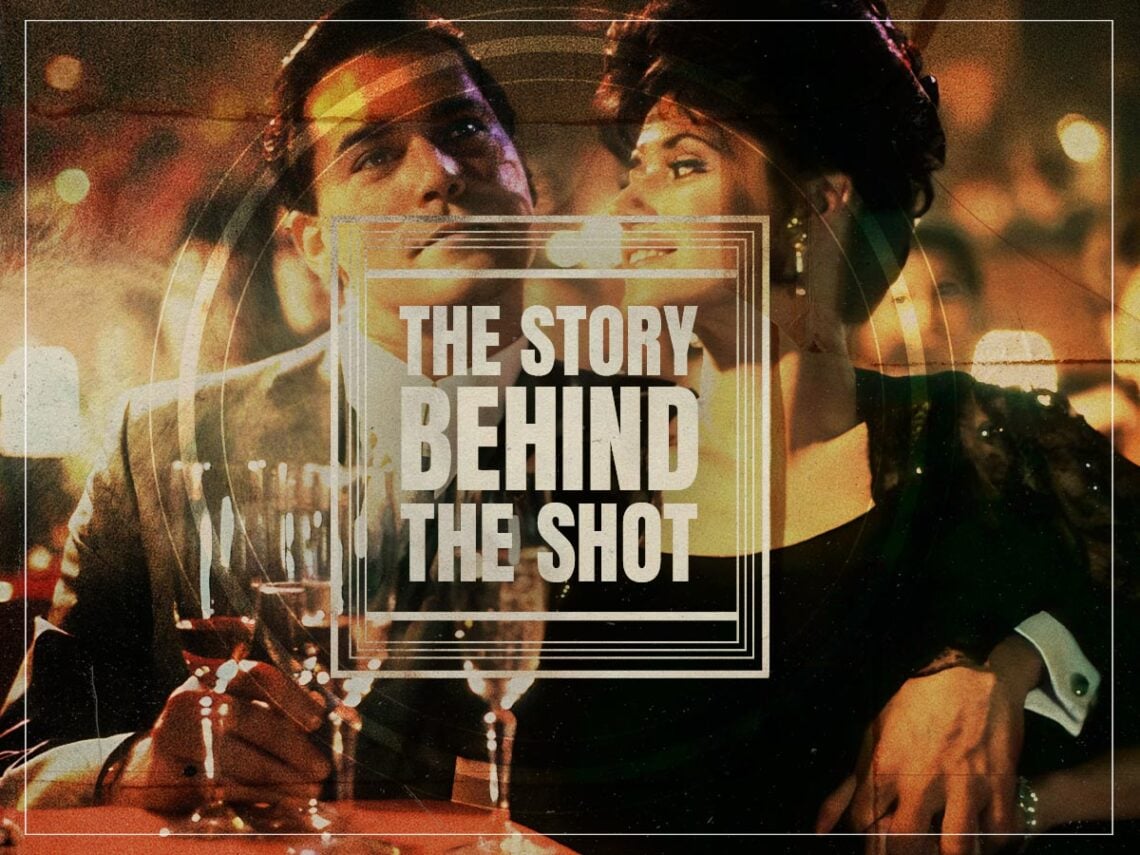
The Story Behind The Shot: the seminal Steadicam of Martin Scorsese’s ‘Goodfellas’

Martin Scorsese has directed several of the greatest movies ever made, and there are a lot of people out there willing to die on the hill that Goodfellas is his magnum opus. Whether or not anybody agrees or disagrees, what can’t be denied is that it’s right among the top tier and a landmark in the history of American cinema.
It was hardly Scorsese’s first – or last – gangster flick, but it was the perfect distillation of filmmaker and form. Already decades into his career and more familiar with the genre than most, it was the perfect movie at the perfect time that allowed one of the best of the business to take his artistic and technical virtuosity to the next level by using his stylistic flair to enhance an already engaging story set in a world that had become second nature to him from a storytelling perspective.
Of course, Steadicam was hardly a new technology by the time Goodfellas kicked off production in early 1989. Introduced in 1975, it had already become integral to the mythologies of Sylvester Stallone’s Rocky and Stanley Kubrick’s The Shining, two movies that couldn’t be more different but underlined the versatility and effortlessly immersive fluidity of the technique.
However, Scorsese took things to the next level when he tracked Ray Liotta’s Henry Hill through his favoured spot in a sequence so masterful, influential, and iconic that ‘The Copa Shot’ has become an entity unto itself. On a visual level, it’s staggering, but what’s equally important is the narrative function that it serves, with the director ensuring that he isn’t simply showing off a new trick in his arsenal.
In just under three minutes, Scorsese raised the bar for Steadicam and laid down a marker that Goodfellas was the next evolution in his artistry, tracking Henry and Lorraine Bracco’s Karen through the Copacabana club as they skip the line out front, head down the stairs and threw a hallway, and waltz right into the thick of the party.
Within the context of the story, Henry used his connections, status, and ties to so many high-rollers in exclusive areas to impress his date, but for the audience, Scorsese used the seamless descent from life on the street to the criminal underworld as a means to showcase how glamorous, alluring, and intoxicating an existence on the wrong side of the law could be.
Cameraman Larry McConkey was the one operating the rig, even if things didn’t go off without a hitch. He’d worked with Scorsese before and had even operated the Steadicam on the auteur’s previous feature, After Hours, but that didn’t mean he was prepared for the ambitious idea he was about to be presented with.
“Now, Marty may have just thought that he would have voiceover overtop of the shot, but I was kind of looking at my watch and thinking, ‘This is already the worst case of shoe leather in the history of cinema. There’s no way this will ever work,'” McConkey admitted to Filmmaker Magazine, and that opinion wasn’t one that was quick to change. “I’m thinking the first two minutes of this shot are going to be awful,” he admitted. “There’s no way they’ll ever use it. They’re going to cut it to hell.”
Of course, it wasn’t awful, it wasn’t cut once, and Goodfellas got its most iconic shot out of the deal. In the space of several minutes, Henry’s romantic subplot is established, his character is fleshed out, the way his status would continue to impact Karen is hinted for the first time, and the lengthy take stands out as a work of genius in isolation, especially in a movie that’s populated by rapid-fire editing and freeze frames.
The Copacabana scene is comfortably the best and most unforgettable shot in Goodfellas, and it may well be the finest of Scorsese’s entire career.
