


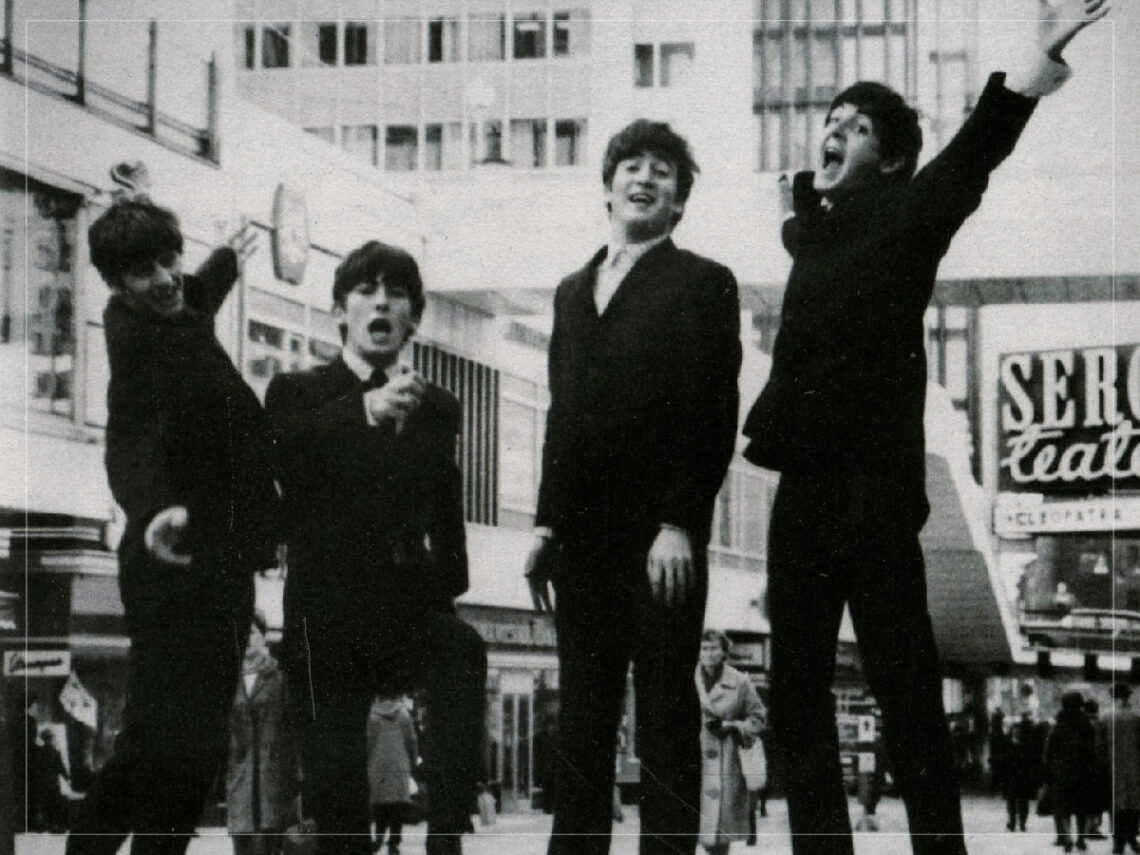
‘The Gretty’: the secret jazz chord The Beatles fell in love with

While I’m personally not sure how anyone can find any sort of fault in the music of The Beatles, one thing that tends to be agreed upon on a universal level is that their songwriting abilities were frankly unparalleled for the entirety of the 1960s.
That is, arguably, something that is still relatively hard to deny even in the modern era, and any band or artist who approaches songwriting in a similar fashion undoubtedly has The Beatles to thank for this approach.
You could argue that they were unaware at the time of writing these songs that they were creating something that would end up being regarded as ‘timeless’ or still revered to the same extent over 60 years later, but anyone who is able to pay homage to the band in the modern era will be given this descriptor, and with good reason.
Despite having been broadly influenced by the rock and roll and skiffle movements from the 1950s, where composition was kept to basic structures and didn’t require much in the way of deviating from a standardised form, what The Beatles did, even from their earliest years, was boldly defy this perceived notion that following a certain chord pattern was the only way to do things.
The music may not seem rebellious now, but at the time, its disregard for convention was a wild rejection of how pop music sounded, and some of the different chord progressions that were used by Paul McCartney, George Harrison, and perhaps most importantly, John Lennon, would go on to define their sound.
It was one of Lennon’s friends in Liverpool, a local guitarist named Jim Gretty, from whom they learned about the use of the ‘dominant seventh sharp ninth chord’ voicing, which can be used as a turnaround chord to move between two sections of a song. The band had been using it in some of their early recordings, although the track ‘Till There Was You’ from With the Beatles was not an original composition.
They would end up employing it again on the McCartney-penned ‘Michelle’ and in Lennon’s ‘Sexy Sadie’, among many other songs like ‘Taxman’ and ‘The Word’, using it to their advantage as they made their own works more harmonically complex in their compositions. While many have criticised the band for not having the same level of musical talent as some of their contemporaries in the 1960s, utilising a feature such as this is actually a far greater indication of how they were willing to try out non-standard chord voicings and progressions in order to further their craft.
To them, this will always be known as the ‘Gretty chord’, owing to the fact that their friend, who worked at a music shop called Hessey’s in the Whitechapel area of Liverpool, had told them about its existence. To others, it’s referred to as the ‘Hendrix chord’, owing to the fact that it was widely used by Jimi Hendrix in his compositions.
However, its roots in jazz, blues and classical music is perhaps the most notable part of its origin, and for a band like The Beatles, who were making such an impression on the pop charts, to be using something as complex and heavily associated with these other areas is not just a brilliant indicator of how good their songwriting was, but how brave they were with it and how much they tried to involve external influence in their songwriting.

Never Miss A Beat
The Far Out Beatles Newsletter
All the latest stories about The Beatles from the independent voice of culture.
Straight to your inbox.