


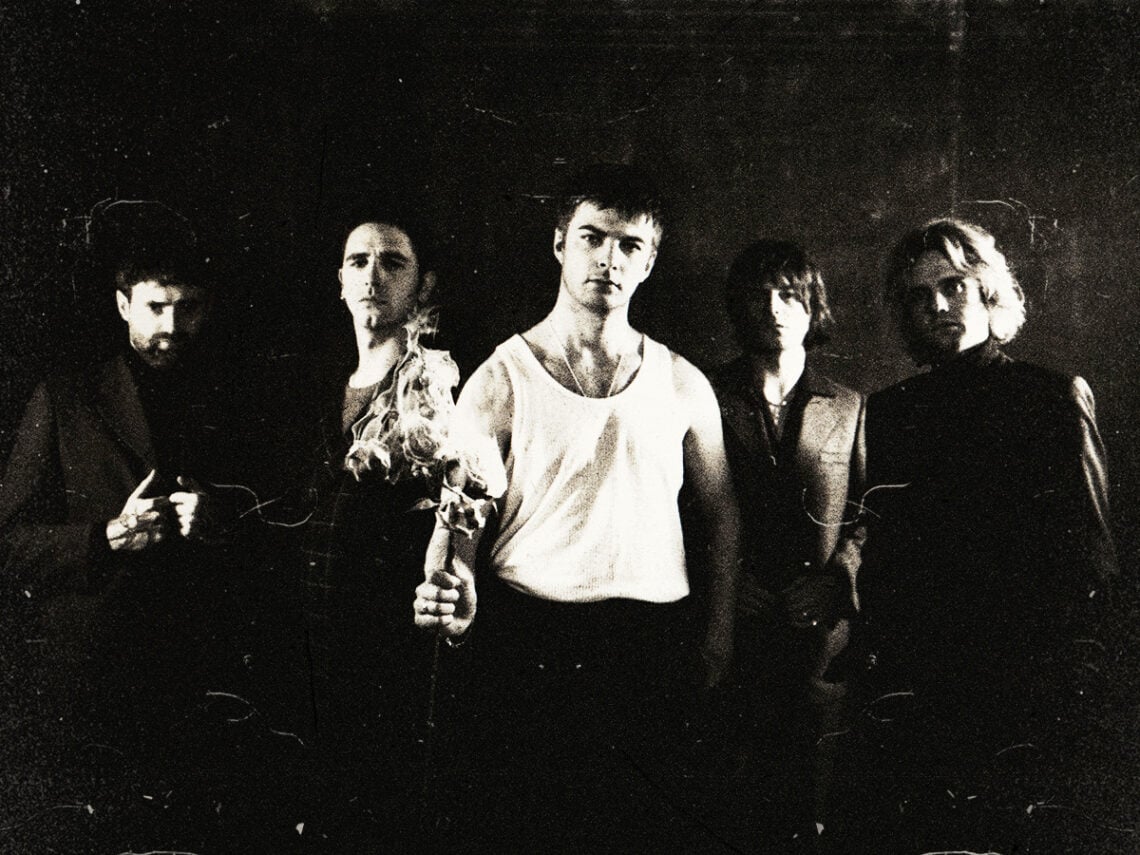
What is the secret to Fontaines D.C.’s addictive sound?

Not many bands have a sound quite as addictive as Fontaines D.C. When I find myself falling back down the rabbit hole of their discography, I’m always acutely aware that it will be a difficult one to claw my way back out of. Songs find themselves on repeat for days on end, albums run into one another with ease, and I just keep queuing more. At its core, it’s just guitar music, so what makes it so good?
This is a topic that arises when I’m sat at the pub chatting with English Teacher, who cite Grian Chatten and his bandmates as one of their primary influences. As we discuss what it might be that makes their sound so addictive, so memorable, and so envy-inducing to a fellow musician, we can only pinpoint sincere, classic songwriting. It might sound vague, but it’s true.
The enduring pull of Fontaines D.C.’s music derives from Chatten’s ability to just write good songs. There’s nothing hugely inventive about their sound – it sits quite firmly in the post-punk realm, only ever deviating from classic guitars and drums with the occasional tambourine. They don’t play with genre or instrumentation, there’s no sampling or strange synths, they rely entirely on melodies and meaning, and they’ve mastered both.
Take ‘Jackie Down The Line’, the lead single from Skinty Fia, for example. The song relies on pulsing percussion and a growling guitar while Chatten’s voice sits just atop. On paper, it would seem that there’s nothing particularly special about the track, and yet I had it on repeat for weeks. The melody is so solid, Chatten’s vocals so effortlessly singalong-worthy that you can’t help but play it twice.
The content of his words is just as illustrative of his songwriting prowess. Lines like “Don’t make no odds for ye, to be told” flow off the tongue with ease while he sprinkles in truths about the world around him with ease. “What good is happiness to me if I’ve to wield it carefully,” he shrugs without a second thought, leaving the rest of us in awe.
When ‘I Love You’ came out not long after, it had me uncontrollably hitting my replay button once more, desperate to nail every word to those driving verses. It was a guitar and drums, but it was so much more. Chatten dives into politics and his love for Ireland, somehow turning sprawling sentences into melodies catchier than you’ll find on Radio One. It’s an impossible feat for anyone but him.
As Skinty Fia arrived, it became clear that this is Fontaines’ entire songwriting model, one they’ve been tightening for three albums now. From the moment they released Dogrel, they paved the way for songs about Irish identity marked out by authentic melodic songwriting.
“My childhood was small,” Chatten declares on their first record, “but I’m gonna be big.” It’s shrouded in verses with far more poetic prowess – lines like “Dublin in the rain is mine, a pregnant city with a Catholic mind” – but it’s no less meaningful and all the more melodic. It invites you to sing along with him, to reach for something more.
‘Boys in the Better Land’, too, rests on simple strums and tracking tambourines, but it’s guaranteed to make crowds go wild. The melody demands movement, and the placement of Chatten’s words in phrases like “rock star, porn star, superstar, doesn’t matter what you are” dares you to keep up with him. There’s a real focus on rhyme and pacing that makes their music impossibly catchy.
Though they’re formulated to fit perfectly into melodies, his words are enduringly authentic. “Life ain’t always empty,” he repeats on ‘A Hero’s Death’, from their sophomore record of the same name. It’s impossibly simple – so easy to sing along to – and easy to get behind, too. His playful verses implore you to tell your mother that you love her and speak sincere, and it’s easy to believe that he abides by his own rules.
There’s no real difference in the writing between Dogrel and Skinty Fia, just a honing of their craft. From ‘Big’ to ‘Starburster’, there’s an impressive consistency in quality throughout their discography, a continual focus on poetic, authentic songwriting. Unexpected home truths are spliced between catchy choruses and melodies in a catalogue full of real, classic songs.
While post-punk bands scramble to stay interesting, forcing jazz influences and electronica into their songs in an effort to maintain relevance, Fontaines continue to prove that considered, catchy songwriting will always keep audiences coming back.
