


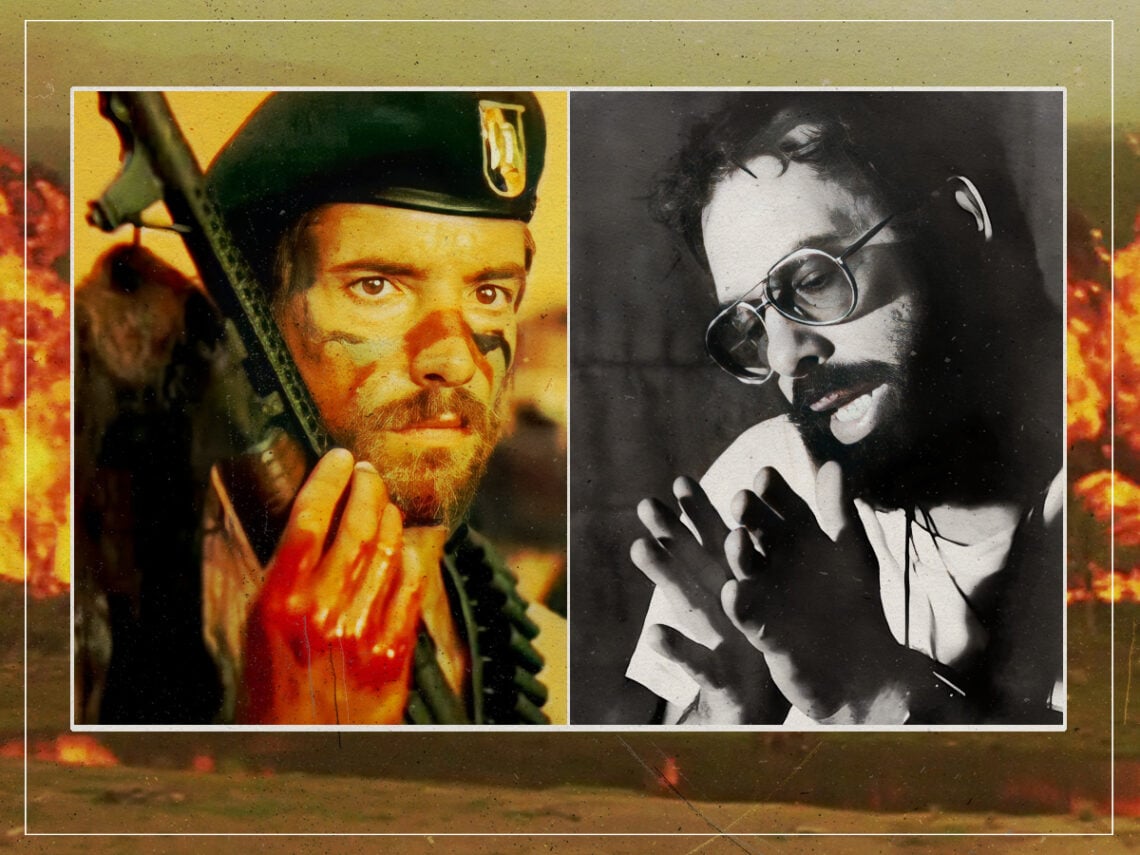
How Scott Glenn saved Francis Ford Coppola’s life on the set of ‘Apocalypse Now’

While Francis Ford Coppola’s 1979 film Apocalypse Now serves as one of the greatest Vietnam War movies of all time, it endured a true production nightmare rife with setbacks and outright danger. From logistical and budgetary issues to the unpredictable natural conditions of the Philippines, Coppola’s masterpiece was almost made victim to the director’s overambition.
Harvey Keitel, who was Coppola’s original choice for the lead role, eventually played by Martin Sheen, left the production and Sheen himself later suffered a heart attack. Much of the crew and cast of Apocalypse Now were left utterly demoralised, so its completion is something of a miracle.
Even despite the awful production of the film, things might have been so much worse were it not for the actor Scott Glenn, who ended up playing Lt. Richard M. Colby. Glenn had been to an open call for the classic film and wound up getting the part because of his Marine training knowledge and subsequent saving of Coppola’s life.
In an interview with GQ, Glenn explained how Coppola first took to his combat expertise after he trialled for a handful of supporting roles and rolled his eyes at some of the scene choices, noting, “Francis stopped the improv and said, ‘I saw that, Scott. These people are doing serious work. I don’t need you making a comment on this work.’ said, ‘It wasn’t that work was bad. But these guys are on a boat with the engine turned off, floating down the Mekong River. You scream and yell like that, you’re going to have a mortar round in your laps in five seconds.'”
Coppola knew that he simply had to have Glenn on set with him, a decision that invariably led to his life being saved. Upon arriving at the production location, Glenn found that most of the cast and crew had become tired of filming and decided to head out to Manila for some fun, bar Martin Sheen, his family and a handful of production assistants.
Shortly after, two huge typhoons were set upon the Philippines, where Glenn was patiently waiting. In an interview with The Washington Times, the actor opened up on his experience at this moment, noting how he and an assistant called Doug Claybourne had managed to get the skeleton crew through the natural ordeal. “It was the biggest typhoon that had hit the Philippines since 1932,” he said. “Francis and everybody else in Manila probably thought we were dead for sure.”
This led to some of the film’s financiers threatening to bring the shoot to an end, so Coppola had to prove that it was safe, boarding a boat and attempting to cross a mass of water that was still angry in the aftermath of the monsoons. “They got in the boat, they shoved the boat out into the stream, and the boat was just instantly caught by the current,” Glenn said.
The boat had been attached by rope to the land, but with the boat raging around in the water, Coppola and his DoP Vittorio Storao had been at risk of capsizing. Glenn acted fast: “I sprinted the 25 yards and I pulled [a knife] out and cut the rope. It snapped like a big bullwhip, and the boat was okay — it righted itself and went downstream.”
A rescue chopper then arrived, which Glenn also had to advise on how to get out of the escalating situation. The result was Coppola’s eternal gratitude for Glenn saving his life, and he offered him any role in the movie, finally settling on the man sent ahead of Martin Sheen to assassinate Colonel Kurtz.
