


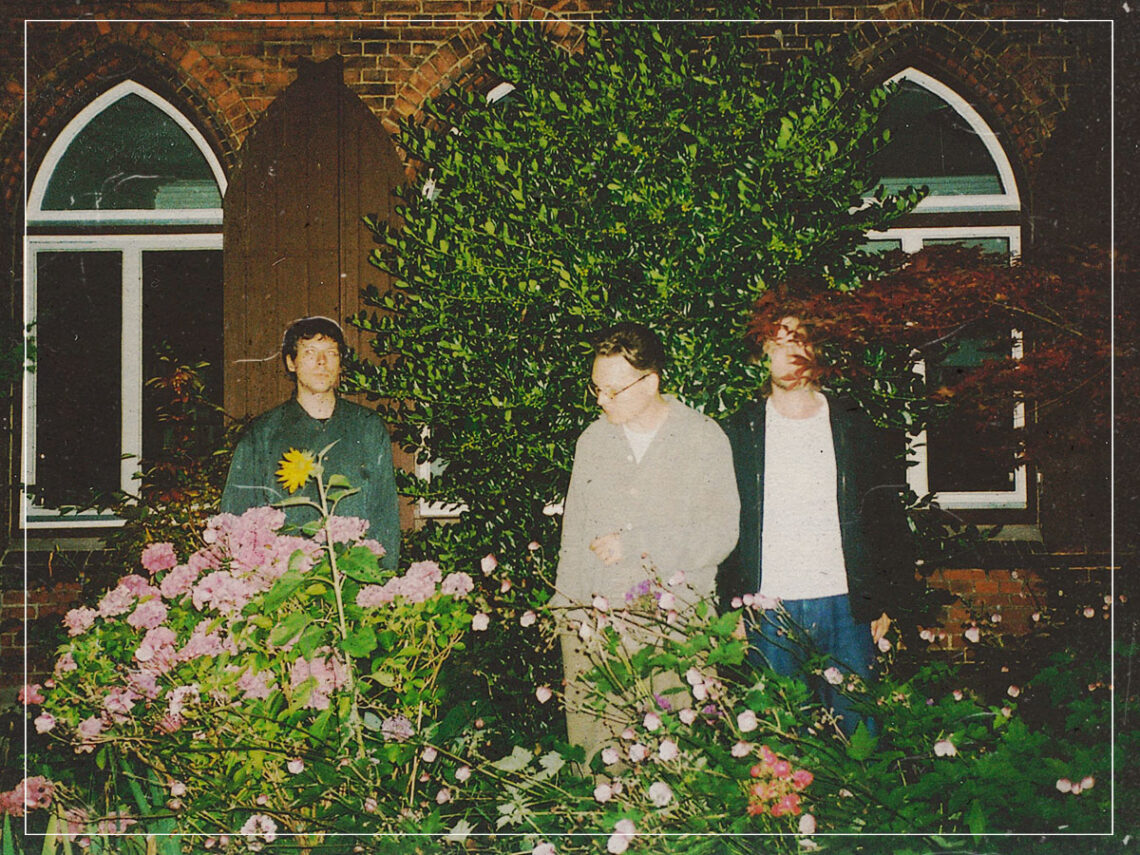
Schatterau – ‘Schatterau’ album review: the ghosts of the past conjured by a four-track

THE SKINNY: Hauntology is a word that springs to mind when listening to Schatterau’s self-titled debut album. If you don’t know what that word means, then you needn’t worry; you can pick up the gist from its semantics alone. The same can be said for this record; it’s the sort that turns Hauntology into an ambient onomatopoeia.
15 textured swells seem to charm the past out of an old four-track cassette that has been yielded as an instrument rather than a mere recording device. Ambient loops rove around with a foggy depth like Another Green World being channelled through a ouija board. But there are plenty of ambient loops these days and records that do clever things with old recording devices; what makes this Hands in the Dark label release different?
Frankly, not much. However, there is also enough depth to what is there and wavering variety to keep you interested enough not to really care that much. The Hamburg / Berlin trio of Daniel Jahn, Jonas Meyer, and Tobias Rutkowski give off the effect of disappearing into the various tones they produce. Ostensibly, it’s about their own upbringing in East Germany amid the uncertain days of the demise of the GDR. However, the record’s journey into the past is so fully realised that your own imagined scenes swarm forth.
With most of the compositions running for little over a minute, these scenes from the past whirl by in an ever-changing blur. There are times when you wish it would stay transfixed on a miniature for longer, but the sense of a journey with surprises around the corner is also what adds to the interest of the album. And the cover is a cracker to boot.
For fans of: Buying a Fyodor Dostoyevsky novel, reading half a page before putting it down to have a good old stare at a wall and never picking the book back up again.
A concluding comment from Tom’s mother: “How did I ever raise a boy pretentious enough to get all this from, what is to my ear, a pointless mess of bland, vaguely German noise.”
Schatterau track-by-track:
Release Date: March 8th | Producer: Schatterau | Label: Hands in the Dark
‘Vis-à-vis’: Scene one – An optimistic twinkle and hushed vocals conjure up the scene from a movie where the main character is about to embark on their grand plan. Moody monochrome shots and bridges fill a stirring montage. [4/5]
‘Freilicht’: Scene two – A doomy organ blares a hymn from the past, but this is somehow swirled with the future in a maddening blur of time. The cinema fills with the passage of 1000 years in 40 seconds of footage. [3.5/5]
‘Wie Wei Hinauf’: Scene three – Doesn’t conjure too much, in honesty. An in-between space song, like a tram station at 3pm. [2.5/5]
‘GH Ost’: Scene four – A vaguely cultish chant can be heard in the background. Almost like Tom Hanks wandering around a city looking for Freemason symbology, but in a movie directed by Andrei Tarkovsky, and Hanks has been recast by Jackie Earle Haley. [4/5]
‘Zusammen’: Scene five – It begins to get disturbing. You no longer want to think of imagined scenes. Instead, you worry whether the garbled menagerie of murmurs with somehow induce intense paranoia. I suppose that’s probably the point, given the album’s theme. [2.5/5]
‘Unsichtbare Spuren’: Scene six – Something almost nauseating about the droning loop that runs throughout this. It only serves to conjure irritation. [1.5/5]
‘Klingenberg’: Scene seven – Perhaps sensing the need for a change in the mix, this track has a sweet dreaminess to it. It’s still odd, though, like the forest in fog. [4/5]
‘In Langen Zügen’: Scene eight – A jazzy tone puts you in a bar, the one that you find within a train station. You’re sipping a drink and waiting for something or someone. And yes, that siren is on the album. [3.5/5]
‘Wermutt’: Scene nine – A dull and bland drone whose highlight is the fact that it’s over in a minute. Probably shouldn’t have made the cut. [1/5]
‘Solaris’: Scene ten – A dance track from a 1980s Berlin club plays through the thick walls of a tenement building in the 1920s; somehow, the haunted forefront blurs the future in the background in a weird mirage. [4/5]
‘Buhaus’: Scene 11 – The song slowly gathers, and so does the scene. From a rather nondescript tick rises a heist movie pulse and the building sense of impending action. You get the sense that something unpleasant is being foreshadowed. [4/5]
‘Kontur’: Scene 12: The bad thing never materialised. Spring is on the way. And the murky fog of an industrial city is fading. [3/5]
‘Heimlich’: Scene 13 – Not a great deal is conveyed in a brief minute of noise other than a general sense of warmth. [2.5/5]
‘Keksfabrik’: Scene 14 – The dreamiest and most existential cut of the lot. Weirdly, this is not quite as image-evoking as the rest of the record and makes you think more about the fabric of modern society rather than the scenes that have led to this. This is hauntology explained in song. [4.5/5]
‘Mala Strana’: Scene 15 – A groovy and Eastern farewell. ‘Thanks for coming, enjoy the world around you now’, it seems to say. [3.5/5]

Never Miss A Beat
The Far Out New Music Newsletter
All the latest New Music from the independent voice of culture.
Straight to your inbox.