


Anatomy of a Scene: The terrifying sacrifice in ‘The Wicker Man’

After Ari Aster’s Midsommar was released in 2019, many people were shocked by the scene near the end of the movie, in which one of the main characters is placed inside a bear and set on fire as part of a bizarre cult ritual. The sequence was clearly inspired by The Wicker Man, Robin Hardy’s 1973 folk horror movie about a strange Scottish island where paganism is practised by the inhabitants, which culminates in a terrifying burning ritual, killing the protagonist, Sgt. Neil Howie.
The Wicker Man is arguably the best folk horror movie in existence, surreal in its depiction of unusual eroticism, with characters having sex outside or prancing around naked. The characters are all odd, but so is Howie, a traditional and uber-religious Christian who is saving himself for marriage. He finds the inhabitants of Summerisle puzzling, but he must stay there to investigate the disappearance of a young girl, Rowan.
However, as the movie progresses, with Howie resisting sexual advances, he discovers that nothing is as it seems. Every person who lives in Summerisle is deceptive, refusing to give his answers about the missing child. When he thinks he’s close to cracking the case after receiving the location of Rowan’s grave, all he finds is a dead animal. Her classmates act none the wiser, and certain people even claim that a girl named Rowan never lived on the island.
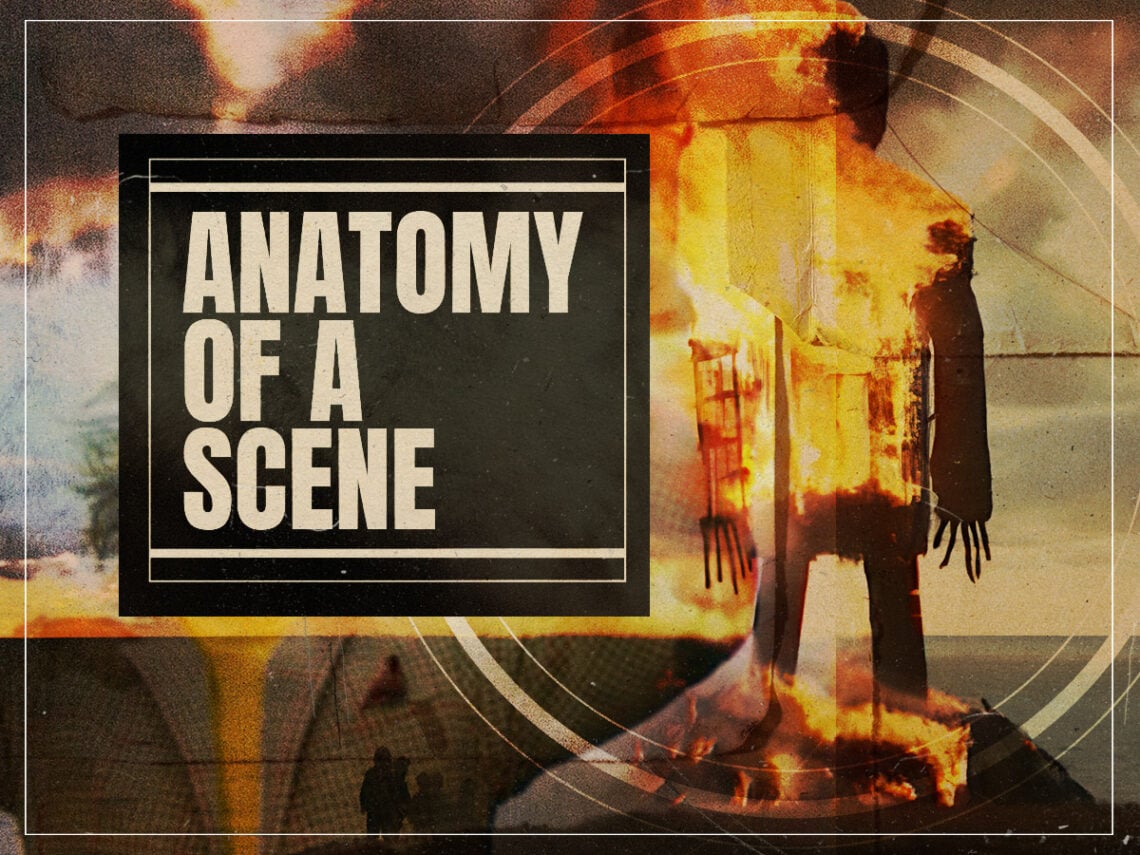
Eventually, the truth unravels, with Howie finding himself in a tragic position. Rowan’s disappearance is revealed to be a ploy to get Howie to the island – she’s been there the whole time, not held captive to be used as a human sacrifice (to rejuvenate the dying crops) as Howie initially thought. Instead, the inhabitants want him; he fits the criteria for the sacrifice. While singing and dancing, the villagers place him, dressed as a Fool, inside a giant wicker man with an array of animals. Then, the massive structure is set alight, with Howie forced to anticipate his death, which comes rather quickly as the flames rise.
The music is jovial, and the witnesses to his death, including children, couldn’t be happier to watch him burn. As Howie sits inside the wicker man in a state of panic, he recites prayers and sings a psalm, but it’s too late. It’s painful to watch his desperation, which is heightened by the screeching animals who are also getting burned alive with him. The scene is unforgettable, acting as the perfect way to round out the film.
Religion and power are the central themes here. Howie desperately wants to be saved by God, but his attempts are futile. This higher power cannot save Howie on Earth – evidently, trying to live according to his religious beliefs, such as abstaining from sex, has been pointless. We’re still going to die; we might as well live on our own terms, not by the demands of others, the film suggests.
Yet, ironically, the villagers are just as susceptible to such ways of living, which is reflected in their God-like treatment of their leader, Lord Summerisle. They do everything for him, but, as Howie recognises as he comes to accept his fate, this herd mentality is fickle – there’s no reason why Lord Summerisle won’t be betrayed by the villagers when they realise that he could be their next sacrifice. Lord Summerisle has managed to trick the residents into treating him like a God so that he can be viewed as a powerful figure, letting everyone do his hard work for him. Yet, if a whole island can burn a man to death, who knows what else they’re capable of?
The Wicker Man asks many questions about our reliance on religion, deception, and why we give certain certain people roles of power. It’s a haunting film which exists in a wholly realistic and natural setting, which makes it feel even more terrifying. The final scene is indelible, ending with a shot of the setting sun over the sea. This sacrifice might well be done, but the villagers aren’t. If another crop shortage happens (which is inevitable due to the climate), it won’t be long before they search for their next victim.
