


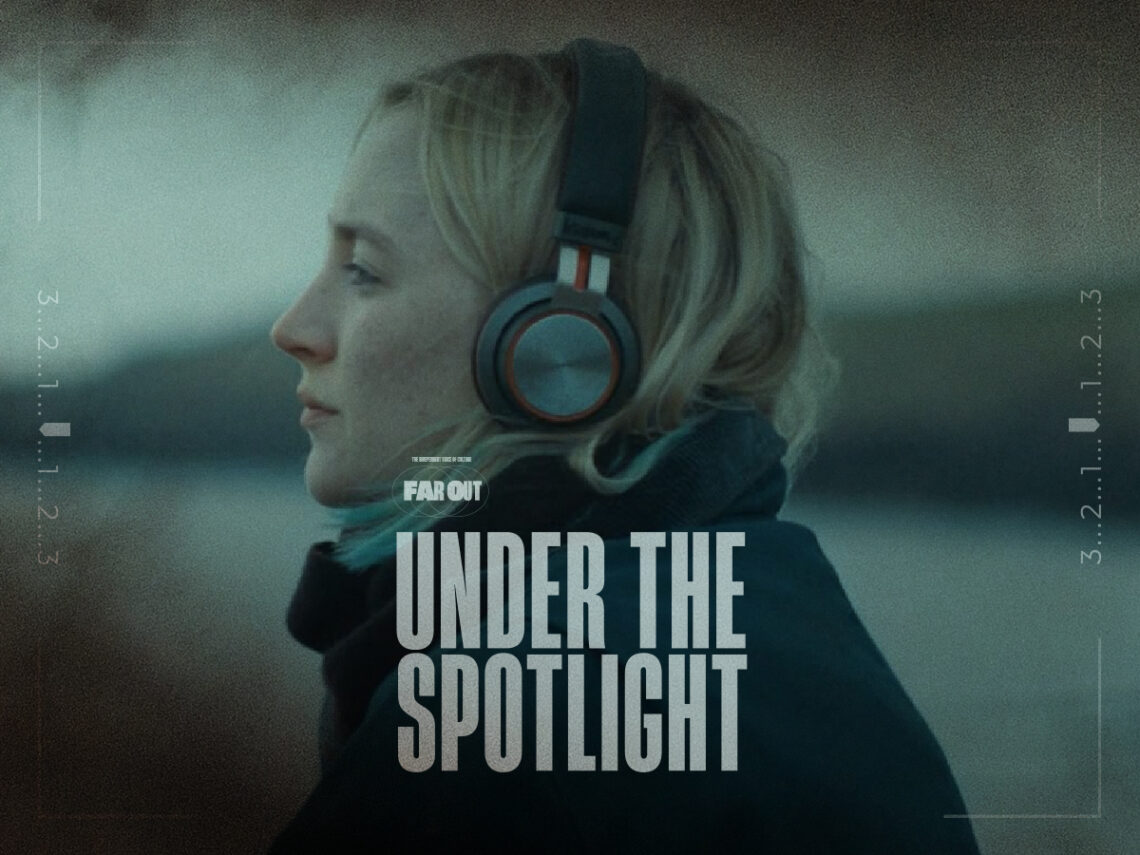
Under The Spotlight: Saoirse Ronan shows what real grief and healing look like in ‘The Outrun’

The Outrun is a unique experience that truthfully shows what it is like to be in continuous pain and gradually heal. At its centre, Saoirse Ronan gives a performance that should be remembered among her four Oscar nominations in this intimate yet expansive drama.
The Irish star, now confirmed for The Beatles biopics series, plays Rona, a troubled woman in her late 20s who has moved back home to the Orkney Islands in Scotland after a stint in rehab, with her alcoholism having wrecked her life in London.
At the beginning of the film, Rona insists the situation is temporary, affronted by her mother’s condescending friends, but also awkwardly trying to connect with people her own age in the area. Then Rona has a panic attack when she attempts to return to London, and it becomes clear that she has no idea when she will be able to get back to her “real life”.
So Rona takes up work with the Royal Society for the Protection of Birds and spends her days tracking the endangered corn crake. She relapses at one point and comes home to her mother, drunk and spiteful and teary, then temporarily moves to the even more remote Papa Westray island.
Slowly, she finds new interests, connects with a man who is 12 years sober, and becomes free enough to dance passionately by herself in her apartment and conduct a concert of waves crashing onto the cliffs. Rona exhibits a quiet disappointment and disgust with herself, but also sadness about the circumstances that got her here. Two standout scenes in Ronan’s performance are close-ups on her as she talks on the phone. The first time, Rona apologises to her ex-boyfriend, defeatedly saying she understands why he left.
The second time, she is barely holding it together as she talks to her father, who is demanding she come release him from a facility where he is being treated for bipolar disorder or addiction. She calmly says she can’t, simply hangs up when he starts berating her, and then breaks down.
Ronan also portrays how terrible Rona is when she’s drunk, screaming, and even hurting her loved ones. In her deflated road to recovery, she at one point says she doesn’t think she can be happy sober. Yet with no obvious turning point, Rona does find happiness again. It’s an entirely cohesive arc that doesn’t need any grand, showy moments to show Rona coming back to herself, as Ronan performs the painful range of emotions that all amount to things getting easier with time.
Another notable aspect of The Outrun is occasional sidetracks into Celtic mythology, where Rona tells a story in voice-over, at one point accompanied by an animated visual. Ronan’s gentle narration is beautiful all on its own, but it is also crucial to the story as Rona’s relationship with the wildlife and culture of the Orkney Islands is the literal thing she does to not need alcohol anymore. Through her voice alone, she connects the character to the bittersweet parts of the legends.
After the tears, dancing, and catharsis, Rona prepares to depart after her stay on Papa. Because of a sort-of plot twist I can’t bear to spoil, the film ends with Rona letting out a joyous, disbelieving laugh. It celebrates something beautiful she has now seen, that she made it this far at all. It’s a natural sound that encapsulates all that Ronan does in this role.
