


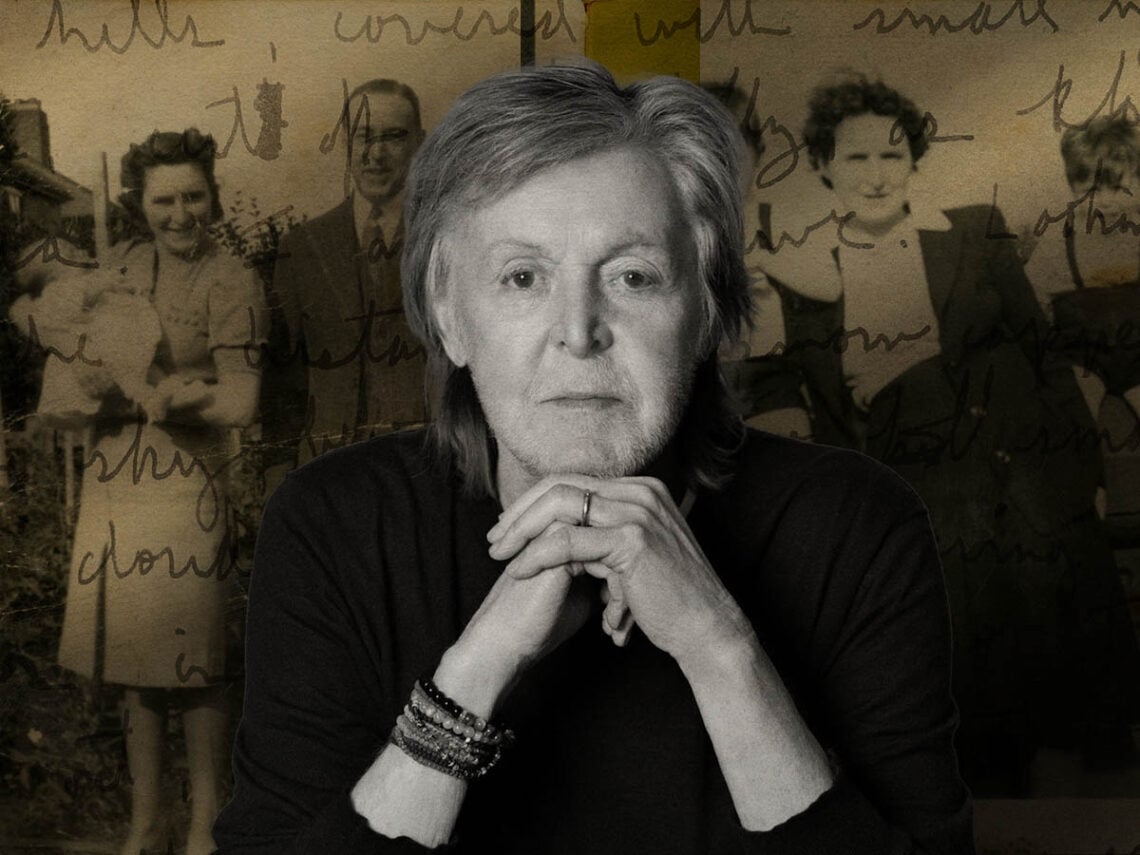
‘Salesman Saint’: Paul McCartney’s ode to the generation that raised him

“In places it’s a very personal record,” Paul McCartney said, “And a lot of it is retrospective, drawing from memory, like memories of being a kid from Liverpool and from summers gone”.
You’d be forgiven for presuming Sir Paul was discussing his brand new album, The Boys of Dungeon Lane, but the quote above actually comes from an old press release promoting McCartney’s 2007 record Memory Almost Full. He was 64 then, as he’d prophesied years earlier.
“We’re describing my parents having come out of a bomb shelter when the all-clear sounded,” he said. “I had an image of them standing there unshaven, dad anyway, and weary of the war, holding their child and looking towards the future.”
That’s Paul again, but this time talking back in 1991, age 49, about a scene from his somewhat forgotten first foray into classical music, Liverpool Oratorio, another semi-autobiographical exploration of a childhood spent in an industrial port city, the sacrifices of two wartime parents, and a boy lured to music and stardom in the wider world.
Hell, we might as well go all the way back to 1967 and look at ‘Penny Lane’, a vibrant little painting of a place plucked out of McCartney’s childhood memory. It existed in reality, and still does, geographically speaking, but as a piece of fiction, Penny Lane became representative of something much bigger: the quaint hustle-bustle of 1950s English suburbia before the cultural revolution of the 1960s, a revolution for which Paul and his bandmates ironically became the poster boys.
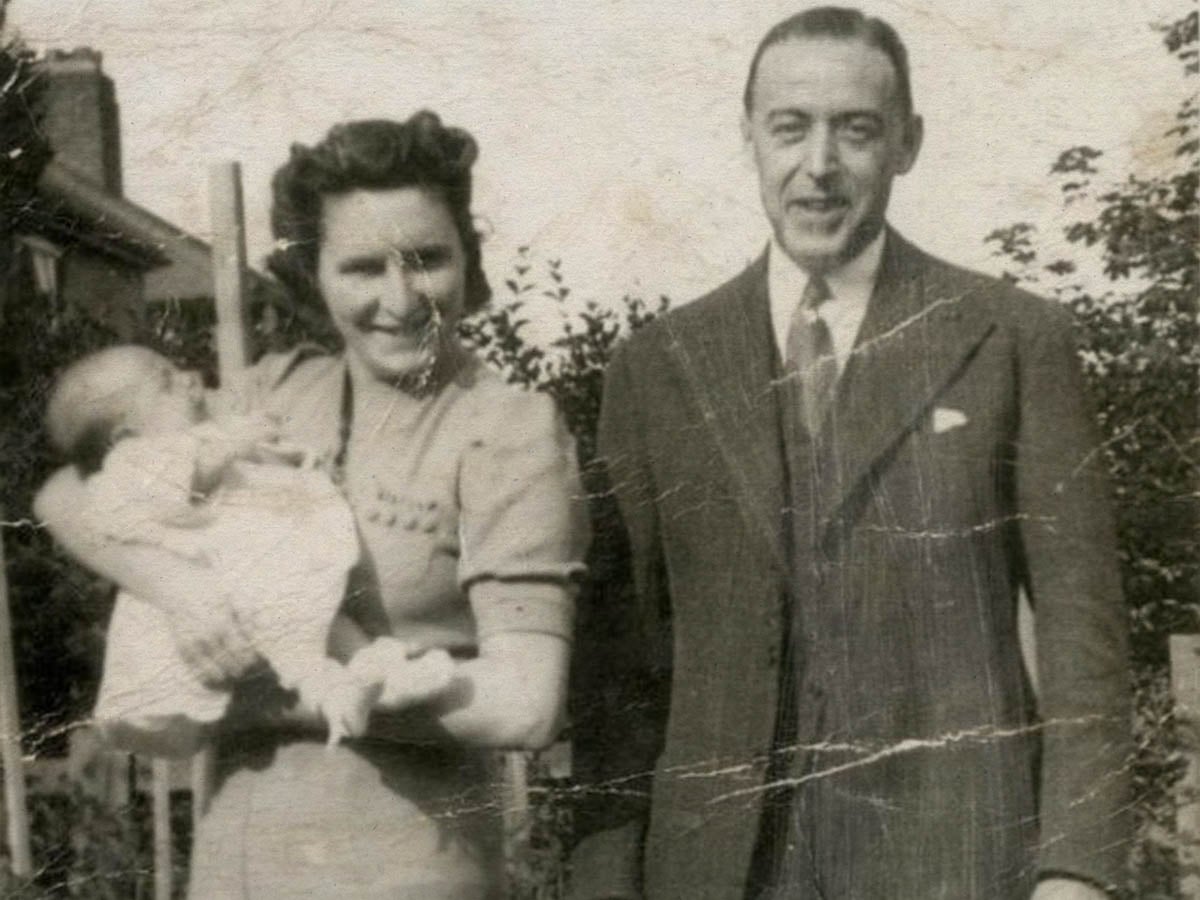
Paul McCartney, for all his mastery of songcraft, has notoriously always been a sucker for sentimentality and nostalgia, including hokey love songs, heartbroken folk ballads, and those old music hall standards about the selfless sacrifices of your dear old ma and pa.
Some of the most popular sheet music in circulation in the 1920s and ‘30s, which easily could have been in the McCartney family’s collections, included tunes like ‘A Boy’s Best Friend is His Mother’, ‘My Old Man’, ‘Daddy and Home’, and ‘I Wouldn’t Trade the Silver in My Mother’s Hair (For All the Gold in the World)’. These were saccharine, sappy tales of parental appreciation written in much the same style as patriotic anthems or odes to beloved hometowns, and the intent was to encourage the same sort of sentiments in young listeners.
By stark contrast, when rock and roll came along as the music of rebellion in the late 1950s, it suddenly became exceedingly uncool to sing lovingly about your parents, or to suggest you respected them in any way whatsoever. Most rock songs about childhood and one’s relationship with a mother or father now lent into tales of frustration, a lack of understanding, and longstanding trauma. McCartney’s own songwriting partner, John Lennon, certainly became a leading purveyor of that sort of therapeutic, no-holds-barred approach to the parental song: “Mother, you left me, but I never left you. I needed you, you didn’t need me”.
Most Beatles fans know about the tragic death of Lennon’s troubled mother, Julia, in 1958, as it’s long been considered an essential component of John’s entire personality as an artist. What fewer people seem to be aware of is that McCartney’s mother, the hardworking midwife Mary McCartney, also died two years earlier from breast cancer, when Paul was just 14.
“I have one big memory of her,” McCartney recently said during an appearance on The Rest is History podcast. “She got called to go to a birth, ‘call the midwife!’, and so she got on her bike, because they didn’t have cars. She got on her bike in this deep snow, with her uniform on, with a little suitcase on the back and a little basket on the front. And I have this memory, in the street lights, of her cycling out through the snow and thinking, ‘Wow, that’s pretty brave’.”
Not long after Mary’s death, a teenage Paul wrote his first song, which he didn’t consciously intend as any sort of commentary on his own grief. ‘I Lost My Little Girl’ was just a silly heartbreak song in the style of countless early rock and doo-wop hits, but many years later, he explained on the TRIH pod, “Someone pointed out to me, my mum had died not too long before that. So, probably, at the back of my mind, a therapist would say that’s what this was about. But the guitar was your therapist.”
In theory, the loss of his mother at such a formative age should have created a hole in the heart and some of the same feelings of pain and abandonment that fueled much of Lennon’s work, but Paul, as the proverbial yin to John’s yang, channelled thoughts of his mother into soaring tributes rather than introspective primal scream sessions.
‘Let It Be’, most famously, was inspired by a dream in which Mary, his own mother rather than Jesus’, appeared to him during a period of stress and uncertainty in the late Beatles years. Rather than dwelling on her absence, the song transformed her into a source of comfort and wisdom. The mother in ‘Let It Be’ isn’t a specific Liverpool midwife named Mary McCartney, but more of a benevolent spiritual presence, a reassuring figure standing just beyond the edge of the frame, ready to serve the same function for any listener.
That tendency would become one of the defining features of McCartney’s writing about his parents. Rather than trying to introduce them to his fans as fully fleshed out and flawed people, or to work out whatever untapped, personal feelings he might have about them, the passing of time gradually made them less useful as three-dimensional character studies and more appealing as vehicles for bigger ideas; particular as representatives for the ideals of that ‘Keep Calm and Carry On’ generation.
Unlike Mary, Paul’s father, Jim McCartney, lived long enough to see The Beatles become the biggest band in the world, dying in 1976, by which point Paul was already a veteran of one musical revolution and midway through a second career with Wings.
Jim was a fascinating character in his own right: a cotton salesman, amateur musician, bandleader, and working-class Liverpudlian whose love of jazz and dance-band music profoundly shaped his son’s musical instincts. Beatles songs like ‘When I’m Sixty-Four’ and ‘Wild Honey Pie’, with their music-hall sensibility, owe a lot to Jim’s influence, and Paul even covered one of his dad’s personal compositions, an instrumental called ‘Walking in the Park with Eloise‘, in 1974.
When Paul writes directly about his father, however, he rarely focuses on eccentric personal details. Instead, Jim often emerges as an archetype of quiet, decent masculinity, hardworking, practical, emotionally reserved, and deeply committed to family.
In ‘Put It There’, for example, from 1989’s Flowers in the Dirt, McCartney adapts one of his father’s favourite sayings, “put it there if it weighs a ton”, into a less personal and more universal exploration of the mid-century father-and-son dynamic, when the “L” word might be hard to come by, but dependability and sage advice are readily on tap: “Put it there if it weighs a ton / That’s what a father said to his young son / I don’t care if it weighs a ton / As long as you and I are here, put it there / Long as you and I are here, put it there.”
A father-son handshake, the pinnacle of closeness in 1950s Liverpool.
On McCartney’s latest album, The Boys of Dungeon Lane, there’s another standout song about the parent-child relationship called ‘Salesman Saint’. Though he is an 83-year-old man with eight grandkids of his own, this track finds Paul returning to the role of the little boy once again, although the songwriter is at least using his collected wisdom to go back in time and observe his parents, Mary and Jim, with a historian’s eyes rather than just his own hazy recollections.

It has been 70 years since Paul last saw his mother Mary, who never knew of his success and fame, and a half-century since his last chat with his father. Almost unavoidably, much in the same way that McCartney’s often prickly relationship with John Lennon has been dulled at the edges and sweetened in the silence of his absence, Paul is also perhaps well past the stage of trying to ‘size up’ the people who raised him or to question their choices. That’s the work of a middle-aged man, maybe, but having now lived a decade longer than his father did, Paul’s perspective on his parents has been romanticised and simplified like the streets of Penny Lane, or Dungeon Lane, or those new roads going in after the war.
His father was a salesman, his mother was a saint, “Working every God-given minute / To make enough to pay the rent / So they learned to carry on / With laughter and a song / To help them through the night / They’re going to make it through / They’re going to make it all right”.
What makes this particularly interesting, again, is the generational context. The Beatles, along with so many of their peers, were seen as rejectors of old British conservatism. The rock revolution of the 1960s was, in part, a push back against the stoicism, conformity, and political passivity associated with the wartime generation.
For artists like Lennon, that conflict remained central throughout their careers. For McCartney, however, age seems to have produced a kind of reconciliation, and a lot of it seems to be rooted in an appreciation for how his parents didn’t merely survive the war by keeping a stiff upper lip. To the contrary, they relied on music and laughter to get through each day, as did thousands of other Liverpool households during the Blitz. In this way, ‘Salesman Saint’ is an ode to all of them, with Jim and Mary McCartney merely serving the role of avatars for all of those wartime parents. Whether you were raising a future Beatle or not, the goal was to keep focused on the joys in life, even if the view out the window suggested otherwise.
The song is very minimalist in its descriptive language, but McCartney’s matter-of-fact delivery matches the vibe of the period, as do the touches of war-era jazz horns that begins melding into the acoustic ballad. It’s a nice acknowledgement of the time we’re all getting increasingly disconnected from, and it doesn’t lean on bombast or patriotic imagery to make its point.
“Coming through the war, and having to be happy when bombs were falling, there was a lot of music when I was a kid,” Paul said, “There were a lot of jokes. And so [my parents] kept their heads above water by laughing at the whole thing. And I think that was something that found its way into The Beatles. I think it gave us a good sense of humour; that no matter what we were going to do…we gave as good as we got. And that was because of our Liverpool upbringing.”

Never Miss A Beat
The Far Out Beatles Newsletter
All the latest stories about The Beatles from the independent voice of culture.
Straight to your inbox.