


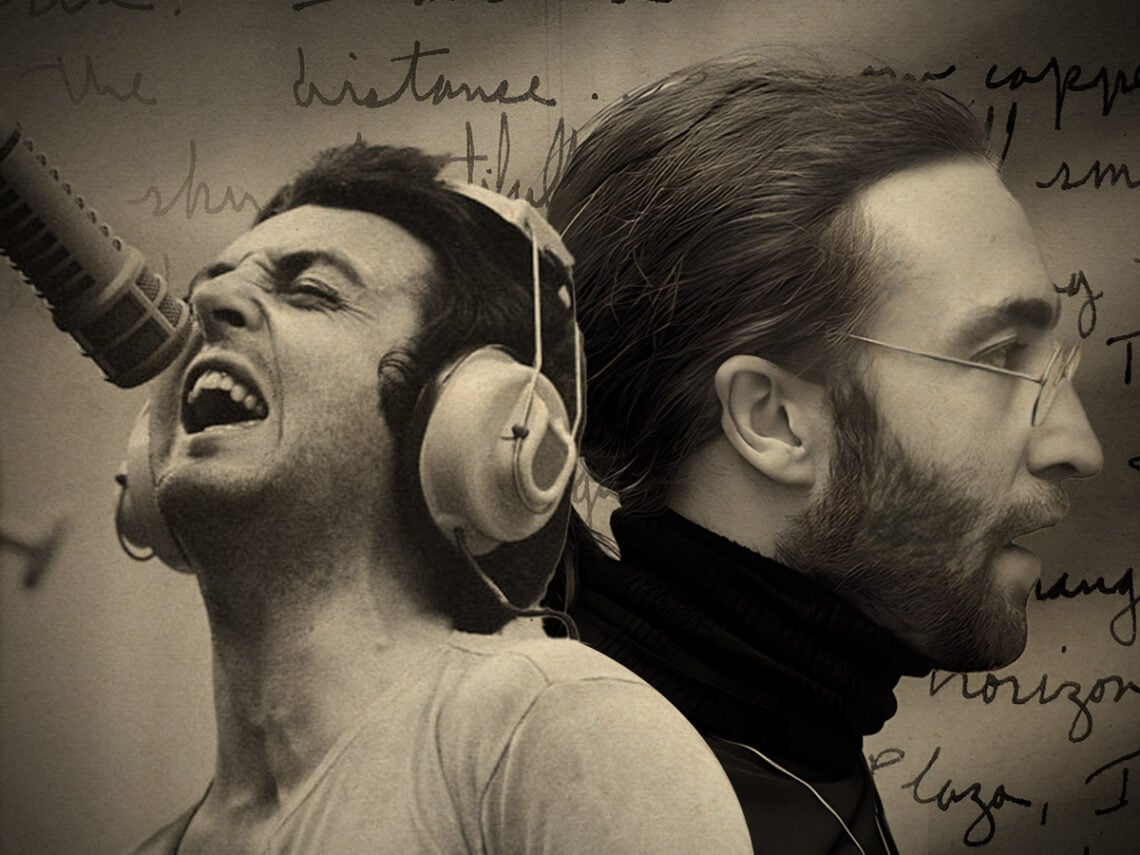
Anatomy of a fall-out: Dissecting the legendary feud between Paul McCartney and John Lennon

One of the great ‘what if?’ questions in rock and roll history is whether The Beatles might have finally reunited had John Lennon lived long enough to patch up his differences with Paul McCartney and celebrate what they’d accomplished together.
It’s equally if not more likely, however, that a surviving Lennon would have simply spent the past half-century relentlessly coming up with new and amusing ways to take the piss out of Paul.
Think of all the opportunities that would have been there for him: McCartney losing The Beatles’ publishing rights to Michael Jackson; the box office flop of Give My Regards to Broad Street; that iPhone commercial with the ukulele. Just the sight of an elderly Paul still out there on stage singing the old hits could have inspired a snarky Instagram post from his old songwriting partner, if you can imagine such a thing. In fact, John cleverly managed to plant the seeds of just such an insult way back in 1964, one which required 60 years to properly germinate and deliver its sting.
“I hope [we become rich] because I don’t want to be singing at 80,” Lennon told Hit Parader just as Beatlemania was kicking off, “Who wants a croaking Beatle of 80?”
It’s sometimes useful to emphasise the humorous elements of the legendary Lennon-McCartney feud, because the more you dig into the reality of it, the more depressing it becomes, and yes, the two men had a brotherhood, both as childhood friends and creative partners, but their falling out went beyond the petty jealousies and grudges of a typical sibling rivalry, and the press were always on hand to fuel the animosity.
It’s not that outlandish to say that the only two men who could truly relate to Lennon and McCartney at the end of the 1960s were Neil Armstrong and Buzz Aldrin. The two astronauts, inextricably linked for eternity, knew that no matter what they did for the rest of their careers, everybody was going to ask them about (a) the moon and (b) each other. Like John and Paul, Neil and Buzz were very different people, and came away from their experience with no particular desire to hang out outside of space capsules. Fortunately for them, the public wasn’t really clamouring for an Apollo 11 reunion, nor were the spacemen expected to rate each other’s accomplishments in the years that followed. In that respect, the ex-Beatles had it a fair bit worse.

Any great falling out has to start with a great bond, of course, and Lennon and McCartney’s was the purest of teenage palhoods, brought together by a shared obsession with music and a willingness to throw themselves into its pursuit with reckless abandon. Famously, maybe just as a result of being the older one, John was recognised as the de facto ‘chief Beatle’ by the time the band started getting widespread attention, but he was a diplomatic, seemingly egoless captain, telling Hit Parader in that aforementioned 1964 interview that “ours is a cooperative group. Nobody lays down any laws. We talk things over. We have our rows—nothing serious—just differences like any other human beings”.
As even his most devoted fans would realise over time, however, John Lennon was not an easy-going fellow or the most amiable collaborator in the world. As one of his old art college schoolmates and music club rival, Michael Isaacson, put it in Ray Coleman’s 1985 biography Lennon, “I think if [John] had not become successful, he may well have become more than just a wayward bum. He might well have become a really nasty piece of work. It’s all hypothetical, but I fear the worst could have happened. Where his energy was channelled into creative music, it would have gone into something destructive instead. He was strictly an all-or-nothing kind of guy.”
The notion of Lennon as the chief Beatle didn’t last very long, particularly as his songwriting partner established himself as the author of some of the band’s most impressive and sensitive compositions: ‘Yesterday’, ‘Eleanor Rigby’, ‘I’ll Follow the Sun’, ‘For No One’, among others. The mathematical improbability of two songwriters of John and Paul’s calibre winding up in the same band was paradoxically the reason for The Beatles’ excellence, as the two had to constantly raise their game to legitimise their presentation as a supposed songwriting team. Both men struggled to keep their egos out of this dynamic as the pressures of international stardom and scrutiny mounted, and the militantly individualistic Lennon was particularly ill-equipped for being content in that ‘cooperative’ system.
The proverbial creative differences were already there by the time The Beatles stopped playing live in 1966, and ramped up considerably after the death of the band’s manager Brian Epstein a year later. As John began his relationship with Yoko Ono toward the end of 1967 and looked for ways to push himself into new territory creatively and spiritually, he began to resent some of Paul’s comparatively lightweight and traditional contributions to The Beatles’ later albums, calling them “granny music”.
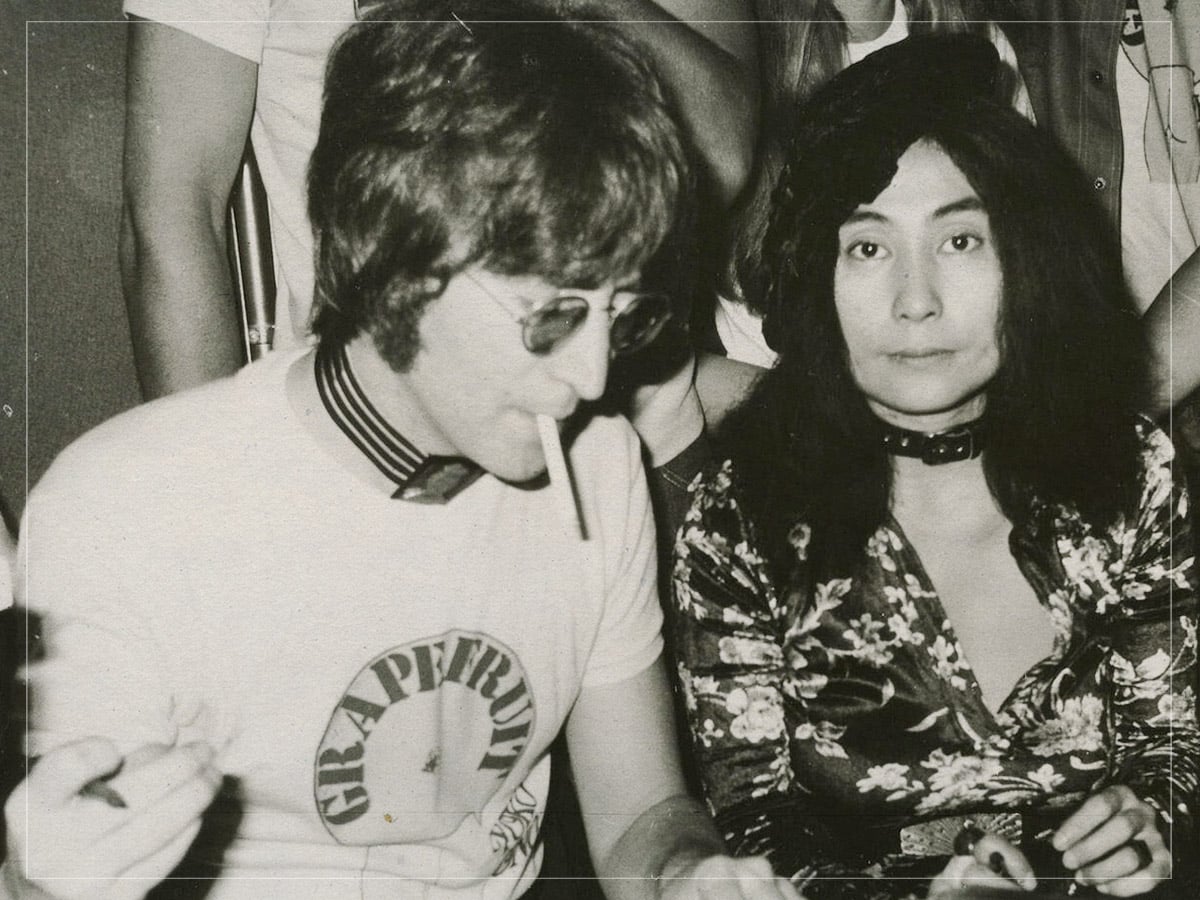
Paul, meanwhile, whether as a power play or out of simple obligation, increasingly grabbed the reins of the band’s daily business, and as evidenced in the Get Back documentary, was clearly the new musical chief of the group, as well, largely because Lennon, in the throes of drug addiction, couldn’t be counted on. In a better world full of reasonable men, The Beatles collectively would have recognised that they’d outgrown one another at the end of the ’60s, and could have respectfully parted ways with a hug and a bow. It’s easy to forget that these were still young men, however, born in a time and place when it was a lot easier to communicate vulnerability through hostility rather than warmth.
By 1969, with the fraying seams of the band obvious to just about everybody, Lennon’s drug-aided paranoia increased, and he began accusing McCartney of various types of musical and financial sabotage. “He always suspected me,” McCartney later told biographer Hunter Davies, “He accused me of scheming to buy over [The Beatles publishing company] Northern Songs without telling him… I bought a few shares, about 1,000, I think. John went mad, suspecting some plot. Then he bought some. He was always thinking I was cunning and devious. That’s my reputation, someone who’s charming, but a clever lad.”
Logic might suggest the demise of The Beatles would liberate its members and ease any lingering tensions, and when it came to most of the relationships within the band, that was the case, as numerous collaborations continued between the ex-bandmates on one another’s subsequent solo albums. Lennon, however, wasn’t extending any such olive branches to McCartney. To the contrary, he used his 1971 album Imagine, a record most famous for an anthem about peace and brotherhood, to Trojan horse in one of the nastiest diss tracks of the pre-hip-hop age.
‘How Do You Sleep’ remains exhibits A, B, and C of the Lennon-McCartney feud, a terribly petty, bitter, and almost Trumpian example of a man who’s experienced incredible good fortune, but can’t move past his own insecurities and imagined slights. It’s no coincidence that most of Lennon’s attacks on McCartney were directed squarely at Paul’s music, a concerted effort to undermine his partner’s contributions to the Beatles’ greatness, which would thus elevate Lennon’s own grandeur as a direct consequence.
“The only thing you done was ‘Yesterday’,” John infamously sings on ‘How Do You Sleep’, but there are crueler and more telling lines than that: “A pretty face may last a year or two / But pretty soon they’ll see what you can do / The sound you make is muzak to my ears / You must have learned something in all those years”.

In Lennon’s defence, he supposedly believed he was returning fire after McCartney had decided to get personal first, in a more subtle fashion, on his own solo track ‘Too Many People’, which Paul later acknowledged did include a small dig at both John and Yoko: “Too many people preaching practices / Don’t let them tell you what you wanna be”.
“I felt John and Yoko were telling everyone what to do,” McCartney told Mojo in 2001, explaining the origin of the song, “And I felt we didn’t need to be told what to do. The whole tenor of The Beatles thing had been, like, to each his own. Freedom.”
In the wake of ‘How Do You Sleep’, the Lennon-McCartney relationship was at an all-time low, but things were always more complicated than they seemed. While it was always easy to take shots at one another or roll their eyes at each other’s respective artistic choices in the ‘70s, the mutual respect that had been established way back in 1957 was still there under the surface. In the film that accompanied Imagine, Lennon, in a moment of genuine self-awareness, said that ‘How Do You Sleep’ was “not about Paul, it’s about me. I’m really attacking myself… The only thing that matters is how he and I feel about these things, and not what the writer or commentator thinks about it. Him and me are OK.”
For his part, McCartney was still quite plainly hurt and angry about the song, but he never abandoned his old friend. “Nobody knows how much I helped John,” he told Hunter Davies, “Me and Linda went to California and talked him out of his so-called lost weekend [in 1975], when he was full of drugs. We told him to go back to Yoko, and not long after, he did. I went all the way to LA to see the bastard. He never gave me an inch, but he took so many yards and feet.”
Lennon’s ex-wife, Cynthia Lennon, wrote in her own memoir that “John’s style was to walk away and stay away, as he did with me: once his mind was made up, he didn’t go back. But he and Paul had had a deep and enduring affection for each other since they were teenagers, and it had never disappeared. The two had never been close after The Beatles’ split, but I know they’d met and talked a number of times.”

One of those occasions from the mid ’70s was later fictionalised in a 2000 TV movie called Two of Us, directed by Let It Be director Michael Lindsay-Hogg of all people, in which John (Jared Harris) and Paul (Aidan Quinn) are shown chatting and sorting through their entire relationship in a satisfying bit of Beatle fan fiction. In reality, the two men rarely, if ever, got ‘real’ with each other. Deeper insights more often travelled from one to the other via newspaper clippings.
There was a touching moment in the recent film McCartney 3.2.1, in which Macca discusses the stories behind various Beatles songs with producer Rick Rubin. At one point, Rubin mentions finding a quote from an interview in which Lennon called McCartney “one of the most innovative bass players that ever played bass, and half of the stuff that’s going on now is directly ripped off from his Beatle period. He’s always been a bit coy about his bass playing, but he’s a great, great musician”. McCartney is touched by this rare example of praise from John, and says, “That’s beautiful. I hadn’t heard that before,” adding that two lads from Liverpool rarely knew how to give compliments or say they cared about each other.
In classic John-Paul fashion, though, there is more to the story. Rubin had selected a quote from one of the last interviews Lennon ever gave, a rather famous and frank discussion with Playboy magazine in 1980. Lennon had, indeed, credited Paul for his skilled musicianship in that chat, but he also called him an “egomaniac” when it came to anything aside from his bass playing. In the same interview, Lennon, now a very wealthy 40-year-old man settling into a clean and sober home life with Yoko and their son Sean, still found it necessary to fire off numerous criticisms of McCartney, including the old nugget that Paul had intentionally tried to torpedo John’s songs in the studio.
“Subconscious sabotage,” Lennon called it, “Usually we’d spend hours doing little detailed cleaning-ups of Paul’s songs; when it came to mine, especially if it was a great song like ‘Strawberry Fields’ or ‘Across the Universe,’ somehow this atmosphere of looseness and casualness and experimentation would creep in. [Paul] will deny it ’cause he’s got a bland face and he’ll say the sabotage doesn’t exist. But this is the kind of thing I’m talking about, where I was always seeing what was going on.”
The fact that Lennon was still bothered by thoughts like this in his final days, or that he felt the need to bring them up in interviews, is the saddest part of the whole Lennon-McCartney saga, and where a lot of other rock and roll feuds capture a moment in time, later finding their combatants coming to an understanding, or at least moving on, this one never got the resolution it deserved. That didn’t need to be a joyous Beatles reunion, either, but simply an indication that John Lennon had truly found the inner peace that he was always looking for, that he could look back on The Beatles, and his friendship with McCartney, as a remarkable thing to be grateful for, warts and all. Sadly, he never got there.

Never Miss A Beat
The Far Out Beatles Newsletter
All the latest stories about The Beatles from the independent voice of culture.
Straight to your inbox.