


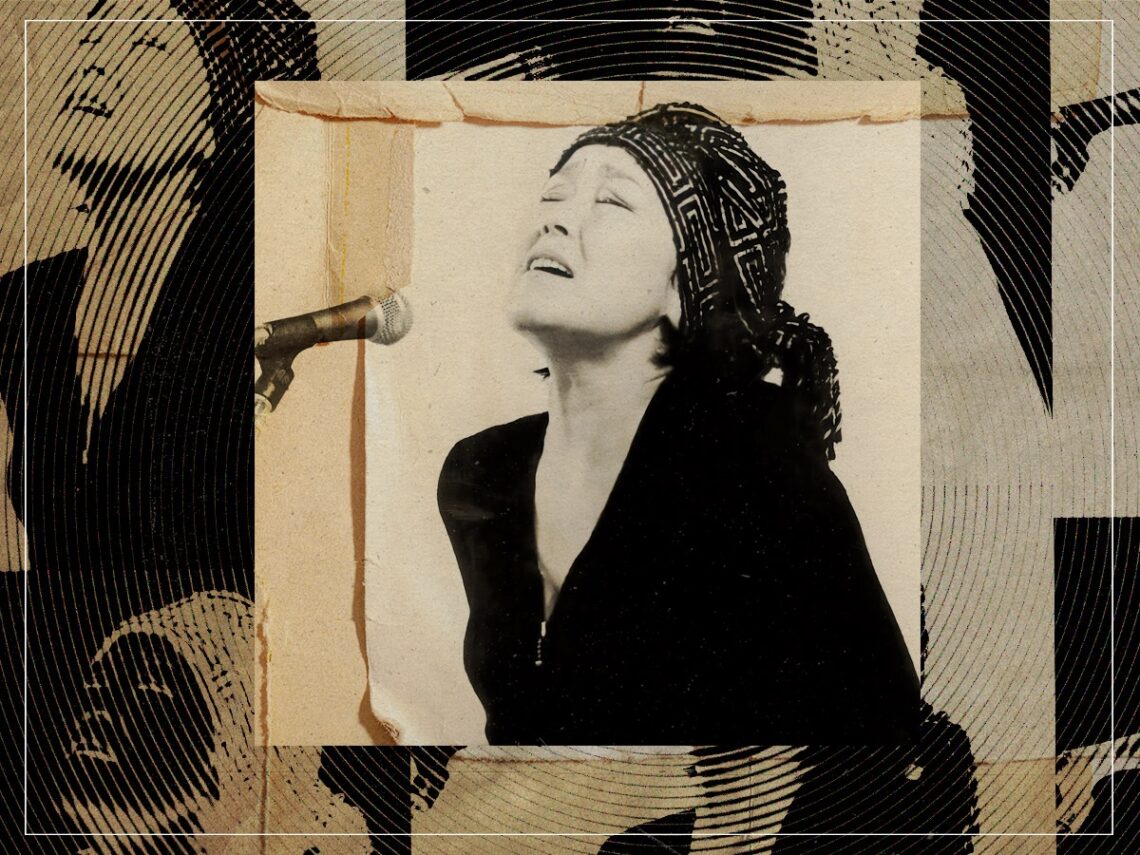
Sainkho Namtchylak: the singer who gave a revolutionary voice to Tuva

Deep in the remote landscape of southern Siberia lies the often-overlooked republic of Tuva. Officially ruled over by the Federation of Russia, the region has a history going back thousands of years to 209 BC when the Xiongnu Empire controlled it. Throughout their incredibly rich and diverse history, the people of Tuva have maintained strong connections with their cultural heritage and traditions, especially with regard to the music of the republic. However, pioneering artists like Sainkho Namtchylak have since dragged the music of Tuva into the modern age, experimenting with tradition.
Tuva is rarely viewed as a beacon of musical expression, particularly for those in the West. Given the remote nature of the republic and its comparatively low levels of modern infrastructure, cultural exports from Tuva rarely reach the shores of the United Kingdom. Nevertheless, the region has fostered something of a legendary reputation within certain circles for its unique and distinctive style of traditional folk singing. Khöömei is the name of a traditional style of throat singing, which has characterised the culture of Tuva for centuries. This distinctive music provided early inspiration for Namtchylak, who set about redefining the expectations of her region.
Growing up in a remote village in south Tuva during the 1960s, Namtchylak was discouraged from pursuing her keen interest in music and singing. At the time – and still, to an extent, within the modern-day – traditional singing was seen as an exclusively male exploit. Even after she studied music in Tuva, Namtchylak was denied qualifications due to her gender. Of course, at the time, Tuva was presided over by the U.S.S.R., which allowed the budding young vocalist to travel to Moscow to study, which she did.
While studying in Moscow, Namtchylak was exposed to the defiant sounds of avant-garde and experimental music, which immediately endeared itself to the singer. Although she briefly returned to Tuva following her studies, joining the folk outfit Sayani, Namtchylak could not shake the influence of the experimental music she had heard in Russia’s capital. As such, it did not take long for her to return to the city, performing alongside a variety of other experimental artists.
Due to the secretive nature of music within the U.S.S.R., it was not until after the fall of communism in Europe that listeners outside the Eastern Bloc were exposed to the revolutionary sounds of Sainkho Namtchylak. The singer managed to combine the distinctive, visceral sounds of Tuvan khöömei throat singing with experimental, avant-garde jazz as well as modern electronic music. Her revolutionary approach to music has completely redefined expectations of traditional throat singing, modernising the genre while retaining the sense of tradition and pride that the old-school throat singing held.
An unavoidable portion of khöömei’s appeal comes with its deep connection to nature. The entire region of Tuva is deeply in touch with the importance of nature and the natural world. Particularly during the traditional period of Tuvan throat singing, vocalists would often sing inside caves or other natural surroundings, largely as a means of artificially projecting the voice during a time before microphones. However, this also imbued the music with an incredible feeling of being connected to the natural world. Curiously, despite all the influences of electronica and modern avant-garde, Namtchylak’s work manages to retain that organic feeling, too.
Namtchylak continued to perform and record tirelessly throughout the 1990s and into the early 2000s. Even a coma, the result of a hate crime that she initially believed was a punishment from God for her musical creations, could not quell the vocalist and composer’s artistic expression. In fact, the Tuvan native continues to perform in the modern age—having last toured in 2021 to promote the release of her latest album, Manifesto, which she recorded alongside the industrial group Minim.
It almost goes without saying that no other vocalist has had the same all-encompassing impact on traditional Tuvan music as Namtchylak. More than that, though, she has inspired countless other artists to experiment with the music they already have. Nothing is sacred; if you want to use traditional folk music as a basis for expression and experimentation, what gives the purists a right to stop you?
