


How the Russian Revolution of 1917 changed cinema forever

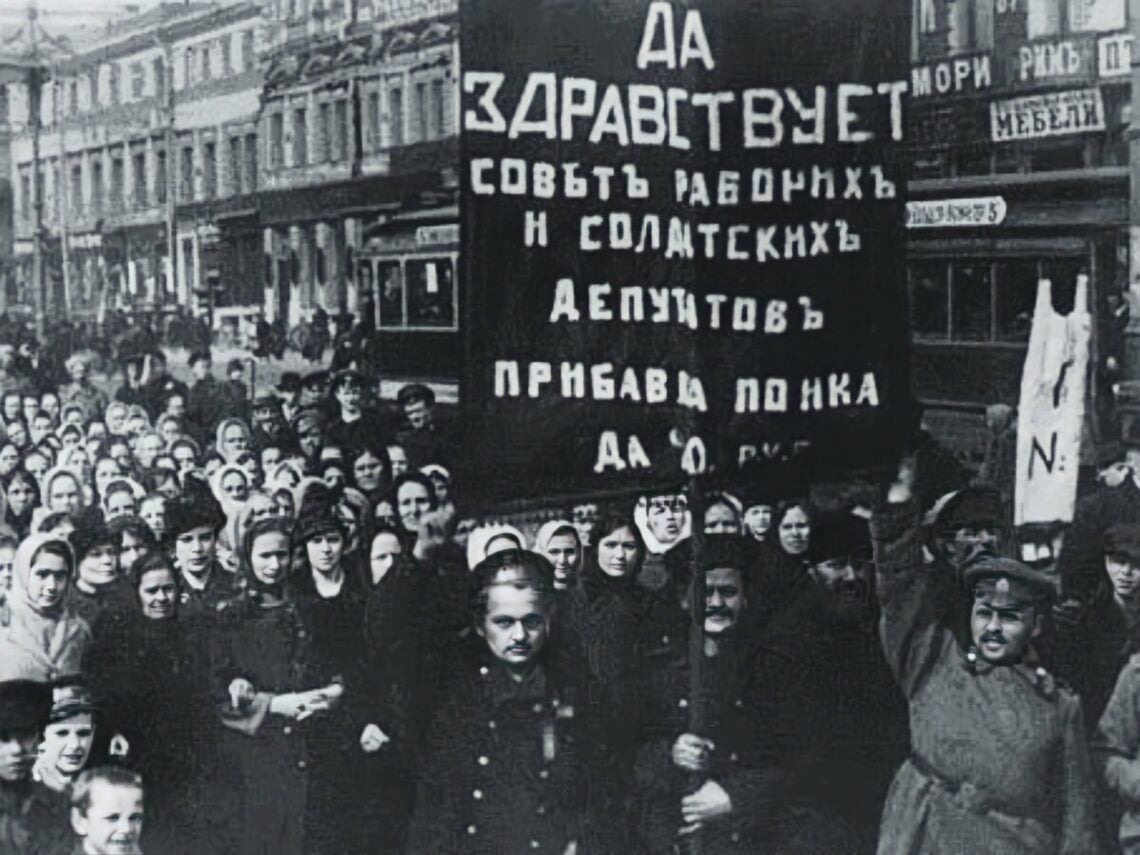
After the Russian Revolution in 1917, the country’s filmmakers had a big problem. Most resources in Russia were scarce, so naturally, food and other essentials were held in higher regard than other more luxury items, and for movie hopefuls, this meant that film stock was in incredibly short supply. Of course, the medium of film had only just started to move forward in the early part of the 20th century, so this was another dent in Russian filmmaking’s journey.
However, Russian filmmakers used what they had available to continue making their movies and many shots from old films still were available and needed to be reused. Film theorist Lev Kuleshov found that audiences would react differently to a scene depending on what shot came before and after it. For instance, an actor appeared to be expressing a certain emotion after the previous shot showed a different object, say an attractive partner or a funeral procession, but the shot of the actor was actually always the same shot.
This gave rise to Russian filmmakers’ understanding of the importance of montage, a sequence of different shots that give their sum a different collective meaning dependent on what has been shown. Filmmaker Sergei Eisenstein used this knowledge to inform his own works and create propaganda films for Russian citizens to support the ongoing revolution.
Eisenstein began to experiment with varying features, like the duration of a shot, how the camera moved and its degree of emotion, to see how audiences reacted. For instance, in Strike, we find in his films montages of cows being slaughtered followed immediately by soldiers being killed, while October sees Christian iconography quickly interposed with symbolism from other religions, creating a critique of religion in sum that they are all essentially the same.
Dziga Vertov was another Soviet filmmaker who took Eisenstein’s montage imperative and took it to the next level. His most significant work, Man with a Movie Camera, departed from the continuity of Eisenstein’s works – in which one image leads symbolically to the next, creating a wider meaning – by creating a sense of time and place in a broad examination of city life.
Vertov’s film depicted several scenes in Moscow, Kyiv and Odesa that merely attempted to explore the kind of activities that take up an average day as a citizen of the Soviet Union. We see a game of football, people swimming, factory workers, a funeral, and a baby being born, everything essential to human life in the early 20th century.
To create that sense of a city coming to life at dawn, Vertov directs his brother Mikhail Kaufman to shoot a number of images of buildings and close-ups of objects. Not only did Man with a Movie Camera use montage to an excellent degree, but it also pioneered the use of slow and fast motion shots, match cuts, split screens and tracking shots, all mainstays of contemporary cinema.
For instance, one of the most famous match cuts of all time is in Stanley Kubrick’s 2001: A Space Odyssey as the prehistoric ape’s bone weapon is beautifully cut to a space station orbiting beyond Earth’s atmosphere, indicating a great passing of time and also creating a profound theoretical meaning, in which humanity’s ‘weapon’ is the technology they have created.
Of course, this iconic cinematic moment would be dust in the wind if it were not for the inventive filmmaking of Eisenstein and Vertov, and pretty much every film in contemporary cinema, even since the 1960s or so, uses at least one technique that they helped to pioneer. What boxing film does not use the highly effective training montage? Which action film would be foolish enough to eschew the slow-motion shot? We also often find a match cut between what is said and what is shown next in a comedy film, creating humour through association.
So it was the scarcity of film stock that led Russian filmmakers to innovate the way they could imbue meaning in their films by using shots from older movies. This created the notion of montage, later adapted by Dziga Vertov to build up a sense of time passing and place-setting, which was later used in scores upon scores of moving. Montage is ten-a-penny in modern film and has been for some time, but we have the likes of the early Russian filmmakers to thank for the technique, even if it was created out of necessity.
Check out Vertov’s Man with a Movie Camera in full below.
