


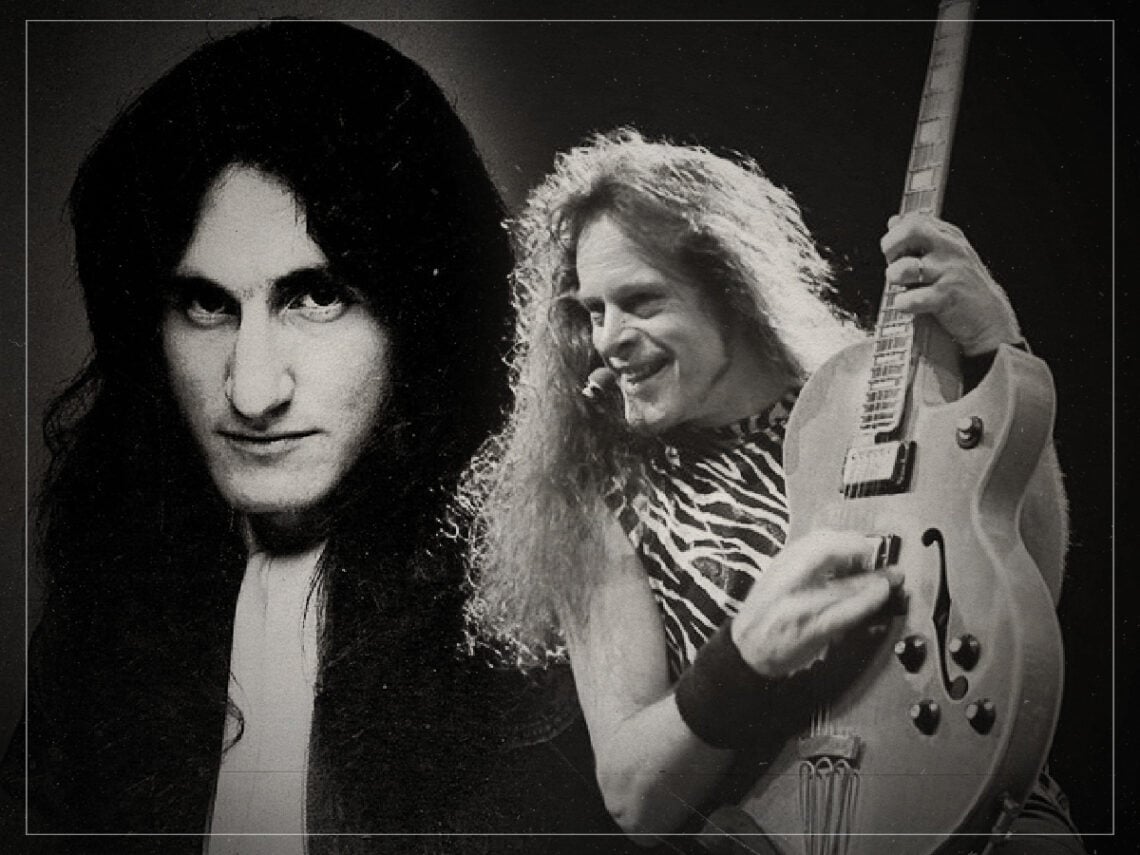
Rush’s depressing tour with Ted Nugent: “Our dreams weren’t going to come true”

There’s an incredible amount of luck and good fortune that saw Rush beat all the odds to grow as one of Canada’s biggest names in rock.
Not that their global conquest was an accident, charged by the power-trio’s electric synergy and ambitiously colossal songcraft, but Rush was indeed an outfit that charted their own course in confounding fashion. Pursuing a progressive direction just as ‘prog’ was growing stale, Rush would finally hit the ground running as if punk never happened in the late 1970s, before finding themselves unlikely stars of the MTV age when adding massive new wave synths to their sharper and more refined sound for the 1980s.
Yet, it wasn’t all plain sailing. 1975 was a pivotal year for Rush, when their highly idiosyncratic records and live shows needed to start commercially paying off lest their Mercury label drop them. Having entered the fold the previous year, drummer and principal songwriter Neil Peart brought with him a pull away from the hard blues of their LP debut and into the complex compositions of Fly by Night. Classic Rush was beginning to take shape.
Rush would follow up Fly by Night with that year’s Caress of Steel, a detour into a deeper mood, atmospheric production, and narrative sequences. Leaving critics cold and selling below Mercury’s expectations, a black cloud began to hover over the subsequent Caress of Steel Tour, Rush’s demoralised North American road playing smaller clubs to thin ticket sales, leading to the tour’s being dubbed the ‘Down the Tubes Tour’.
“We were playing with a fellow named Ted Nugent, and both of us are playing small venues and clubs in the south and southwest,” Lee recalled on the Talkin’ Rock With Meltdown podcast in 2019. “It was seeming like our dreams weren’t going to come true in the near future.”
Nugent was going through a similar period of career and creative transition. Finally putting his former band, The Amboy Dukes, to bed in 1975, the frontman took himself away to the Colorado wilderness to rejuvenate his rock antenna, corralling a new band to cut his debut solo record and hit the road, enjoying Rush as the support across several dates.
They were under different pressures. Ted Nugent had been received fairly well, its accompanying tour cementing a reputation as one of the era’s premier hard rock outfits and establishing ‘the Nuge’ persona in earnest. But for Rush, the tour was a slog, ploughing on through with label pressures above and an urgent understanding that creative gambles were fast running out.
“But then, we went into the studio and did 2112, and it really did change everything for us; it really turned the whole trajectory around,” Lee furthered.
Curiously enough, Rush once again ignored commercial demands from the label and cut the complex 2112, boasting a 20-minute title track just on the cusp of punk’s insurrectionary upheaval. They needn’t have worried, Rush’s fourth LP shooting up to number five in the Canadian albums charts and paving their path to rock royalty around the world.
