


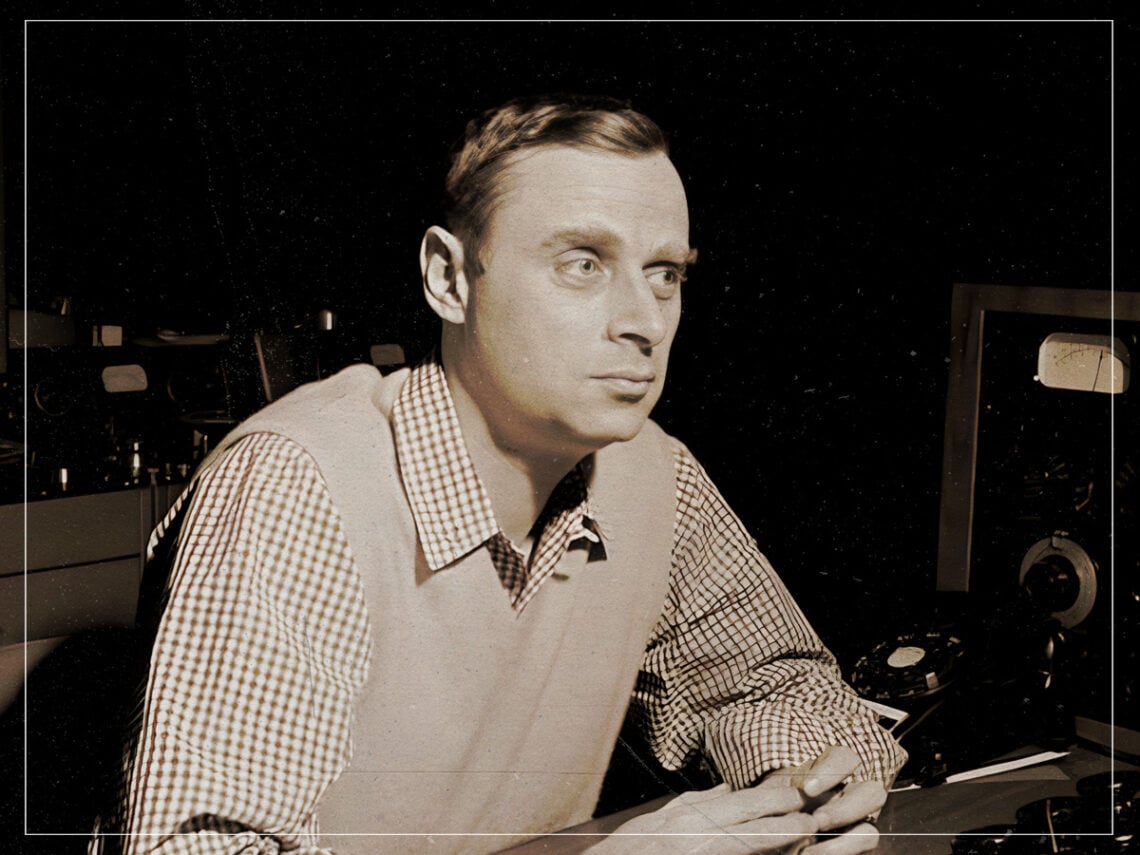
Rudy Van Gelder: the forgotten mastermind behind the sound of jazz

With his name attached to several thousand recordings, including virtually all of the sessions for Blue Note Records from 1953 to 1967, studio engineer Rudy Van Gelder’s audio expertise proved instrumental in shaping modern jazz, famed for capturing the artform’s nebulous character and translating a performance’s sonic space to record.
Boasting credits on some of jazz’s most lauded LPs, including Horace Silver’s Song for My Father, Miles Davis’ Walkin’, and Herbie Hancock’s Maiden Voyage, Van Gelder forged a towering legacy despite little knowing of his name.
“My ambition from the start as a recording engineer was to capture and reproduce the music better than other engineers at the time,” Van Gelder told JazzWax in 2012. “I was driven to make the music sound closer to the way it sounded in the studio. This was a constant struggle – to get electronics to accurately capture the human spirit.”
The recording bug bit Van Gelder at a young age. Playing with ham radios as a kid growing up in New Jersey, Van Gelder would record his classmates’ bands on a DIY assemble of constructed mixers and a Presto disc recorder for cutting acetate, eventually offering his homemade services to local jazz artists keen for a 78-rpm recording of their work. Initially a passion hobby, Van Gelder worked in his parent’s living room in the evenings after a day’s work as an optometrist, quitting in 1959 to pursue jazz engineering full time.
Similar to Steve Albini, Van Gelder placed particular emphasis on microphone placement. Positioning his trusted Neumann condensers to capture the sonic depth and dimension of the jazz groups that passed through his folks’ Hackensack house, Van Gelder held a deep affection for the mic: “I loved the way they looked. They were a symbol of everything I loved about recording studios. I loved all microphones. It was almost an obsession. When I’d see photos of jazz musicians recording or performing, I found myself looking at the mics, not them. The microphone became everything for me.”
Eventually moving to his own studio in Englewood Cliffs in 1959, he cut one of jazz’s most celebrated albums: “The most momentous recording of the 1960s for me was John Coltrane‘s A Love Supreme. It was hypnotic. It was exciting. It was different. But I didn’t have those views when it was recorded.”
Van Gelder elaborated further on how the record’s magic struck him later in life: “I came to that realisation only when I remastered the album for its digital reissue in 2002. You have to understand, I was busy making sure that the work was recorded perfectly. It wasn’t until I was working on updating the original master that I listened intently to the music.”
After Blue Note Records boss Alfred Lion retired, the label began sourcing other engineers. Van Gelder would spend the 1970s working for crossover label CTI, including credits on Freddie Hubbard’s Red Clay and Grover Washington Jr’s Mister Magic. An enthusiastic champion of digital technology, Van Gelder remastered his analogue Blue Note recordings for the label’s RVG Edition series in 1999.
Honoured by the National Academy of Record Arts and Sciences with its Trustees Award before dying in 2016 at the age of 91, recognition for his indelible legacy on modern jazz did finally start to catch up with him later in life. Speaking to NJ, Monk’s son TS made Van Gelder’s lasting reputation very clear, declaring: “I would say [my father and Van Gelder] learned how to record jazz together. He really, really got it right. You can listen to a Rudy Van Gelder from the 1950s that sounds like it was recorded today.”
