


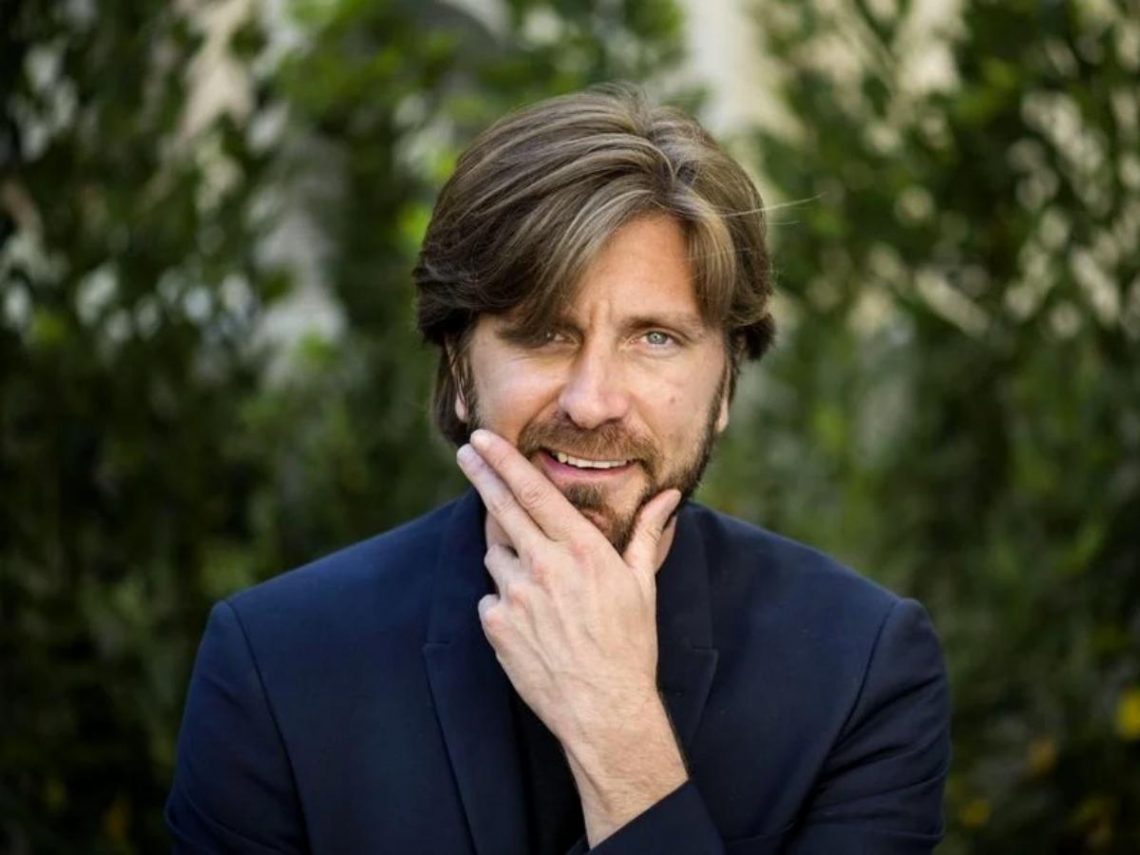
Ruben Östlund explains why he hates violence in movies

Within the sphere of modern arthouse filmmaking, there’s nobody quite like Ruben Östlund. The Swedish director has developed a unique brand of black comedy, evident in his celebrated works such as Force Majeure and The Square. Serving as incisive critiques of contemporary sociopolitical mores, Östlund’s surreal and haunting films are perfect examples of what modern political filmmaking should look like in order to be effective.
Last year, Östlund made a big splash with his latest directorial effort, The Triangle of Sadness. An explicitly satirical take on current social media culture and increasing economic inequalities, The Triangle of Sadness examines the pernicious influence of capital on human psychology. Recognised as one of the best films of 2022, Östlund earned multiple prestigious accolades and now has the chance to win big at the Oscars.
Ever since The Triangle of Sadness picked up Oscar nominations for top categories like ‘Best Picture’ and ‘Best Director’, many film fans have been searching online for information about Östlund’s approach to cinema. One thing that may surprise viewers is that Östlund is completely against cinematic violence, despite the fact that most of his films exhibit political and ideological violence that poses a major threat to the status quo.
During a conversation with The Guardian, Östlund criticised filmmakers who resort to using violence without giving it a second thought. According to Östlund, cinematic violence has real consequences on societal actions. The director noted: “So many directors kill people left and right. I have never experienced anything like that in my life. And I want my films to be true to my experience.”
While talking about the phenomenon, Östlund added: “The industry is perverted when it comes to violence. Of course, it’s an easy way to create a dramatic event. But my view is that human beings are copycats – we imitate what we see. If you’re reproducing pictures of men running around with guns, people will imitate that. Look at any high-school shooting. The images the killers take of themselves in the mirror. It’s so obvious to me that they’re copying a character.”
For many film fans who have grown up loving genre filmmaking, Östlund’s comments will seem controversial. Ranging from Akira Kurosawa to John Woo, many talented auteurs have used the poetry of action cinema to create innovative masterpieces that fall under the category of arthouse action. While violence for the sake of violence is pointless, artists have often used it as a language to reflect the brutal realities of the world we inhabit.
Östlund also compared the trend of cinematic violence to the ideological programming in romantic comedies: “Apparently, it’s the same with our depictions of romance. People who love romantic comedies – they’re the ones who get divorced the most. They move on to the next partner. They move on to the next rom-com.” While you might not agree with Östlund’s observations about the ideological structures of modern cinema, the director stands by his own moral codes.
