


‘LifeHack’ movie review: a digital gimmick stretched too thinly

The SXSW film festival tends to promote titles that engage with new narrative styles, but LifeHack’s screenlife approach can’t sustain the length of an entire feature.
The birth of new filmmaking tools has given filmmakers the opportunity to find different ways of telling stories, and few contemporary movements were as influential as the ‘found footage’ subgenre that emerged with The Blair Witch Project. It wasn’t only a clever method to instil a greater sense of realism, but a way for studios to make cheaper films without stars, leading to overindexing. Found footage horror films may have become less common in recent years, but taking their place has been the ‘screenlife’ style, in which the events of the story are captured from the screens of computers, phones, and other digital devices.
Like the found footage movement, screenlife films began strict as a subsection of horror, but they’ve been to slowly expand to other genres and earned middling results; 2018’s Searching was seen as a compelling mystery told from the perspective of a parent, whereas last year’s War of the Worlds was lambasted as one of the cheapest, most ridiculous ways of making a science fiction epic. LifeHack, a new screenlife film from British director Ronan Corrigan in his directorial debut, attempts to be both a techno heist thriller and a coming-of-age dramedy.
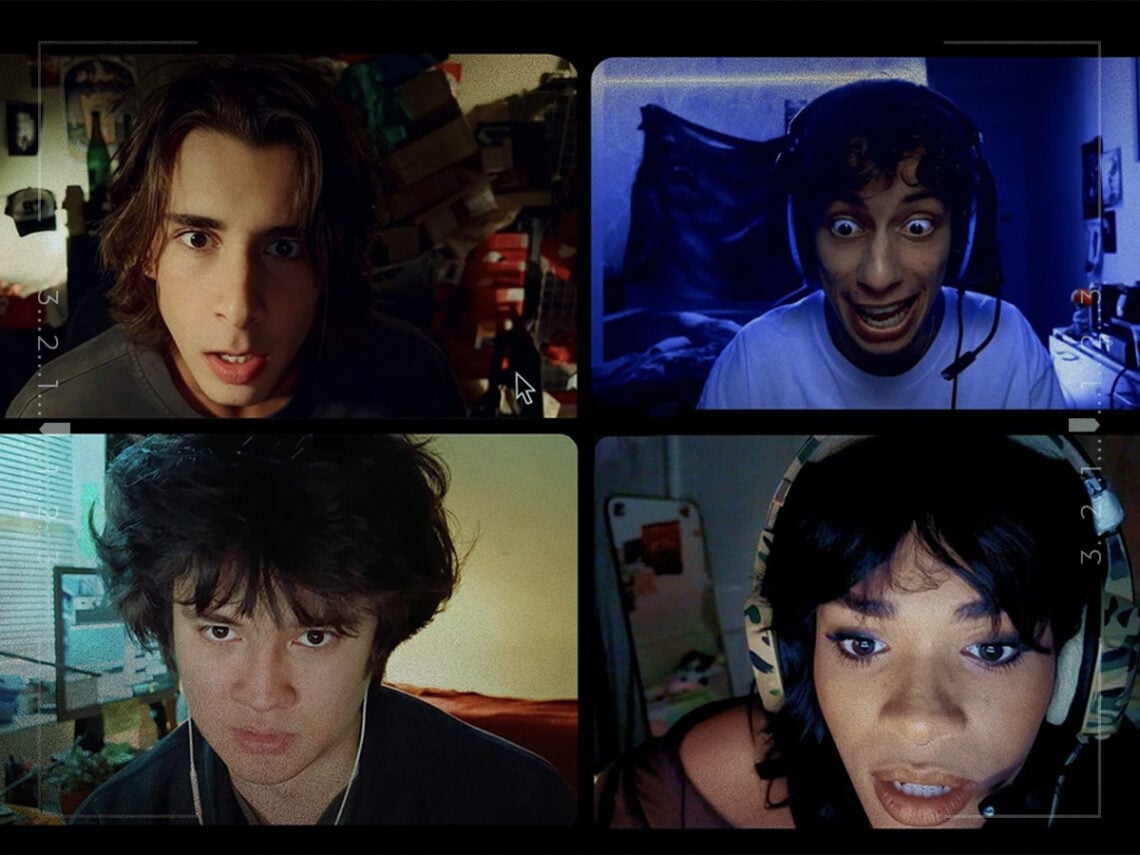
It’s not uncommon for teenagers to spend a majority of their time interacting with one another from behind the screens of their personal devices, and LifeHack establishes the relationship between the 17-year-olds Kyle, played by Georgie Farmer, Alex, played by Yasmin Finney, Sid, played by Roman Hayeck-Green, and Petey, played by James Scholz, who spend their free time running online scams and duping other hackers. Kyle’s digital prowess has unfortunately not translated to life beyond the Internet, and he faces pressure to do something of note before he reaches adulthood. It’s a result of his mounting frustration about the way that the system is stacked in favour of the privileged that Kyle enlists his friends to pull a con on Charlie Creed-Miles’ Don Heard, a wealthy billionaire who initiated a new cryptocurrency strategy that’s assumed to be fraudulent.
The issue that screenlife films have faced is their stagnation, as while found footage films can at least allow their characters to move to different environments, screenlife stories like LifeHack keep their leads bound to their desks. On the one hand, this can be seen as a natural expression of the anxieties that many young people felt when isolated during the Covid-19 pandemic, but it’s hard to find any real stakes in LifeHack when any implemented consequences are theoretical, and the rare times in which the film attempts to reference activities from beyond the desk are awkward and expositional.
The film does have an interesting concept, and a relevant one, given that Heard is an obvious stand-in for Elon Musk, but the group of young Robin Hoods’ method of infiltration is only sparsely authentic, and although some tactics of email infiltration are somewhat compelling, many of their means of collecting information are simplified for the sake of keeping a zippy tone. Moreover, it doesn’t help that LifeHack’s editing involves constantly flipping between screens as jarring noises, pop-ups, and fluctuating servers are incorporated, which, while it is a realistic portrayal of the low attention span of a contemporary teenager on the Internet, makes for an uneven viewing experience.
The hard reality is that legitimate hacking, as portrayed more realistically in recent films like Blackhat and The Girl With The Dragon Tattoo, tends to be an arduous process; Michael Mann and David Fincher only had to briefly allude to the complexity of digital espionage because they made stylised films with compelling characters that could take a more impressionistic look at the Internet, but Corrigan’s inclusion of music, time jumps, and other editing devices seems to compromise the central gimmick. The rare instances in which the film tries to include a real-life threat, such as an infiltration by Jessica Reynolds’ Lindsey that is perceived by Kyle and his friends is so unbelievable that it is rendered laughable.
The condensed time frame of the story wouldn’t have been a big issue if LifeHack wasn’t also trying to say something meaningful about generational disenfranchisement, and sure, there’s something interesting about Kyle’s anxieties about the future, given that he is the first generation to believe their lives will be worse than their parents, but anything bordering on substantial feels iterative and insincere. As for Creed-Miles, his villainous role may have been more compelling if 2025 didn’t already have two much more interesting Musk-esque antagonists in Superman’s Lex Luthor and The Naked Gun’s Richard Cane.
LifeHack may be intended to empower teenagers, but it’s not exactly an endorsement of their virtues, with the smug, obnoxious attitudes of the characters making it challenging to invest in their goals, even when their intentions seem pure. Screenlife films may have potential, but this title is a case of when the style feels like a hindrance to what would have been more satisfying as a mixed media project.
