


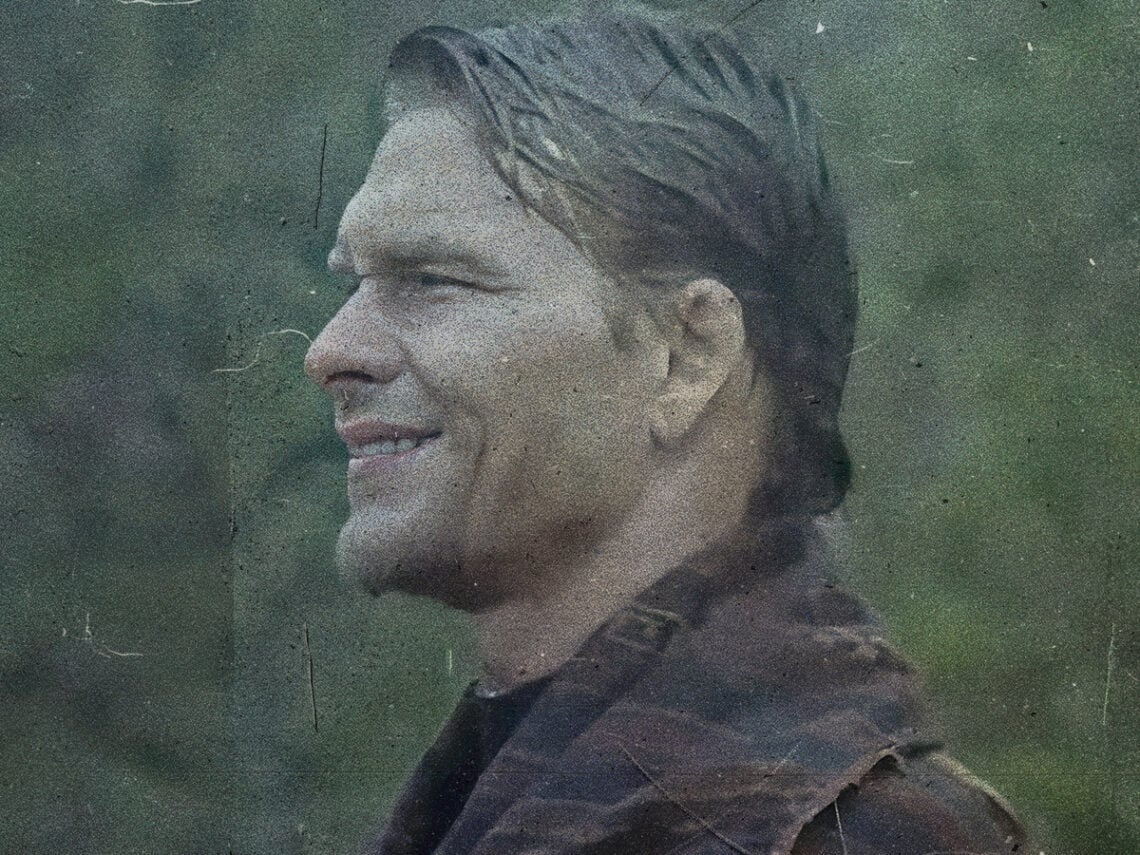
The role Patrick Swayze said he was “born” to play: “It was a lot of fun for me”

By the early 2000s, the leading man status Patrick Swayze enjoyed in the Hollywood of the ’80s and early ’90s was a thing of the past. Aside from a memorably skin-crawling supporting role in 2001’s Donnie Darko, his films from this era are largely forgettable.
Perhaps this is why, when an opportunity arose in 2004 to saddle up as a heroic leading man one last time, Swayze jumped at the chance. It didn’t even matter to him that it was within the context of a two-part Hallmark Channel TV miniseries, because the role brought together everything he’d dedicated his life to.
Indeed, as Swayze put it to Venice magazine, playing the legendary pulp adventurer Allan Quatermain in King Solomon’s Mines synthesised “all the training I’ve done in things like martial arts, horsemanship, stunt work, and just being a mountain man and survivalist.”
Even though he was already in his early 50s by ’04, Swayze still felt physically and mentally fit enough to tackle a character largely credited with inspiring the creation of many pulp heroes of the 20th century. Quatermain first appeared in H Rider Haggard’s novel King Solomon’s Mines in 1885, and the big game hunter and avid outdoorsman returned in 13 more novels, as well as four short stories.
Over the decades, the character was played on film by stars like Stewart Granger, Richard Chamberlain, and Sean Connery, but to a modern audience, his fame was eclipsed long ago by one of the whip-cracking, globetrotting, snake-hating characters he directly inspired: Indiana Jones. In fact, George Lucas has gone on record to say there would be no Indy without Quatermain.
“King Solomon’s Mines helped launch an entirely new form of storytelling that evolved into films like the Indiana Jones trilogy and Romancing the Stone,” Swayze explained, “although those films were all pretty tongue-in-cheek, and I think we take it much more seriously. We wanted to create a dramatic epic that had a sense of fun.”
Truthfully, though, there was another, much more personal reason for Swayze to sign up for what amounted to a slightly cheesy, throwback Hallmark adventure. He was born in 1952 and grew up watching the Granger version of King Solomon’s Mines, which arrived in 1950 and took the box office by storm.
Like most young lads of that time, Swayze was bowled over by the swashbuckling action, the glamorous damsels in distress, and the sweaty adventures in exotic jungles you’d get in Granger’s film and others of that sort. So when he was offered the role, it meant more than simply having another crack at being the leading man. Swayze reckoned he could put his own stamp on Quatermain, and slipping into those boots felt to him like he was “coming home”.
Ultimately, it felt like this character and this project were “the kind of period hero role that I was born for.”
The late star, who sadly passed away five years after King Solomon’s Mines, was also afforded the chance to weave something he was always passionate about into Quatermain’s story: conservationism. Playing an unrepentant big game hunter might have been the norm in 1885, and even in many of the previous screen incarnations, but by 2004, attitudes toward the barbaric practice of hunting had shifted hugely.
Therefore, Swayze’s Quatermain begins the two-part series as a “great white hunter”, but learns the error of his ways throughout the tale, and resolves to make up for the harm he has caused. He finishes the story as a wildlife conservationist, placing a character who was already close to Swayze’s heart even closer still. “It was a lot of fun for me,” he concluded warmly.
