


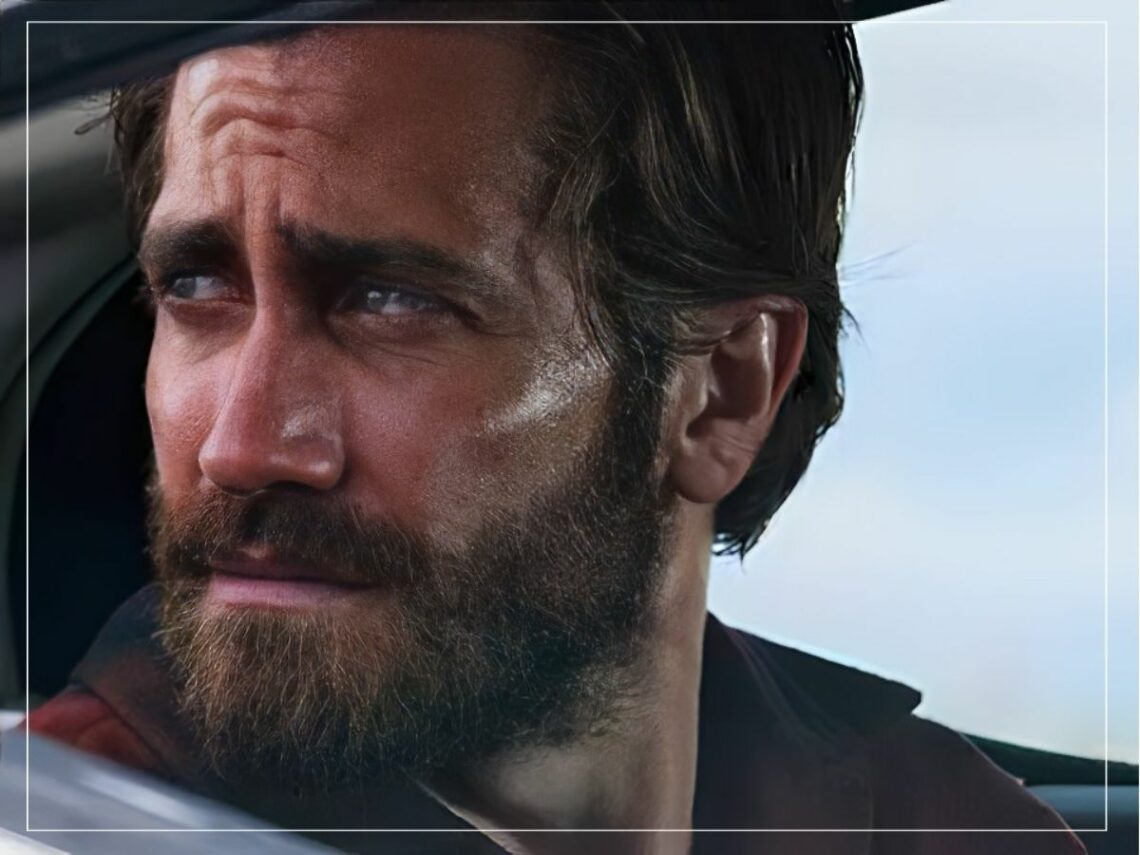
The role that almost derailed Jake Gyllenhaal’s career: “I learned a lot from that movie”

Jake Gyllenhaal‘s relationship with movie stardom has always seemed contentious. Thanks to his good looks, charisma, and famous profile, Hollywood has periodically tried extremely hard to fit him into a conventional movie star mould. This first occurred in 2004 with Roland Emmerich’s disaster epic The Day After Tomorrow, then again in 2010 with the rom-com Love & Other Drugs.
However, Gyllenhaal seemed ill at ease in such mainstream fare and responded by spending nearly a decade making smaller, more unusual and challenging projects to great acclaim. He was finally tempted back into the blockbuster realm with 2019’s Spider-Man: Far From Home, and since then has been furrowing a path as an action star in the likes of Road House and Michael Bay’s Ambulance. However, for fans of an actor who thrives in left-of-centre roles, these mid-range action pictures aren’t his forte, either.
In truth, Gyllenhaal’s career path has always spoken to a push and pull between art and commerce that can sometimes tip in the wrong direction. He appears especially wary of giving himself over entirely to blockbusters, and it’s not only because he prefers stretching himself with dramas, thrillers, and oddball comedies. It’s because his first major blockbuster as a leading man was an utter disaster that landed him in the middle of a controversy he was ill-equipped to deal with at the time.
When Gyllenhaal signed up for the video game adaptation Prince of Persia: The Sands of Time, he saw it as a chance to be part of an old-school Hollywood fantasy adventure. He played Dastan, a street urchin who discovers he is heir to the Persian throne in a supernaturally tinged ancient Middle East. The movie was a major Disney blockbuster produced by Jerry Bruckheimer, and it was supposed to start an all-conquering franchise, but poor reviews and slightly underwhelming box office put paid to those plans.
The movie being perceived as a failure was not the worst aspect for Gyllenhaal, though, who became the poster boy for a Hollywood whitewashing controversy that threatened to overshadow the film. Naturally, Gyllenhaal is not Iranian, nor is he of Middle Eastern or Muslim descent, and critics were sharp-tongued over Hollywood’s decision yet again to ignore people of colour in its casting decisions. By 2010, a groundswell was rising that it was about time Hollywood addressed this problematic trend, which had existed for as long as Tinseltown had been making films.
On the eve of the film’s release, Gyllenhaal tried to play down the controversy by arguing, “It’s not something I gave a lot of thought because all of it is such a fantasy. It’s based on a video game, not something out of history. There’s nothing real about this.”
Interestingly, Bruckheimer went on the offensive when questioned about whitewashing and argued that Gyllenhaal’s casting did have historical precedent. “Persians were very light-skinned,” he claimed. “The Turks kind of changed everything. But back in the 6th century, a lot of them were blond and blue-eyed.”
Reza Aslan, head of a Middle Eastern marketing firm who worked with the Prince of Persia filmmakers, confirmed Bruckheimer’s claim. “Iranians are Aryans,” Aslan told the Los Angeles Times. “If we went back in time 1,700 years to the mythological era, all Iranians would look like Jake Gyllenhaal.”
Despite these claims to historical veracity, the issue was always more about a systematic lack of representation in Hollywood, and Gyllenhaal later subtly hinted that he was wrong to accept the role. In 2019, he told Yahoo Studios that the firestorm of controversy made him more sensitive about his choices.
“I think I learned a lot from that movie in that I spend a lot of time trying to be very thoughtful about the roles that I pick and why I’m picking them,” he mused. However, Gyllenhaal admitted that, regrettably, mistakes may still be made.
“You’re bound to slip up and be like, ‘That wasn’t right for me,’ or ‘That didn’t fit perfectly,'” he concluded. “There have been a number of roles like that. And then a number of roles that do.”
