


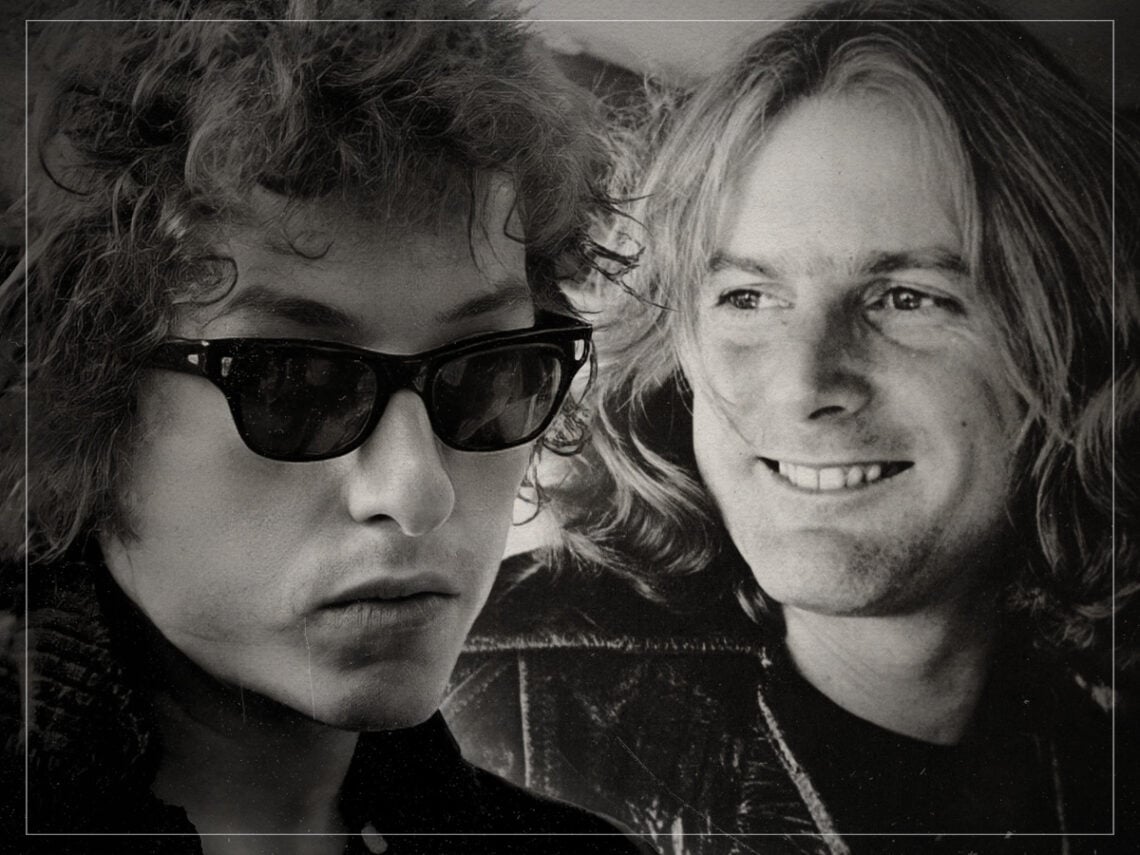
Why Roger McGuinn called Bob Dylan “the modern Shakespeare”

I often think there are two entry points into music fandom. The first is the musicality, the rhythm, the melodies, anything in the sonic sphere that catches your attention and pulls you into the textural world of music. The second entry point, the one through which I used to become a music obsessive, is lyrics.
Listening to the stories told by the greats of the industry and diving headfirst into their poetry can help open the doors to understanding music as a whole. Once the lyrics capture you, well then, the sonic structures upon which they live become all the more interesting, and you obsess over the worlds of rhythmic profiles or melodic compositions. And before you criticise that approach and label it inferior to the first, more music-led approach, just remember that Leonard Cohen was a writer long before the music was introduced, and he is now heralded as one of the greatest artists of all time.
But someone who straddled the line of both, relatively seamlessly, was of course Bob Dylan. While questions over his guitar playing are humorously raised, he was undoubtedly just a credible musician, as he was a lyricist. But there is simply no doubting that his lyrics are some of the best to have ever been penned. In fact, there is a strong case to be made that his lyrics are definitively the best to have ever been penned.
His storytelling was captivating, for one, blending tales of the abstract and real life consistently to deliver poignant pieces of social commentary. Whether it was ‘Blowin’ In The Wind’ or ‘Hurricane’, he had the ability to shock the general public into moral action, delivering it with a voice that was infused with every sense of human emotion.
But underneath those stories, he would deploy high level literary methods to pack songs with even more nuance. Wide ranging thematic images would be pulled into a succinct piece of music, with clever rhyming schemes to ultimately create a collage-like effect in his storytelling. It’s the sort of technical density that has rarely been seen in music and perhaps only been seen in long form writings like novels, films and plays.
So it’s no surprise that titans of the industry are desperate to label Dylan as our musical messiah, and the industry’s answer to perhaps the greatest literary figure in history.
“Dylan’s stuff is brilliant,” The Byrds’ Roger McGuinn said, before dropping the name many would be afraid to. “I coined the term that he was the ‘Shakespeare of Our Time’. It was like knowing Shakespeare here.”
He continued on, referencing even more legends of the literary world, as he showered the songwriter with praise. “Dylan was carrying on Kerouac and Ginsberg. The baton had been passed. I remember Ginsberg said, ‘I think we’re in good hands’. We did ‘Chimes of Freedom’ at Monterey Pop. I loved the imagery. You can’t pin it down as a peace song, or whatever, but it’s got overtones of that. It’s brilliant. I just identified with it and could relate to it.”
It’s high praise for sure, and only history will tell if Dylan is remembered in the same light as Shakespeare. But if anyone in music is going to threaten the famous playwright’s legacy, it will likely be Dylan.

Never Miss A Tale
The Far Out Bob Dylan Newsletter
All the latest stories about Bob Dylan from the independent voice of culture.
Straight to your inbox.