


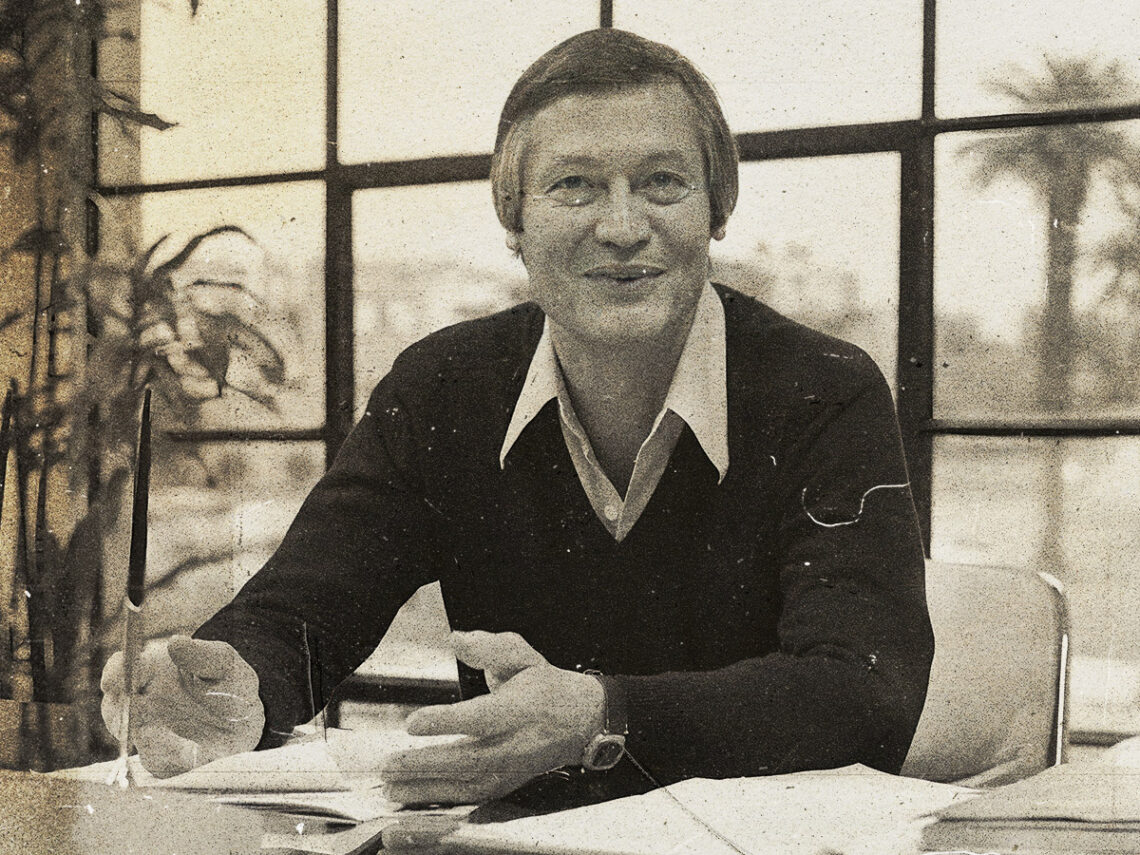
Roger Corman: ‘The Spiritual Godfather of the New Hollywood’

If the key to leaving behind a lasting legacy in the movie business is to inspire the generations that follow, it’s hardly a stretch of the imagination to call Roger Corman one of the most influential figures in the history of cinema.
He may have specialised in the ream of B-tier productions and lent his name to a ridiculous laundry list of credits as a producer, director, and occasional actor. Still, the names of those who got their foot in the door under his tutelage are nothing short of mind-blowing. If it wasn’t for Corman, then the complexion of Hollywood for the last 50 years would look irrevocably different, a testament to his towering standing.
Being known as ‘The Pope of Pop Cinema’ and ‘The King of Cult’ aren’t monikers typically bestowed upon those with a monolithic cultural footprint, but ‘The Spiritual Godfather of the New Hollywood’ certainly fits the bill. After all, the sheer volume of future greats that sat under his learning tree at one stage or another reads like a directorial hall of fame, underlining just how pivotal he’s been to the medium.
If that sounds even remotely hyperbolic, then consider that Ron Howard, Francis Ford Coppola, Martin Scorsese, Jonathan Demme, and James Cameron all collaborated with Corman at one stage or another during the formative years of their careers. They’ve all got Academy Awards for ‘Best Director’ under their belts and have combined to deliver some of the greatest films and biggest hits cinema has ever seen.
That extends to on-camera talents, too, with Jack Nicholson, Dennis Hopper, Tommy Lee Jones, Robert De Niro, and Sandra Bullock all appearing in Corman-backed productions. Cameron even proudly stated that he “studied at the Roger Corman Film School,” and he’s made a habit of repeatedly changing the game when it comes to both technological advances and eye-watering box office hauls.
That doesn’t even cover his role in bringing international auteurs to mainstream audiences, either, with films by such prominent icons as Federico Fellini, Ingmar Bergman, Akira Kurosawa, and François Truffaut making inroads into the American market. The distribution rights to their features were regularly picked up and handled by companies operated by… yep, Corman.
The Silence of the Lambs director Demme called him “the greatest independent filmmaker the American film industry has ever seen and will probably ever see”. It’s a career trajectory nobody would have predicted from somebody who made their producorial debut on 1954’s shoestring sci-fi fantasy Monster from the Ocean Floor. It lived up to its title as many of Corman’s low-budget genre flicks were wont to do.
Proving that enthusiasm and energy were the most important tools any filmmaker had at their disposal, Corman would laugh in the face of budgetary constraints that would trouble a lesser creative mind. He made it his business to knock out a succession of movies at a cost that would barely cover the catering budget of a major mainstream release.
Cost-effective, immensely profitable, and weaponising his background in engineering to meticulously plan out virtually every aspect of his productions in advance, a dollar has rarely stretched further than it has when placed in Corman’s hands. In some cases, that could be interpreted as a slight, but one of the reasons why he was so prolific is because he was so adaptable. There wasn’t a setback he couldn’t overcome, and if that work ethic was capable of being distilled down, bottled, and sold, then Hollywood would be a great deal more productive than it’s regularly been.
Before the prospect of ‘high concept’ movies or projects that could be sold on the back of an ‘elevator pitch’ became commonplace, Corman was all over that, too. All he needed was a simple, straightforward premise that was easily digestible and marketable to the general public, and he was off to the races. He didn’t sell stars, nor did he sell stories, but what he turned into one of his many signatures was the ability to win over financial backers, actors, crew members, and eventually the ticket-buying public through nothing more than a logline, whether he was dealing in Westerns, action, sci-fi, fantasy, or anything in between.
With over 600 credits to his name in a myriad of creative capacities stretching from the early 1950s to today, Corman has never been precious about his work. Some of cinema’s biggest names have become awfully protective of their legacy. Yet, none of them has made a mark even remotely comparable to that left by the titan of B-tier cinema on several generations of established directors.
A talent spotter like no other, Corman may not have been drowned in rapturous acclaim, but at the same time, the complexion of the entire industry would look markedly different without him, and not for the better. He was eventually bestowed with an honorary Academy Award in 2010. Still, the true barometer of his legacy is that it requires a lot less than six degrees of separation to draw a line from virtually any movie produced in Hollywood directly back to Corman.
