


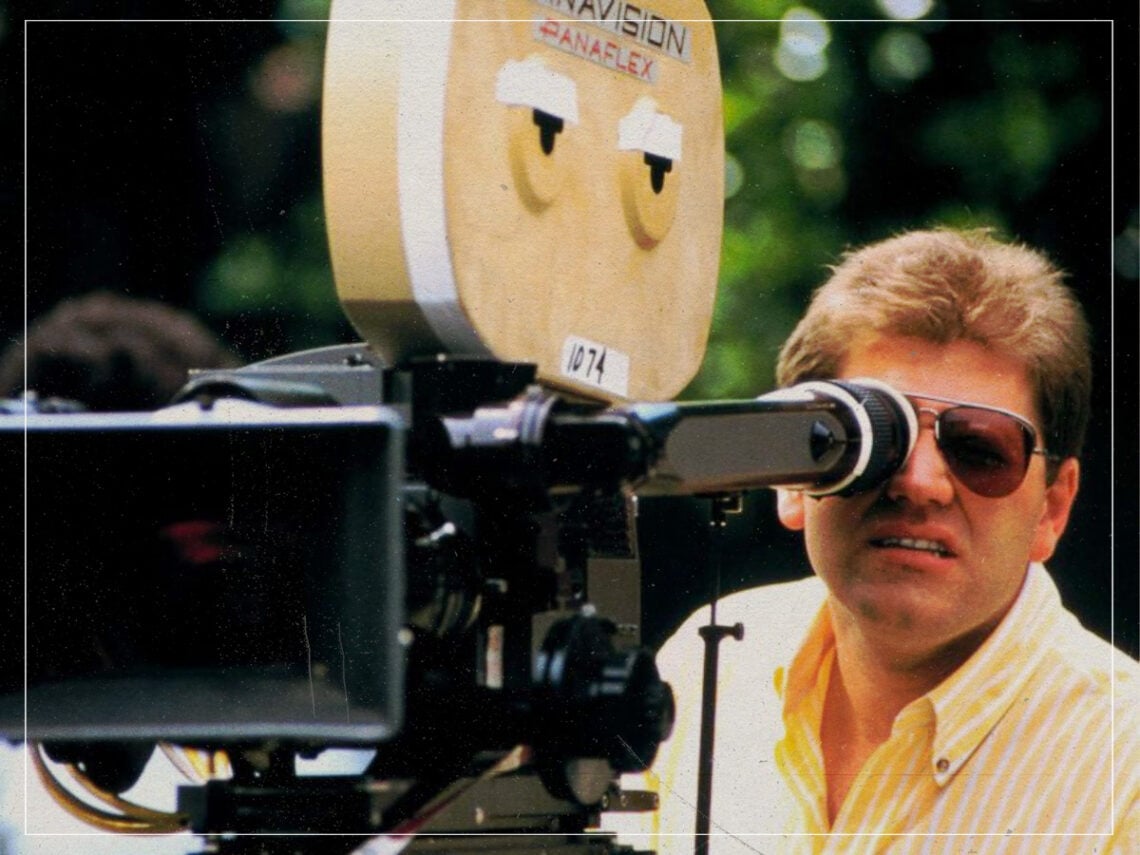
Triumph and tragedy: Robert Zemeckis’ complex relationship with visual effects

Embracing new and developing technologies is something the majority of filmmakers are obligated to do so they can keep moving forward without being left behind, but Robert Zemeckis went all-in to such an extent that his pre-occupation with the shiniest new toys did serious damage to his career.
The Academy Award-winning director behind the Back to the Future trilogy, Romancing the Stone, Who Framed Roger Rabbit, Forrest Gump, What Lies Beneath, and Cast Away has nothing to prove to anybody, but his ongoing obsession with pushing the boundaries of visual effects ended up doing him more than harm than good.
Back to the Future marked his first dalliance with effects-heavy cinema, and it was a relationship that would go on to define Zemeckis for better or worse. Who Framed Roger Rabbit was a landmark moment for digital compositing. Death Becomes Her was the first film to feature computer-generated skin and utilise techniques that would be repurposed by Industrial Light & Magic on Jurassic Park, while Forrest Gump seamlessly integrated Tom Hanks into archival footage.
The common thread is that Zemeckis would use effects to enhance the story he was telling, instead of relying on the effects to inform his approach to production. That tide gradually turned, though, with the eight companies being enlisted to aid Contact for purely artistic reasons becoming consumed by the director’s desire to try and popularise an evolution it quickly became clear the cinemagoing public simply wasn’t interested in.
The Polar Express gets rewatched every Christmas season, but those dead-eyed characters remain unsettling as they did two decades ago. Beowulf transformed Ray Winstone into a ripped action hero only to under-perform at the box office, before Jim Carrey’s A Christmas Carol lost almost $100million despite clearing $300million in ticket sales. It was clear that performance capture was not the way forward, but Zemeckis persevered anyway.
He founded ImageMovers Digital in 2007 as an offshoot of his production company, placing the focus squarely on mo-cap motion pictures. Thanks to the commercial haemorrhaging of his aforementioned Charles Dickens adaptation, it was announced in March 2010 that the outfit was being shuttered and 450 staff members were being given their marching orders.
That was before Mars Needs Moms had even released, which ended up as one of the biggest box office bombs in history and forced Zemeckis to abandon a number of in-development projects, including a Roger Rabbit sequel, a new version of The Nutcracker, original story Calling All Robots, and a remake of The Beatles’ cult classic Yellow Submarine.
It can’t be a coincidence that his next two movies after ImageMovers Digital went tits-up – Denzel Washington’s drama Flight and Joseph Gordon-Levitt’s biopic The Walk – received the most enthusiastic responses Zemeckis had seen in years, from which he appeared to learn absolutely nothing.
Welcome to Marwen? It boasts plenty of visual effects, but was a critical and commercial bust. The Witches? That was a widely-panned and completely unnecessary remake that’s an eyesore to look at, thanks to an overabundance of CGI. Pinocchio? Quite possibly the worst of Disney’s live-action remakes of its animated back catalogue, and one where the technology used to create the world is given the utmost importance at the expense of heart, character, or emotion.
Next up is another Hanks reunion in Here, an experimental drama that unfolds over generations from a single fixed perspective. The downside is that Zemeckis is using generative AI to de-age his principal players, and if the first trailer is any indication, the results do not look great. As a filmmaker, he helped revolutionise the digital capabilities of cinema. On the other hand, as a filmmaker, the digital capabilities of cinema have done him no favours in the long run.
