


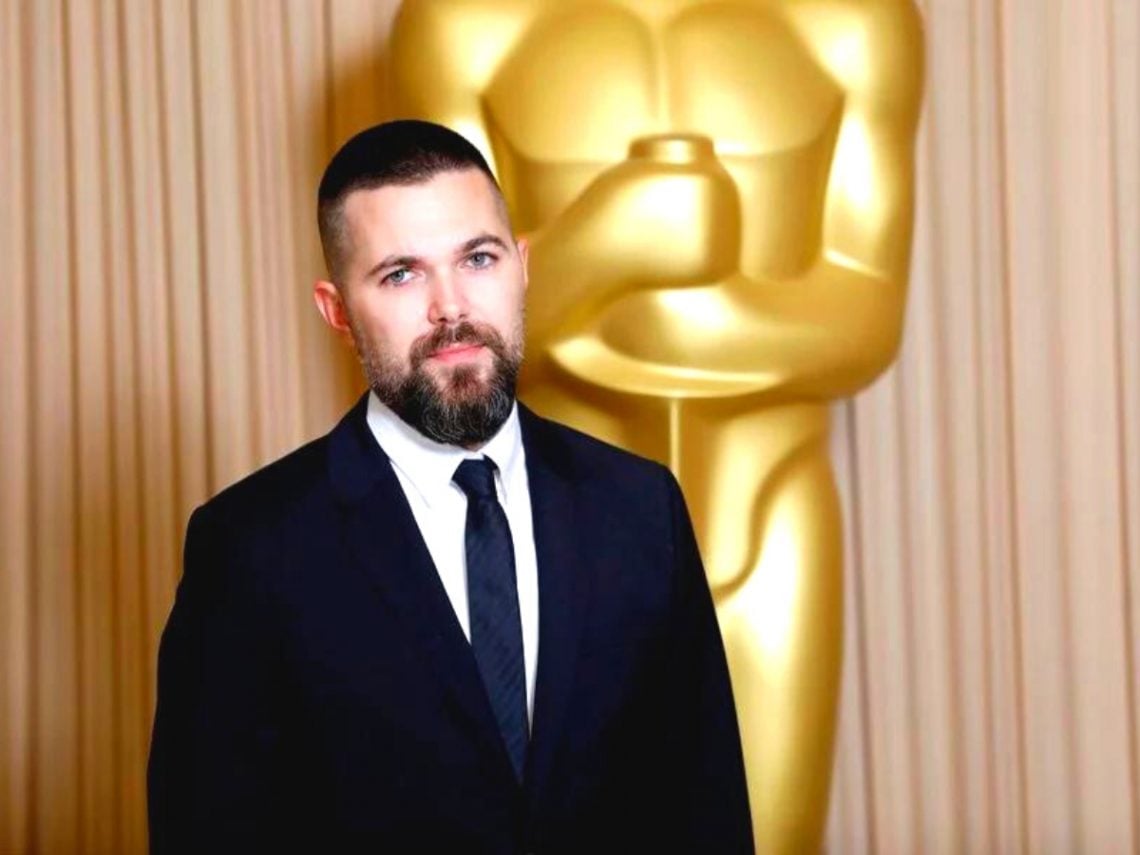
Robert Eggers explains why ‘The Witch’ is more “a fairytale than a folktale”

There are a handful of contemporary filmmakers who seem to be peaking at the very top of their game, with the American creative Robert Eggers joining the ranks of Ari Aster, Benny Safdie and Greta Gerwig, among many others. Rising to the fold in the mid-2010s after a trio of short film successes, Eggers has since become a master of gothic horror and folkloric cinematic sorcery.
Having created his breakout hit, The Witch, in 2015, followed by his equally strong drama, The Lighthouse, four years later, Eggers has long been gearing up for his passion project, an adaptation of F. W. Murnau’s silent film classic, Nosferatu. “Nosferatu is a film that I have been obsessed with since elementary school,” Eggers stated in regards to how the movie changed his life, attributing it to his fondness for gothic folklore tales.
Eggers made sure to announce his love for the niche genre during his feature debut, The Witch, a bleak horror tale that followed a family in 1630s New England whose lives are tormented by the presence of black magic. Also a breakout hit for actor Anya Taylor-Joy, the film gave them both the foundations that their early careers needed, producing a diverse range of projects ever since its success.
Speaking to Vulture about how he conjured the movie from the recorded accounts of witchcraft, Eggers ruminated to the publication, “‘All right, in all of these accounts of witchcraft, be [they] historical accounts of actual witchcraft or folktales or fairy tales, what are the tropes that always happen in every single one? What are the ones that speak the most personally to me? Those need to be in the film’”.
A difficult theme to truly pin down, thanks to the fact that witchcraft is fictional, yet the fear of their existence was very much real back in the 17th century, Eggers found that he had to walk a fine line when drafting his screenplay. “I’m a very naughty, bad person, because this film is more of a fairytale than a folktale, to be honest,” he admitted, “But because of the primitive New England, farm-y, harvest, archetypal vibe, the folktale seemed better for a subtitle”.
Continuing, the director and screenwriter added, “That’s very embarrassing, but it is true. It endeavors to be more of a pre-Disney fairy tale. I’ve actually taken credit for this wording earlier, but I’ll stop doing it: Marie Louise Vaughn is a prominent Jungian, she’s dead now, but she talks about how these watered-down fairy tales aren’t going to survive because they were designed to fit inside a post-Victorian epoch, and the fairy tales that are earlier and closer to myth, they’re just human”.
Missing out on any major awards at film festivals during the time of its release, in the contemporary world of cinema, The Witch is considered to be one of the greatest horror movies of modern times.
Finalising his thoughts on The Witch as a fairytale, the director concludes, “One of the things that these early fairy tales do so well is that they unconsciously explore the complex family dynamics the same way myth does. They explore the family dramas, the drama we’re all dealing with all the time through all the relationships in life”.
