


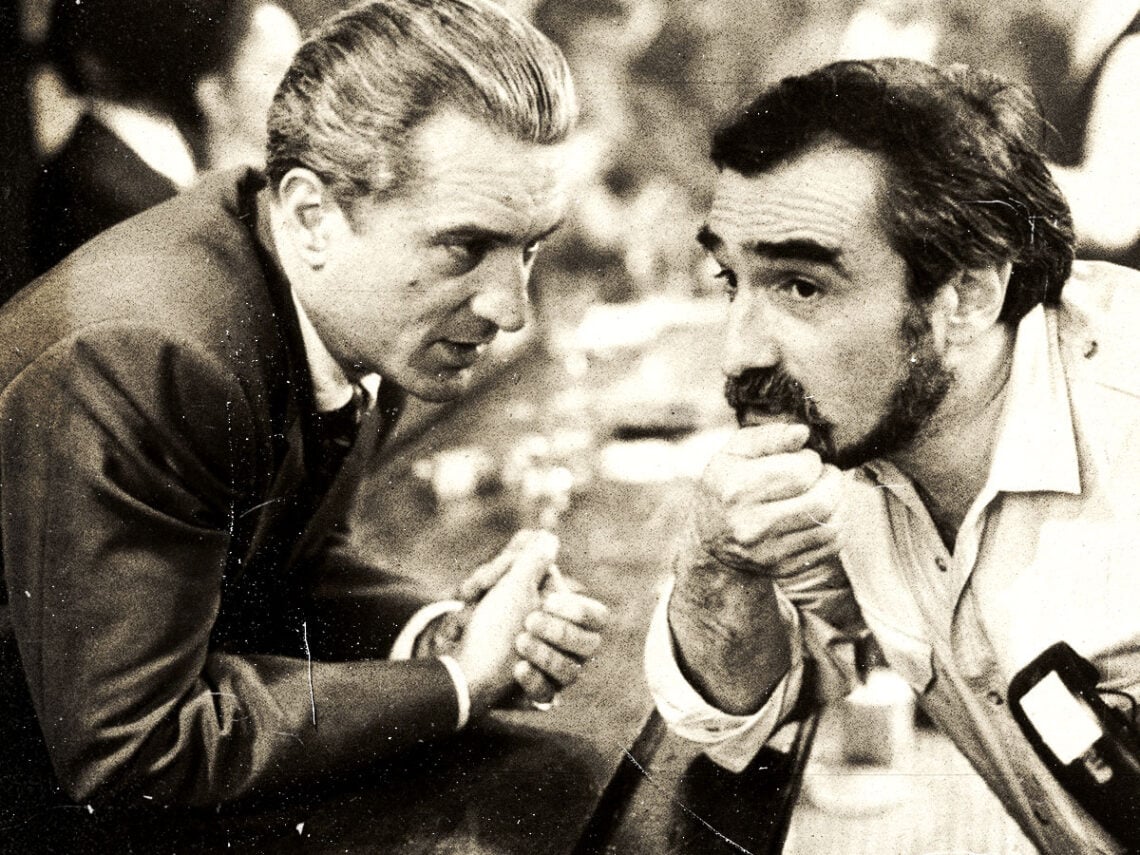
How Robert De Niro saved Martin Scorsese’s life

Martin Scorsese has an unrelenting love for cinema. As a consequence of that, he has created some of the most influential films in history, spoken out about the increasing commercialisation of movies, and founded an organisation dedicated to film preservation and restoration. Few others are as devoted to the art form as he is.
Expectedly, then, when his 1977 musical drama New York, New York flopped at the box office and received equally lacklustre reviews, the director was devastated. The failure was only exaggerated by the significant success of Taxi Driver just a year earlier. Scorsese found himself struggling with depression and drug abuse.
Scorsese recounted the experience to Jay Glennie, author of Raging Bull: The Making Of, explaining: “It became more impossible for me to function, both physically and mentally, until I finally collapsed.” In his “near death” state, Scorsese found himself in hospital as he was “bleeding from the mouth, bleeding from his nose, bleeding from his eyes”, as Raging Bull co-screenwriter Mardik Martin recalled it.
After the doctor told him he couldn’t go anywhere as he was susceptible to a brain haemorrhage at any moment, the director received a visit from his most famous collaborator, Robert De Niro. The actor reportedly asked Scorsese, “What is it you want to do? Do you want to die? Is that it? Don’t you want to live to see your daughter grow up and get married?”
De Niro was in the process of trying to get Raging Bull made and couldn’t see anyone but Scorsese at the helm of it. He asked: “Are you gonna be one of those directors who makes a couple of good movies and then it’s over for them?” Scorsese certainly wasn’t going to do that. He felt “lucky there happened to be a project ready” for him to work on alongside De Niro, one which would recover his health and his career.
The actor recalled the experience to Glennie, sharing: “The thought was unthinkable to me to move on without Marty. But I had to give him that out and ask him if he wanted to do it.” Though he doesn’t remember being quite as forceful, he recounted: “I do recall telling him he could really make this picture special, and we would have something that would be remembered for all the right reasons. To me, there was nobody else who could do it better – period.”
Producer Irwin Winkler also chipped in on how De Niro might have saved Scorsese’s life with his words, suggesting, “I’m not sure what would have affected Marty more? Bob saying you are going to die, or you are never going to make another movie again. Marty’s so passionate about movies it could well have been that.”
De Niro, the promise of Raging Bull, and the reminder of his love for film spurred Scorsese back into action. The film didn’t quite mark the stellar return the duo might have been hoping for, garnering mixed reviews, but it did ensure Scorsese regained his health and love of filmmaking. It has since been helmed as a classic and was the first film to be preserved by the United States Film Registry for its cultural significance. Scorsese continued to hone a prolific working relationship with the life-saving and career-salvaging De Niro, as they went on to work together on more commercially and critically successful films like Goodfellas and Casino.
