


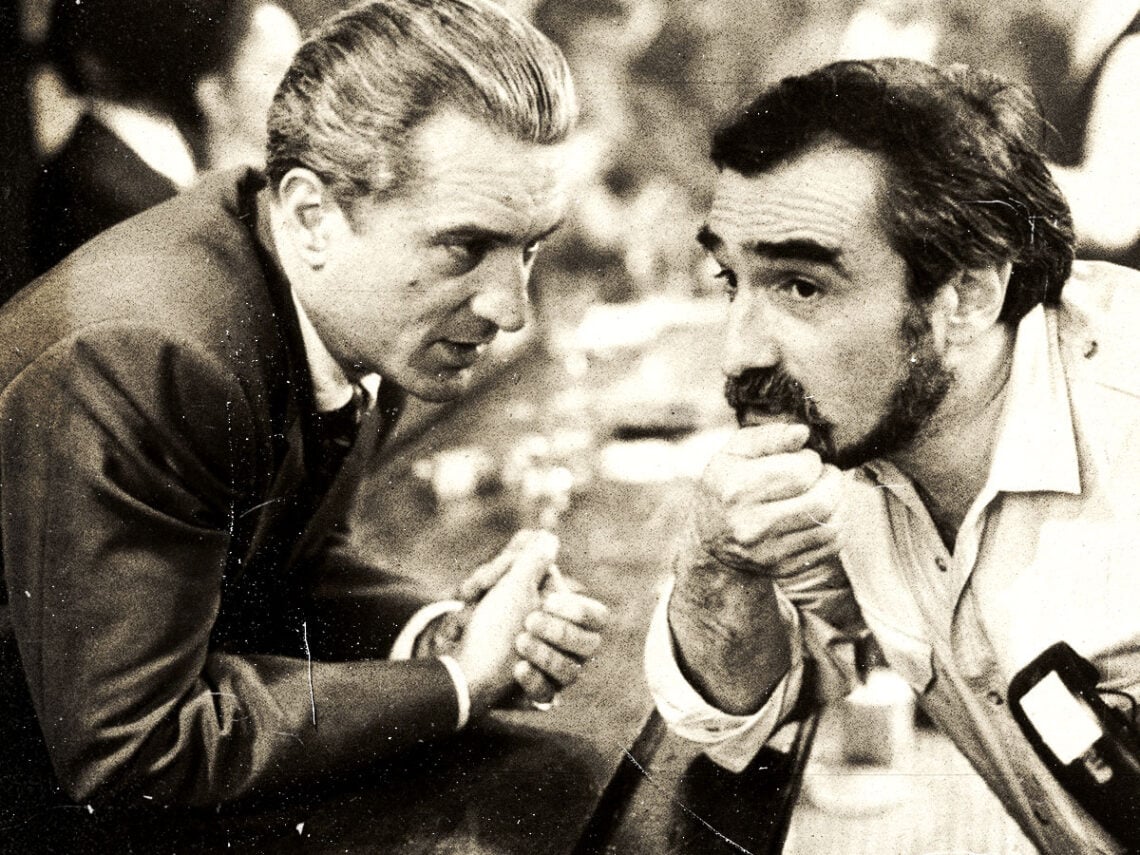
Is Robert De Niro Martin Scorsese’s ultimate muse?

If two names are guaranteed to appear alongside one another in listings of the greatest movies ever made, the work of director Martin Scorsese and actor Robert De Niro will undoubtedly feature. The two icons of Hollywood make up the cinematic duo who dominate 1970s gritty psychological examinations and ’90s stylish gangster studies in their examples of filmmaking.
De Niro has brought some irreplaceable energy and iconography to Scorsese’s brilliant directions, such as the resentful cabbie Travis Bickle in Taxi Driver and the charming yet dangerous James Conway in Goodfellas. The iconography these characters bring to American cinema echoes the inspiration of some of music’s greatest love songs or the subject of art’s most compelling paintings, conjoining with cinema’s residence as an artistic medium.
De Niro’s frequent appearances in Scorsese’s work result from the receptive exchange of both figures requesting the other for specific projects, implying a respective and artistic investment.
Building on from this, an inspection of what De Niro means to Scorsese and his legacy in filmmaking, charting from the ’70s to a contemporary landscape, employs ideas of his work ethic, his effect on audiences, and his influence on Scorsese as an auteur. The artistic element is a perspective that would classify the award-winning actor as a film muse, inspiring Scorsese, who employs the camera like a brush or pen in his artistry and storytelling.
So where exactly does De Niro stand in Scorsese’s cinematic legacy?
De Niro brings new ideas to Scorsese
One of the duo’s most acclaimed collaborations is Raging Bull, which was released in 1980 as their fourth movie. This feature is a biographical drama adapted from Jake LaMotta’s memoir Raging Bull: My Story. De Niro portrays LaMotta, the Italian-American middleweight boxer with a violent temper that does great for his boxing career but fractures his relationship with his wife and family.
A cinematic re-telling of Raging Bull: My Story was De Niro’s idea, sharing that he pitched the idea to Scorsese by stating, “the book’s not great literature, but it’s got a lot of heart”. What came of the actor’s suggestion was an award-winning visceral examination of hunger for success and the emotional consequences it brings. De Niro’s work as LaMotta earned him the Academy Award for ‘Best Actor’, his second Oscar, and further cemented his and Scorsese’s power as film artists.
This scenario of a director’s cast member coming forward with a film idea illustrates De Niro’s drive to perform under Scorsese’s direction, establishing his role as a muse who inspires and directly contributes to bringing new ideas.
This outline is also present in Scorsese’s The King of Comedy, a 1982 black comedy that sees De Niro play an emotionally fractured aspiring comedian who stalks his talk show host idol. Following Raging Bull, the director was planning to transition from fictional to documentary filmmaking, reportedly searching for newfound peace. Scorsese asked De Niro to play the role of Jesus Christ in his biblical epic The Last Temptation of Christ but was turned down, as the actor had purchased a comedy script written by film critic Paul D. Zimmerman.
After a string of potential directors passed through the project, Scorsese was eventually signed on, having displayed a promising image through Raging Bull’s visuals.
De Niro is also responsible for one of the greatest American gangster movies of all time, Goodfellas, as his eventual agreement to play James Conway allowed Scorsese to secure the film’s finances. This 1990 classic also stars Ray Liotta, Joe Pesci, Lorraine Bracco and Paul Sorvino. It is considered one of America’s most outstanding movies and a testimony to Scorsese’s strengths as a director, all thanks to De Niro.

Discussing their admiration for one another
As two masters of their cross-over crafts who create magic together, De Niro and Scorsese exert immense respect and love for one another at any chance. When speaking about the critically successful and cinematically influential film Taxi Driver to People magazine in 2020, De Niro shared how “doing this film was so special for all of us no matter what happened”.
When reflecting on his career as an actor, he still credits Scorsese, sharing he feels “very lucky to have that long of a relationship with [Scorsese],” so much so that he wouldn’t want to picture a life without the director by his side.
Scorsese returns this sentiment for his talented muse, telling Deadline the same year: “I’m very happy to have found a collaborator like him. We’ve been very lucky over the years, and also it turned out people change over 20 or 30 years”.
He added how the two could not stay apart and feel an urge to collab in their works: “Yeah. We changed, and then came back together, and I would call that a highly fortuitous situation”.

How Scorsese allows him to flourish and vice versa
Speaking to Entertainment Weekly in 2015, the actor was asked about the HBO gangster series Boardwalk Empire, which opened with a pilot directed by Scorsese, recruiting it as an opportunity to list what he loves about him as a director.
“(Scorsese’s) very easy, he goes with your ideas, he’s very, very flexible, and takes whatever he can from every actor,” De Niro said. “Yet he’s very clear as a director and guides it, the piece, in the direction he feels he should. He gives you a lot of support.”
This approach is also detected in De Niro’s acting methodologies, including noting exterior acts and unspecified emotions concerning his roles in scripts. The star can incorporate his own perceptions and visions of what a character can say, such as the famously improved Taxi Driver line “You Talkin’ To Me?” and the body language and additional props that is seen on screen.
He also illustrates his character’s goal in the Raging Bull script, such as “just concentrate on knocking the motherfucker out”. This factor shows De Niro’s dedication and passion for acting and the creative freedom on Scorsese’s part for his cast to immerse themselves in.
De Niro’s role in Scorsese’s progress and status as a filmmaker comes from immense dedication and focused effort in front of the camera and behind it, kickstarting new projects that eventually become cinematic treasures. Taking all this effort and commitment into account and its success, the actor shines as Scorsese’s ultimate muse.
