


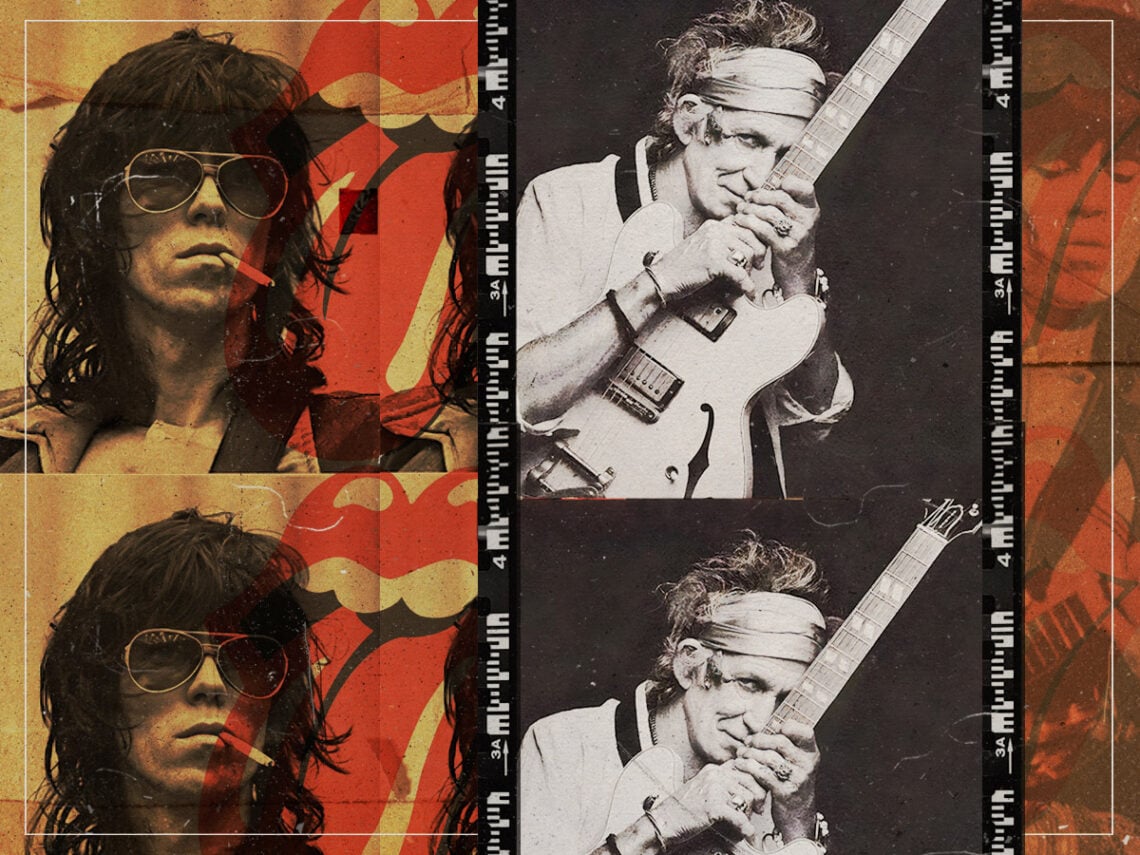
Riffs not solos: Unpacking Keith Richards’ guitar philosophy

“Solos come and go, riffs last forever,” Keith Richards declared during an appearance on BBC Radio 4 when talking about his ethos. The difference is subtle but important. A riff is a repeated sequence that comes back in throughout the song. A solo is a block of music where the guitar steps into the spotlight and holds it for a while. For Richards, prioritising the former over the latter is what The Rolling Stones’ legacy is built on. In many ways, it’s the secret to their enduring success.
When thinking about the Stones’ music, so much of what first comes to mind is one of Richards’ riffs. People think of the introduction to ‘I Can’t Get No Satisfaction’, the instantly recognisable sound of ‘Start Me Up’ or the ‘Gimme Shelter’ guitar line that still sends their live crowds into a frenzy when it begins. All of them are riffs; they’re repeated over and over throughout the song and, therefore, are embedded deep into our collective cultural brain.
It’s simple science. Repetition is a fast-track approach to remembrance. If we hear something enough, it’s bound to get stuck in our brains. So Richards’ priority going to riffs, writing these hooky licks that are on repeat through their songs, is exactly why Stones’ songs are so catchy, and therefore exactly why they have managed to have so many hits.
In that way, the band are cashing in on the golden method that has been used time and time again, mostly in pop music. A major part of their success hinges on the fact that their songs are making use of the kind of repeated themes that pop music does so much. It means that within only a couple of listens, it’s easy to sing along to the song as its structure and form are easy to grasp. It also means that it only takes a couple of replays for the track to be stuck in your head. In short, Richards repeated riffs are earworms with the band on a mission to make sure they’re infesting your brain.
But what’s special about the band is that they made earworm tracks that, even decades later, fans can’t get enough of. Unlike a lot of catchy songs that often sound great for a few weeks but then sicken you off, the Stones’ hits have ever become tired and stale. Even their earliest hits sound just as good today with his work like the opening to ‘Paint It Black’ never getting limp with time. But that, too, all comes down to Richards’ guitar-playing ethos, which has always prioritised longevity and timelessness over anything flashy.

Richards famously keeps things very simple. “I aim to get the sound that i want coming straight out of my amplifier,” he said, explaining why he even barely uses pedals. “I’m not gonna go around on stage doing tip toes on different machines,” he explains. To him, that’s a matter of showmanship that he prefers to be able to perform properly without worrying about tech. But really, it’s another good example of how Richards views his role within the band and within the song.
It’s a sign that he sees himself within the unit of the band. Just as how Jagger is moving around the music, and how the drummer and bass are following his lead, all working together to create something, Richards also wants to be part of that big picture. He doesn’t want to be stuck tethered to a pedalboard simply because he’s busy being focussed in and obsessive about his specific guitar sound and his job a the guitarist. He wants to work for the greater good of the song, too, seeing it all and all the members as one unit.
It’s the same explanation for his ‘riffs, not solos’ rule. The very nature of a solo disrupts the flow of a song. It is space carved out of the track where the guitar player alone takes and hogs the spotlight. In many ways, it’s a selfish pause just for that player, or at least that’s how Richards seems to see it. It also feels like a flashy display of skill that, while it might sound good to the common listener, is mostly a way that guitar players flex their capabilities that only other players would truly understand.
The Stones guitarist doesn’t like that. “We’re not playing for geniuses,” he told the Telegraph, making it clear that his band aren’t a group out to impress other skilled bands but is out to entertain and engage fans. He’s a player for the people, not for his own glory or for a moment to make other guitarists jealous.
In that way, prioritising riffs over solos is a win for accessibility, making the Stones a band for the many. By creating repeated and catchy riffs and working as part of the unit of the band rather than grabbing at the spotlight with flashy, technical details, Richards’ playing is a major reason why the band’s music has resonated with so many and stays beloved. His altruistic approach serves to power the band, where even his most memorable guitar moments act in service of the song rather than disrupting the song to serve him.
