


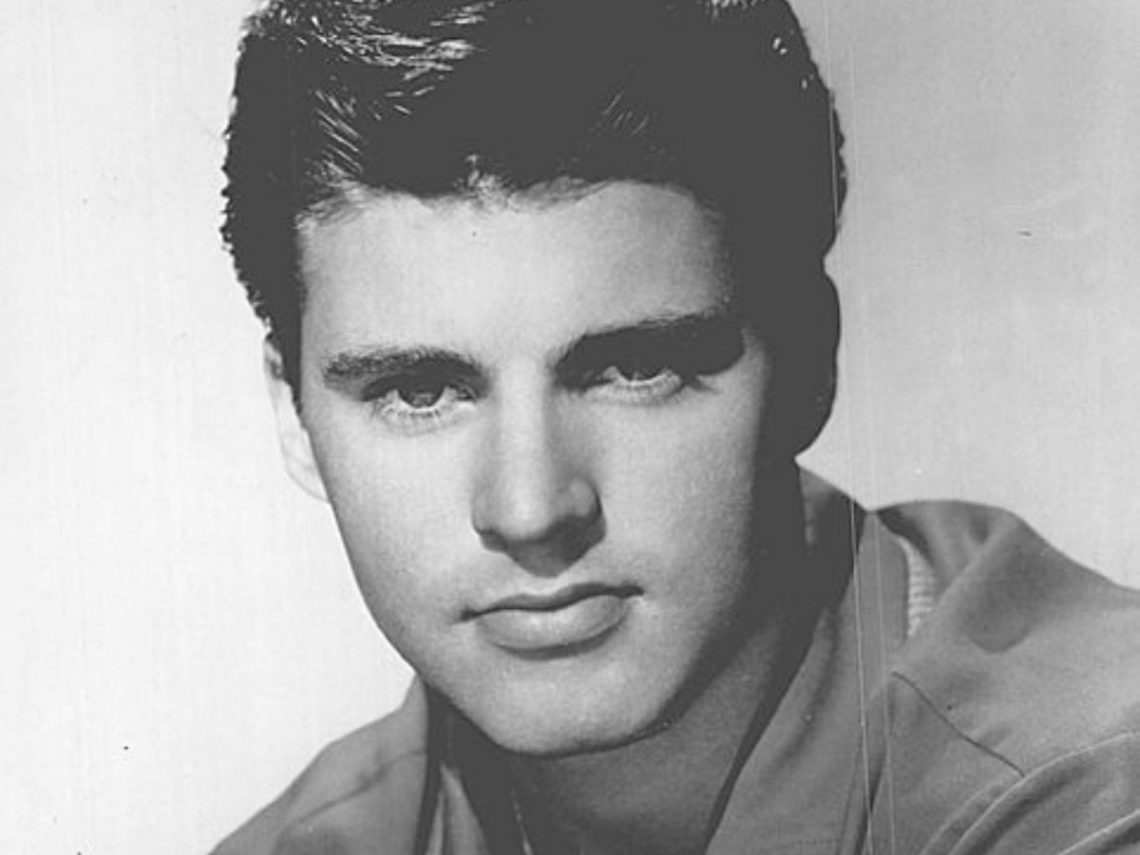
How being booed off stage revived Ricky Nelson’s career

This is the ultimate ‘I’ll show them’ redemption story. Ricky Nelson went from the poster boy of the 1950s to a tired has-been – the sort of figure who retrospectively illuminates that the past wasn’t all you thought it was – and then back again after suffering the tragedy of being booed off the stage. It took hitting rock bottom for him to find his mojo and show the kids of the revolution that they were wrong to sully their old heroes and favourable reminiscence was back in the air.
It was October 15th, 1971, and 12 years had passed since his sumptuous hit ‘Lonely Town’. The greased-back quiff look had been traded for mop tops, and Black Sabbath were rendering crooning a bygone sign of prudent old times. Nelson had even dropped his ‘y’ to become Rick Nelson in a half-baked rebranding.
Nevertheless, he was once a legend, and even those desperately cool kids who claim that they were into avant-garde art when they were nine can acknowledge that. Thus, he was still big enough to play Madison Square Garden as part of the Rock & Roll Spectacular. However, people weren’t really expecting to be blown away. Thus, his attempt at playing new songs hit their hardly bated breath like bad air, and the boos soon followed. He was mercilessly cut short.
Was this to be the end of a golden boy—the coolest cat of ’50s romanticism no less? Nada. Nelson went back home and penned the lyrics: “You can’t please everyone, So you gotta please yourself.” The song would build towards a proclamation of sticking to your own integrity and he titled it ‘Garden Party’, a nod to the fateful event that spawned it. The song was released in 1972 and became his first US Top 10 single for almost ten years since 1963’s ‘For You’.
There had always been more substance to Nelson back in the day than many of his doo-wopping cohorts, and now he proved he could cut it with the revolutionaries. He was embraced once more. As his son, Gunnar, later wrote: “After a lifetime of pretending to be a character he wasn’t – wearing the sweater on Monday on the set of Ozzie and Harriet after being a real rock star on the weekends – he was writing and performing for his own pleasure and satisfaction. The song was based on his experience at Madison Square Garden.”
As he joyously adds: “He turned what could have remained the darkest day of his life into his brightest shining moment. Just when the music industry considered him a relic, filing him away as yesterday’s news, he had the biggest hit of his career and it was totally autobiographical.” It’s that defiance that made the record soar and the cool fortitude underneath it that cut through even in his old commercial days. Ricky Nelson still had it if, indeed, he ever lost it.
