


Hear Me Out: Richard Thompson is still the UK’s most underappreciated musician

To put it quite plainly, Richard Thompson is the gap in your record collection: the guitar god you could have been spraying graffiti for, and the singer-songwriter you should have been emulating at those ill-advised open-mic nights.
Over the past 60 years, Thompson has produced an impossibly consistent catalogue of quality work, evolving from the shy and mostly non-verbal guitar-wunderkind of seminal British folk-rockers Fairport Convention into a seasoned and expressive singer, storyteller, and stage showman. He’s got Ray Davies’ narrative chops, Neil Young’s rootsy vulnerability, and a distinctive, seemingly seven-handed guitar sound that some folks think Mark Knopfler blatantly co-opted.
Thompson’s got no shortage of unabashed A-list admirers, too, from Robert Plant, David Gilmour, and Emmylou Harris to Elvis Costello, David Byrne, and REM, and not to mention a whole host of younger British folk singers like Johnny Flynn, Laura Marling, and the Unthanks, who look to him and Fairport Convention as north stars. Some guy named Bob Dylan has even been known to cover Thompson’s ‘1952 Vincent Black Lightning’, albeit to far less emotional impact than its composer consistently manages.
“I’ve covered 75 [Dylan songs]; he’s covered one of mine,” Thompson humbly responded when he heard about the latter incident, “I think that that’s the right ratio”.
So, what has all the effusive admiration from these high-profile peers done for Richard Thompson’s pop profile? Well, counting his mid-1970s albums with his then-wife Linda Thompson, ‘RT’, as his fans call him, has released 27 studio albums to date, along with an almost endless, Grateful Dead-ish stack of additional live records and compilations. Of all of these releases, only one, the 2015 album Still, has managed to get as high as number ten in the UK album charts. It’s an even sadder picture in America, where 2013’s Electric marked an all-time best performance by reaching number 75 on the Billboard chart.
This is the Richard Thompson conundrum, one that probably would have been eradicated with one random radio hit somewhere along the way: maybe the majestic ‘Wall of Death’, or the punchy ‘I Feel So Good’, or the timeless ‘Beeswing’, but it never did happen. As a result, with no MTV airplay or viral moment or Olivia Rodrigo collaboration, Thompson never felt the pressure to repeat himself or to rest on his laurels.
“Well, I don’t have any laurels,” Thompson once corrected me during a phone interview I had with him back in 2009 (for the Metro Pulse newspaper in Tennessee), “I think I’m always just very dissatisfied with what I do; like there are other places to go, that I can do better, and that the work can reach a higher standard. I suppose it’s good to be a little restless, you know? I haven’t really achieved very much at all, and I’d like to achieve something. So I’m always driving myself forward. I’m always thinking, ‘Well, here’s this project, but how about after that? Let’s have another project and another project’”.
“I’m always thinking in terms of projects. And it’s just one step in front of the other. It keeps me going down the road.”
Richard Thompson
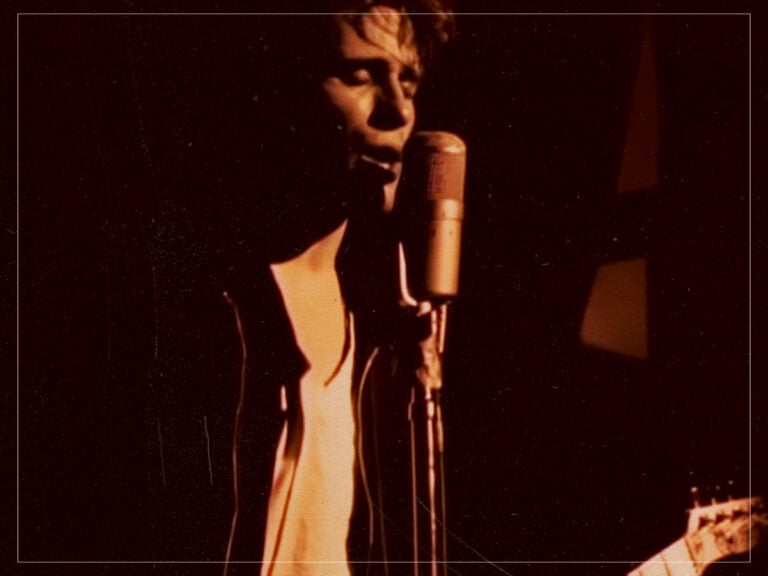
People now look back in stunned confusion at how all three of Nick Drake’s records went completely unnoticed in his own time, only to be properly appreciated decades later. Well, if you can imagine someone of Drake’s calibre carrying on for an extra half-century and still remaining best known for being under-known, that’s Thompson. Maybe it’s no coincidence, either, that he played guitar on two of those Drake albums (Five Leaves Left and Bryter Layter).
In a strange way, longevity, consistency, and prolificity aren’t always ingredients for success in rock and roll. Because Drake’s entire career spanned just a few years and a few dozen songs, it’s relatively easy for someone in 2026 to revisit that work and get a complete sense of what the Drake ethos was; what makes his songs appealing and what made the singer himself a fascinating character, frozen in time and never able to explain some of his own mysteries.
Thompson’s music, by contrast, is a vast ocean with no clear, agreed-upon doorway into the ‘full’ experience, kind of like trying to introduce someone to Doctor Who or some other sprawling franchise. There is no obvious commercial hit to start with, and no consensus among fans on which era or which style best defines his sound. As a personality, he is also neither brooding and mysterious nor hyper-charming and magnetic. He is soft-spoken, thoughtful, sarcastic, and self-effacing; a good banter-maker, but not one prone to stirring up headlines even when someone directly asks him about the Mark Knopfler stuff.
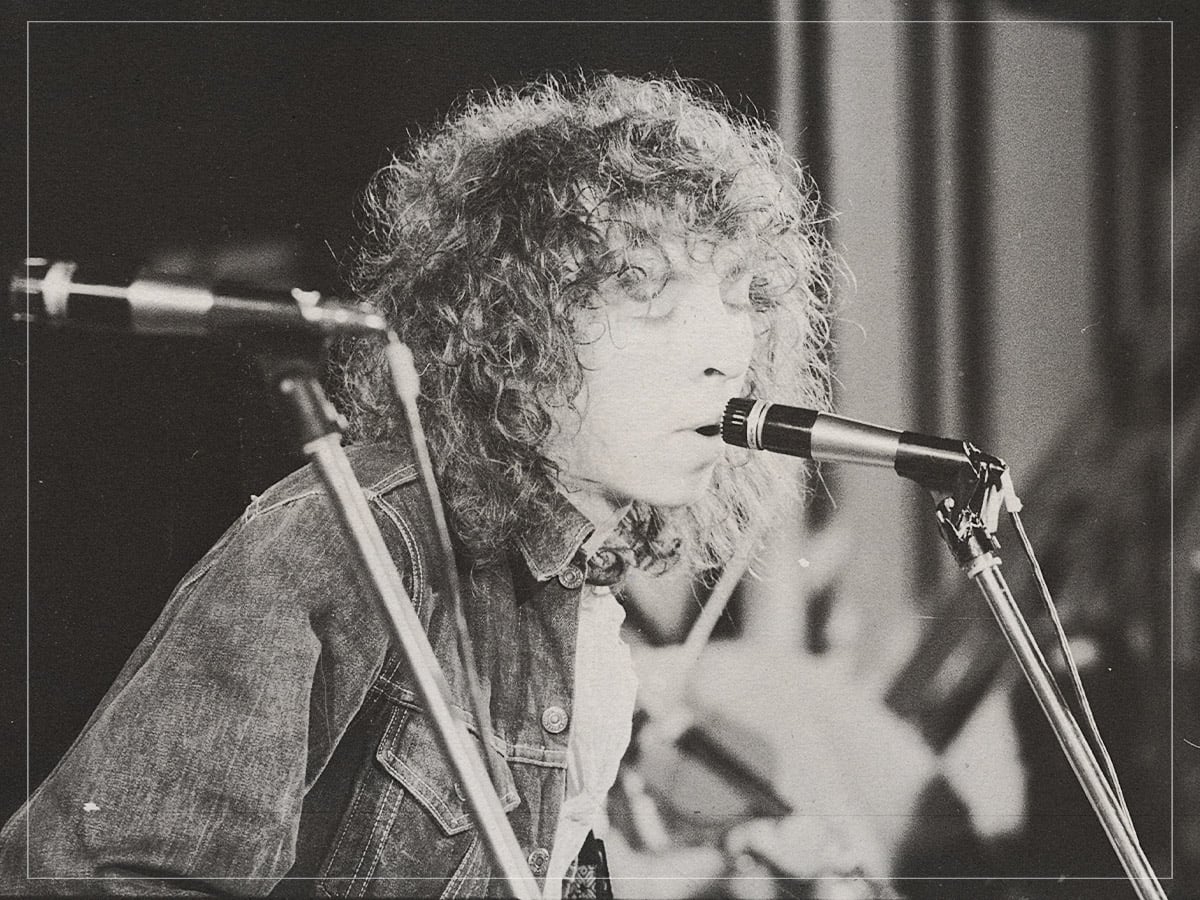
As a touring act, Thompson has also fluctuated through most of his career between being a solo acoustic performer and the leader of an ever-evolving band, capable of playing blistering electric sets. His guitar work can seamlessly jump from complex, finger-picked English and Irish folk styles to absolutely batshit, freestyle rock ‘n’ roll solos on his Fender Strat; Bert Jansch to Jimmy Page at the drop of a hat. Accordingly, Rolling Stone magazine once ranked him as the 19th greatest guitarist of all time, but even that level of praise sounds reductive when used as the central summation of his career.
It’s the songwriting that’s the more important separator, and the biggest reason that Richard Thompson is probably the single most underappreciated British musician of his generation. His fans will struggle to tell you what his absolute best songs are, but they can usually identify the different species of them, from the up-tempo electric rockers (‘I Feel So Good,’ ‘Razor Dance’, ‘Cooksferry Queen’) to the tear-jerking folk ballads (‘Beeswing’, ‘1952 Vincent Black Lightning’, ‘Drifting Through the Days’), to the epic, curtain call anthems (‘Shoot Out the Lights’, ‘Wall of Death’, ‘Dad’s Gonna Kill Me’). They’ll also tell you that his voice has inexplicably improved with old age, how he never does a half-ass show, and how he continues to challenge himself with new albums and new tours, year after year. It’s safe to assume he’s not seeking that elusive hit single anymore, but he’s always searching for something.
“I guess there’s all sorts of career curves,” Thompson told the Edmonton Journal in 2019, “You know, in rock ‘n’ roll you’re not supposed to be creative after about the age of 23, really. But I think the picture has changed, and what you call rock or folk or singer-songwriter music will now tolerate an older generation. As you get older, you’re supposed to get wiser, so hopefully there’s more of that in your music, too.”
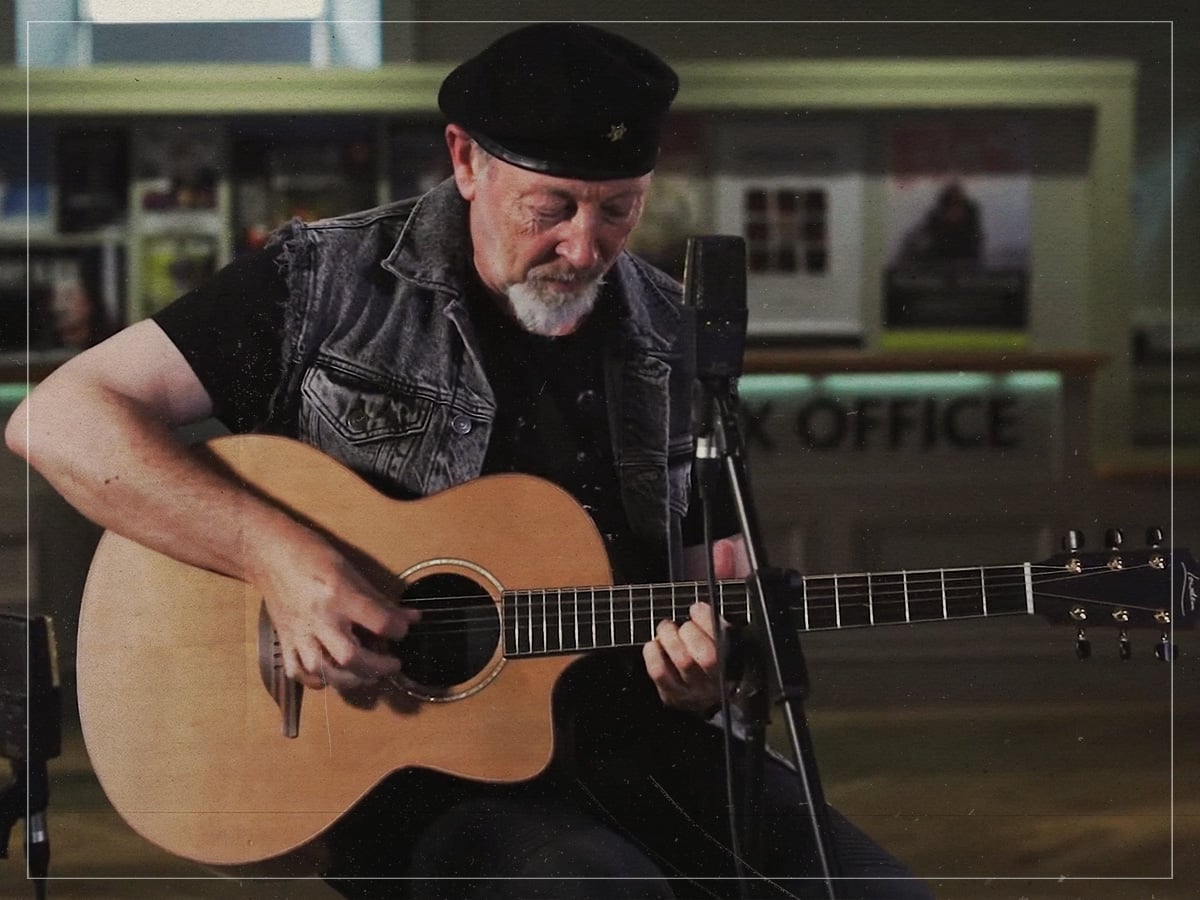
At 77, Thompson is no better at knowing how to succinctly promote himself than anybody else. He has acknowledged that it can be “really weird” at times to be playing songs he wrote in his 20s, and that some of them have lost or changed their meanings over time. Because you’re not likely to hear them in movies or adverts or while you’re at the supermarket, though, they seem to have a bit more flexibility to evolve; a rare perk for one of rock’s less famous OBEs.
“You have this body of work that spans decades,” he said, “and you play a brand new song that you wrote yesterday in the hotel next to a song you wrote 50 years ago. It’s quite bizarre, but it’s a balance of things I like to hear and things the audience might like.”
Those audiences aren’t just the diehard, bootleg-collecting Boomers, either. “It’s nice to see young faces out there, as the old audience dies off,” Thompson told me with a chuckle. “But you know, it’s always nice when people discover your music. Some people will say, ‘I found you on the internet’ or ‘my father turned me on to your music’, and I always find that really sweet and rewarding to hear.
“There’s life in the old dog yet,” he added. “I just enjoy what I do, and I hope I can do it as long as I have my wits about me”.
Richard Thompson is on tour, of course, throughout 2026, still supporting his latest album, 2024’s Ship to Shore.
