


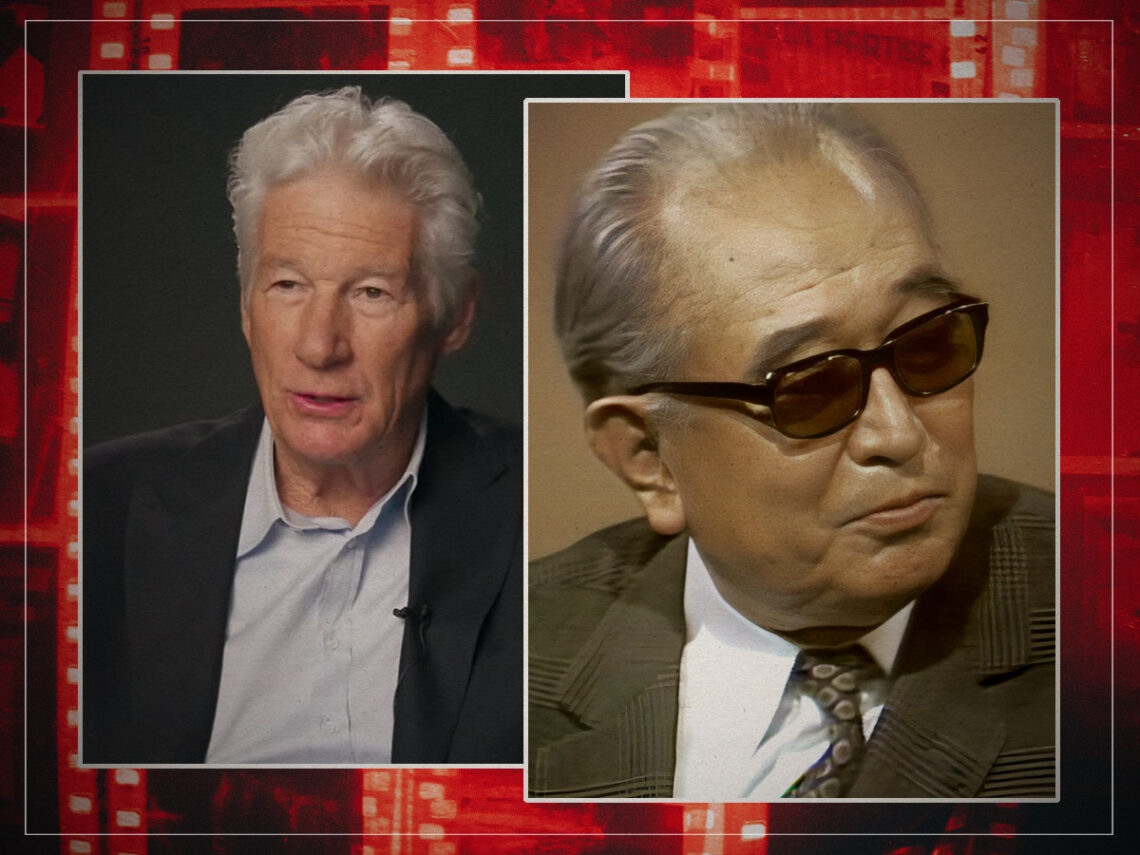
How Richard Gere became the only American to play a major role in an Akira Kurosawa movie

As a symbol of the ideal American in cinema, Richard Gere is pretty much perfect. Good-looking, well-groomed, charming, talented, and when he came along in the late 1970s, it was like a little piece of Golden Age Hollywood had been dragged into the modern era.
Gere leveraged his rampant Americanness to great success across the pomp of his career. He covered all sorts of ground; as a member of the Navy in An Officer and a Gentleman, a jazz musician in The Cotton Club, and a kind-hearted Wall Street guru in Pretty Woman. Put all those things together, and you’ve got a pretty complete picture of American popular culture over the past century. There should be some sort of university degree in Gere studies.
Despite being only a few genes removed from a bald eagle carrying an apple pie, Gere has also branched out into foreign cinema. His 2024 film Longing was backed by several Canadian production companies, and it was actually a remake of an Israeli movie from seven years earlier. Though it was made with American money, the movie Red Corner is largely set in China. Its outward criticism of the country’s justice system put Gere—who, as a Buddhist, is an avowed supporter of Tibet—on Hollywood’s blacklist indefinitely. However, when it comes to his work outside of the United States, his most interesting contribution was Rhapsody in August.
Released in 1991, Rhapsody in August is a Japanese film from iconic director Akira Kurosawa. Based on a novel by Kiyoko Murata, the film follows Kane, played by Sachiko Murase, an elderly woman whose husband was killed in the Nagasaki bombing. When looking after her grandchildren one summer, she discovers that she has a long-lost brother living in Hawaii. Desperate to reconnect in the final years of her life, Kane weighs up taking a trip to the United States to see him. Gere plays Clark, Kane’s nephew, who grew up in America. He journeys to Japan to visit his aunt and learn firsthand about the horrific acts his country perpetrated during the war.
Kurosawa never worked with American actors, even during his short-lived period working in the country. According to a discussion on the website Akira Kurosawa Info, a number of factors led to Gere landing the job. One of them was his aforementioned Buddhism; the director was impressed that an American was so knowledgeable on the subject, which set him apart from his peers. Crucially, Gere waived his usual fee to take the part after Gene Hackman passed on it. Knowing that he couldn’t pass up on a chance to have a huge star in his film for free, Kurosawa accepted.
However, casting Gere turned out to be a major headache. Asian representation groups were upset that Kurosawa had cast a white American actor as a man who was supposed to be half-Japanese, saying it took the opportunity away from an actor of the appropriate ethnicity. As reported in the Los Angeles Times, the director defended this decision, saying, “We don’t need someone who looks Japanese. The situation of the story calls for an American… so we chose Mr Richard Gere”.
Whatever the reason, the decision to cast Gere in Rhapsody in August inadvertently created a piece of film history; a rare collision of East and West.
