


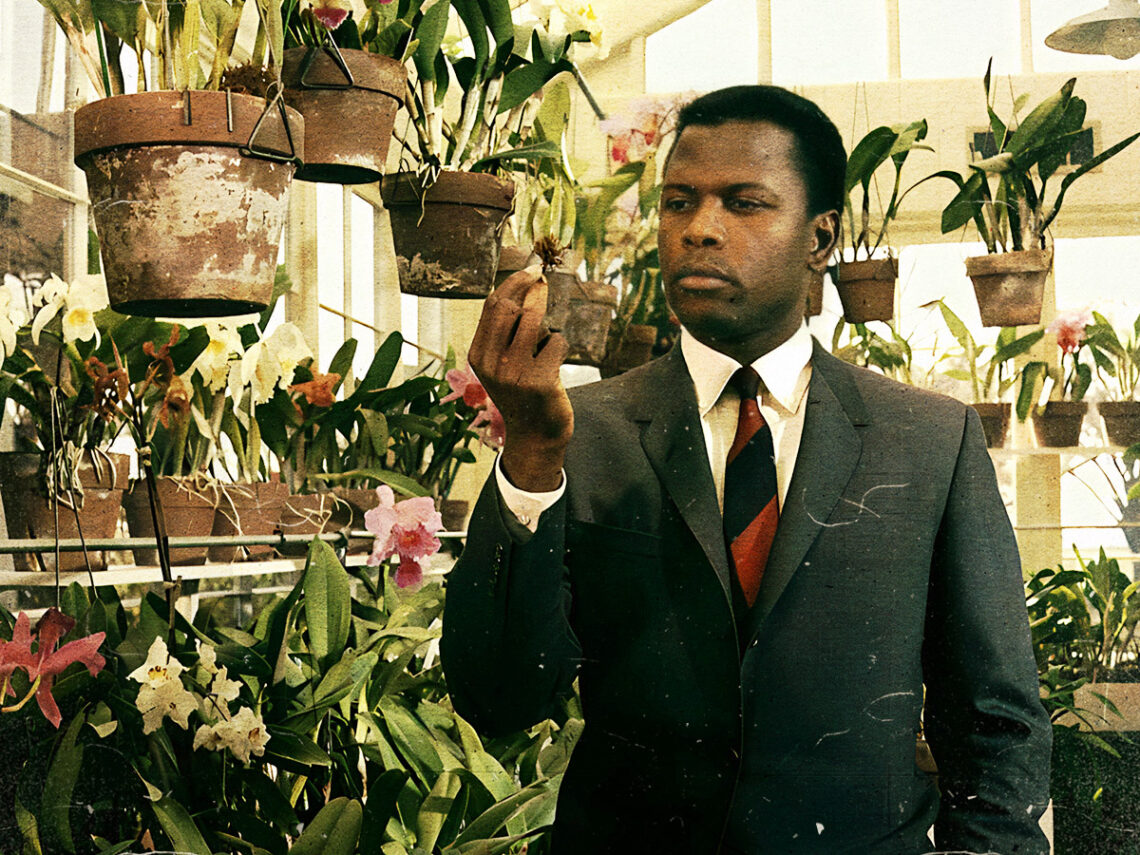
Revisiting the all-star soundtrack for ‘In the Heat of the Night’

There is no question that Norman Jewison’s In the Heat of the Night is one of the most important films ever made. Whilst it might be a neo-noir mystery, it contains much more depth than this tag might suggest. The film remains one of the most damning visual indictments of America’s history with racism, bringing the themes of John Ball’s novel into forensic focus.
When the movie was made in 1967, no cinematic project, apart from 1962’s To Kill a Mockingbird, which was based on the essential Harper Lee book, had challenged the murderous bigotry of America in such a realistic way. Yet, Jewison’s film goes much further in its exposé of America’s racism than To Kill a Mockingbird. The presence of the children protagonists Scout and Jem in Harper Lee’s novel affords the type of purity that’s anathema to the adult world, which we see as a bleak reality in In the Heat of the Night, where the inequity of the grown-up world is made shockingly clear.
While To Kill a Mockingbird was led by Gregory Peck in his career-defining role as the just lawyer Atticus Finch, what makes In the Heat of the Night tick is the gravity of its leading man, the world’s most prominent African-American star, Sidney Poitier. A monumental decision in the light of the themes, just Poitier’s skin colour afforded the movie an authenticity and realism that eclipsed that of the 1962 film and others like it. This was Black America having its say.
The story follows Virgil Tibbs, a Black homicide detective from Philadelphia, who becomes accidentally involved in a murder investigation in a small town, Sparta, in rural Mississippi.
Famously, the film kicks off when local policeman Sam Wood discovers the murdered industrialist Phillip Colbert. At the train station, he encounters Virgil Tibbs, seemingly just another Black man; however, as he has a full wallet – something a Black person couldn’t possibly have due to their honest efforts – he arrests him for the murder. Taken to the police station, Police Chief Gillespie accuses Tibbs of murder and robbery but is quickly stopped in his tracks when he discovers that Tibbs is a renowned homicide inspector from the north.
In a surreal turn of events, Tibbs and Gillespie reluctantly agree to investigate Colbert’s murder together. Battling against ignorance and bigotry in all its forms, Tibbs eventually manages to crack the case.
In his film, Norman Jewison captures with panache the differences between Poitier’s Tibbs and his white counterpart, Gillespie. An incredible achievement, the plot stayed true to the real world’s complexion, despite the tale’s fictional parameters. The movie remains one of the starkest indictments of America’s social politics at the time, exhibiting the negatives while also offering an antidote by showing that mutual respect and collaboration were possible.
With that, Jewison needed a stellar soundtrack to bring such a vital masterpiece of cinema to life, and that’s what he got. The film score was composed, arranged and conducted by Quincy Jones, one of Black America’s most famous musical figures, which imbued the movie with another dose of magic. This was only the tip of the iceberg, too, and an all-star cast helped out Jones. The blues-infused title song, which perfectly opens the film, was performed by Ray Charles, with the composition by Jones and the lyrics by hit-making husband and wife duo Alan and Marilyn Bergman.
The orchestra arranged and conducted by Jones also featured a range of musical heroes. The title track features Billy Preston on the electric organ and The Raelettes’ backing vocals. Elsewhere, Roland Kirk, Gil Bernal, Ray Brown, Bobby Scott, Boomer and Travis and Don Elliott appear. This is not all, either; the indomitable Glen Campbell provides vocals on track nine, ‘Bowlegged Polly’ and plays the banjo, with influential Wrecking Crew bassist Carol Kaye also delivering some of her classic licks across the record.
A remarkably stylistic body of work that augments the film’s themes by cultivating a modernistic blues-orientated sound that nods to the African-American origins of the genre, it seems criminal that it is so overlooked.
