


Chris McKay – ‘Renfield’ movie review: Dracula’s painful revival into the age of self-care

Chris McKay’s Renfield drags Dracula from his ever-restless slumber and into the modern age. As is often the case with the many forms of Dracula we have seen in cinema over the years, the famous immortal Count brings his trusty assistant R.M. Renfield along with him, still responsible for delivering his human dinner and not getting much back in the way of gratitude.
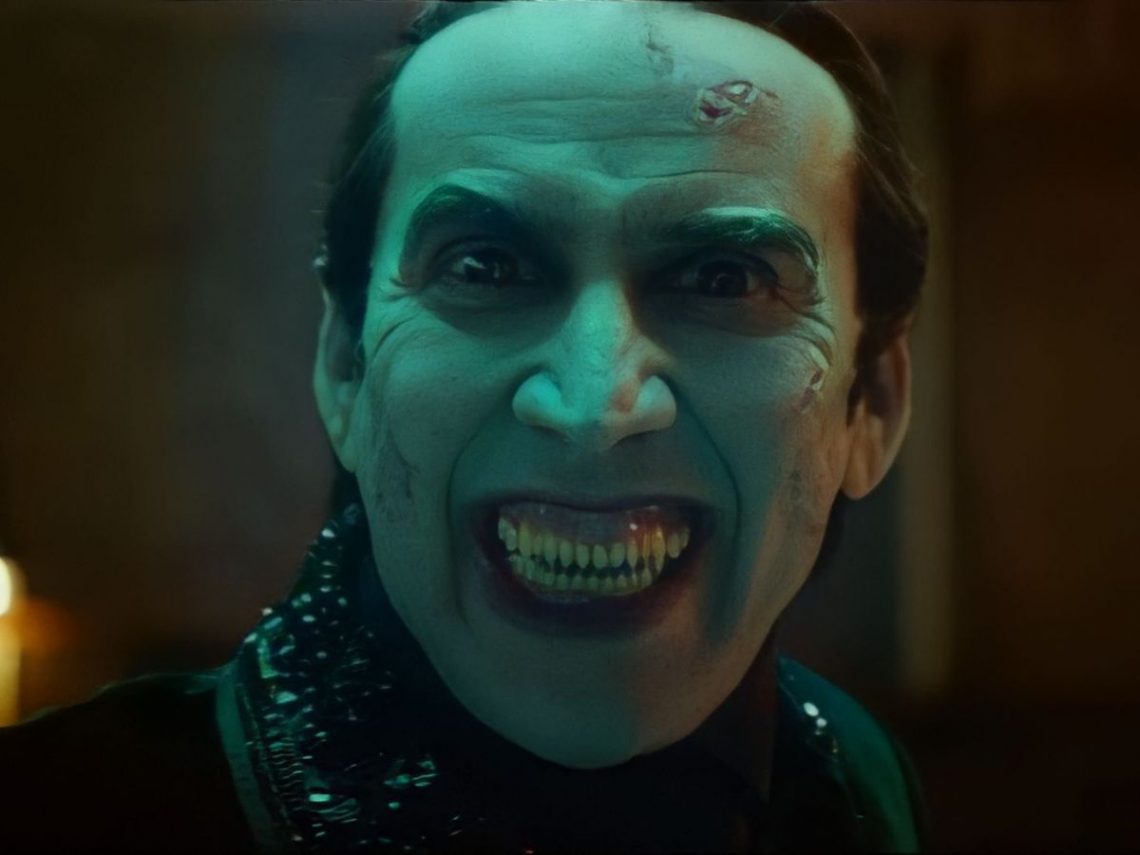
However, this is not a mere ‘retelling’ of the Dracula story that we know and love so well. As the film’s title implies, this story is really about his dear old faithful familiar and, more importantly, his doubts about his ‘relationship’ with the Transylvanian master. Nicholas Hoult takes on the titular character opposite Nicolas Cage as the Count, the latter of whom takes to his role like a bat to the shadows.
On its surface, Renfield is an amusing alternative account of the Dracula myth, with the humorous spin of Renfield’s truly contemporary claims that he is in a “toxic relationship” with a “narcissist”, with whom he admits he has become “co-dependent”. To rid himself of these emotions, Renfield takes part in a Co-Dependents Anonymous support group, at the same time using the meetings to find Dracula’s next meal: the partners of his fellow co-dependents, with his thought being that if he is going have to sacrifice human beings, they may as well be toxic narcissists.
This alone ought to have been enough to fuel the narrative of the film, an examination of a myth told and retold countlessly from the perspective of a character that is often overshadowed by its antagonist. In these confessional, modern moments of the film, it truly shines; Cage is gloriously camp with occasional shades of the theatre – and even the Elephant Man – in his more disfigured forms, while Hoult plays and dissects the contemporary anxieties of the modern-day with a generous emotive yearning and desire.
However, Renfield is also caught up in a crime caper with the drug lords of New Orleans – widely considered to be the modern home of vampires and witches – and an internal romantic tussle with police officer Rebecca Quincy (played by the impressive if irritating Awkwafina). These alternate narrative strands, as well as Quincy’s own quest to avenge her policeman, father, only really serve to divert from the main draw of the film, though, which is Renfield’s longing to free himself from his master/slave relationship with Dracula.
Renfield is likely to be the kind of film that teenagers see today, finding relatability in its modern relationship anxieties and lexicon (“I am enough” for one), whilst being introduced to the world of gory horror-comedy, akin to Edgar Wright’s Shaun of the Dead.
But where Edgar Wright’s films were genuinely funny from beginning to end, Renfield suffers from a reliance on the performance of Cage to deliver its humour. There are, indeed, moments where comedy shines through, but it is often obscured by egregious action sequences, over-gratuitous and rather tedious gore and a lack of narrative focus. There’s an interesting story in Renfield somewhere, but Chris McKay looks to have tried to cough up too much at once.
