


His left foot: The remarkable art of Christy Brown

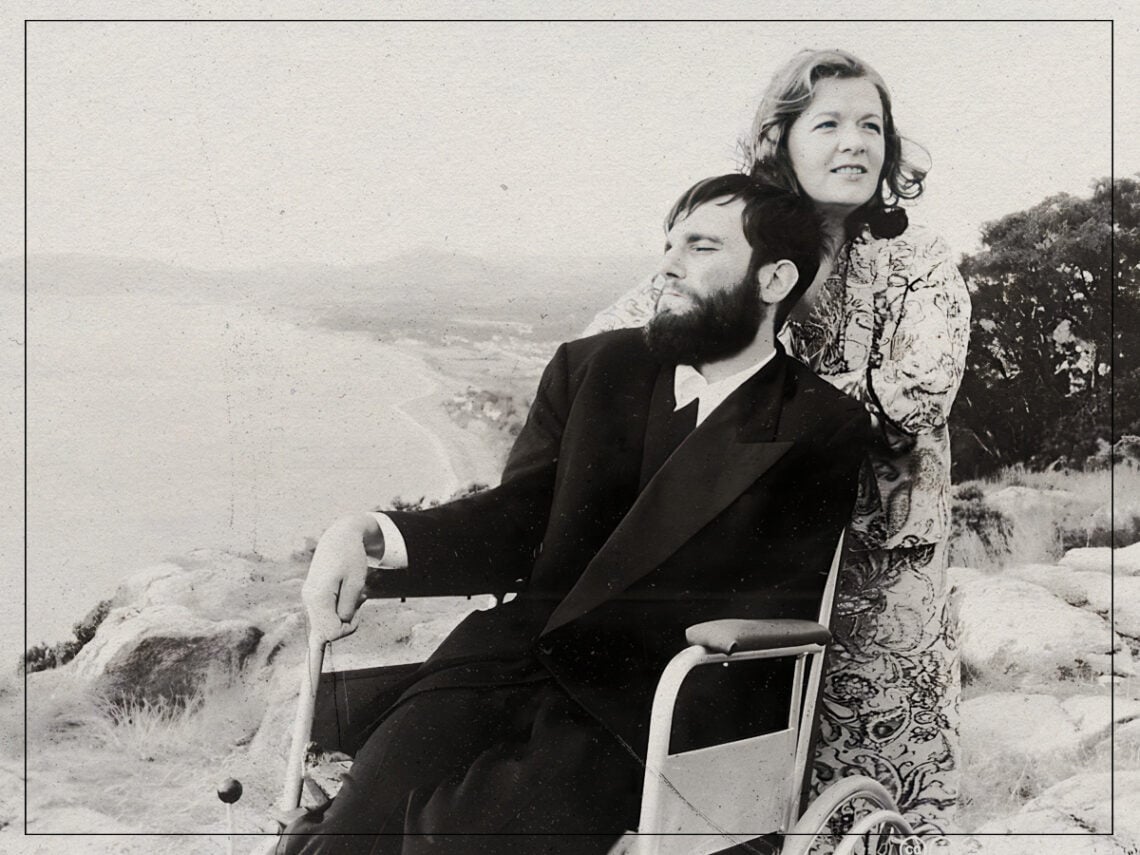
Daniel Day-Lewis won his first Oscar in 1990 for his starring role in My Left Foot. The actor’s intense method-acting approach drew controversy, with the able-bodied Day-Lewis staying in character outside of filming, acting as though he had cerebral palsy. He was portraying Christy Brown, a painter and writer who was born with the condition in 1932. Brown’s story is one of perseverance and sheer creativity, highlighting the importance of art as a mode of expression and communication.
Brown was born into a working-class family in Dublin that rarely received a quiet moment. He had 20 siblings, although nine of these died when they were infants. Despite his parents’ busy household and lack of money, they refused to send Brown to live in a hospital when they discovered that he had cerebral palsy.
The condition prevented Brown from using most of his body – apart from his left foot. When, at the age of five, he realised that he could use his left foot, he snatched a piece of chalk out of his sisters’ hands with his toes and tried to write.
As he got older, he created drawings and paintings with his foot, finding himself enamoured by art. Brown also used his foot to read books, developing an intense interest in reading and writing. He eventually received a small amount of education at a school for those with disabilities, eventually meeting the Irish writer Dr Robert Collis. He encouraged Brown to continue his artistic pursuits, helping him to land a deal to publish a memoir about his experiences of living with a severe disability.
It was this memoir, My Left Foot, which provided the source material for Jim Sheridan’s movie of the same name, with Day-Lewis embodying the artist through an impressive performance. The book revealed Brown’s love for art as a vital means of expression, survival and enjoyment.
Even though he could talk, his paintings and writing allowed him to communicate more clearly, proving to everyone around him that his physical disability didn’t prevent his brain from working in the same way as able-bodied people. By doing so, he helped to disprove the ableist stereotypes that many people, even doctors, held at the time, who believed that just because his body worked differently to the ‘average’ person, he couldn’t possibly be any smarter than a child – which is, of course, untrue.
My Left Foot also highlighted how important a support network is, such as friends and family, with Brown citing his parents’ recognition of his talents as a constant source of reassurance. He ended up writing various other impactful novels, such as Down All The Days and A Shadow on Summer, while painting many evocative works. It’s hard to believe that such intricate work was created by Brown using just his toes to grip his paintbrush, but he found ways to adapt – his love of art and literature prevailing over everything.
He eventually got married twice and continued his creative endeavours until passing away in 1981 after choking on his food. Brown’s life might have been cut short when he was just 49, but he managed to create many incredible pieces of art during that time.
