


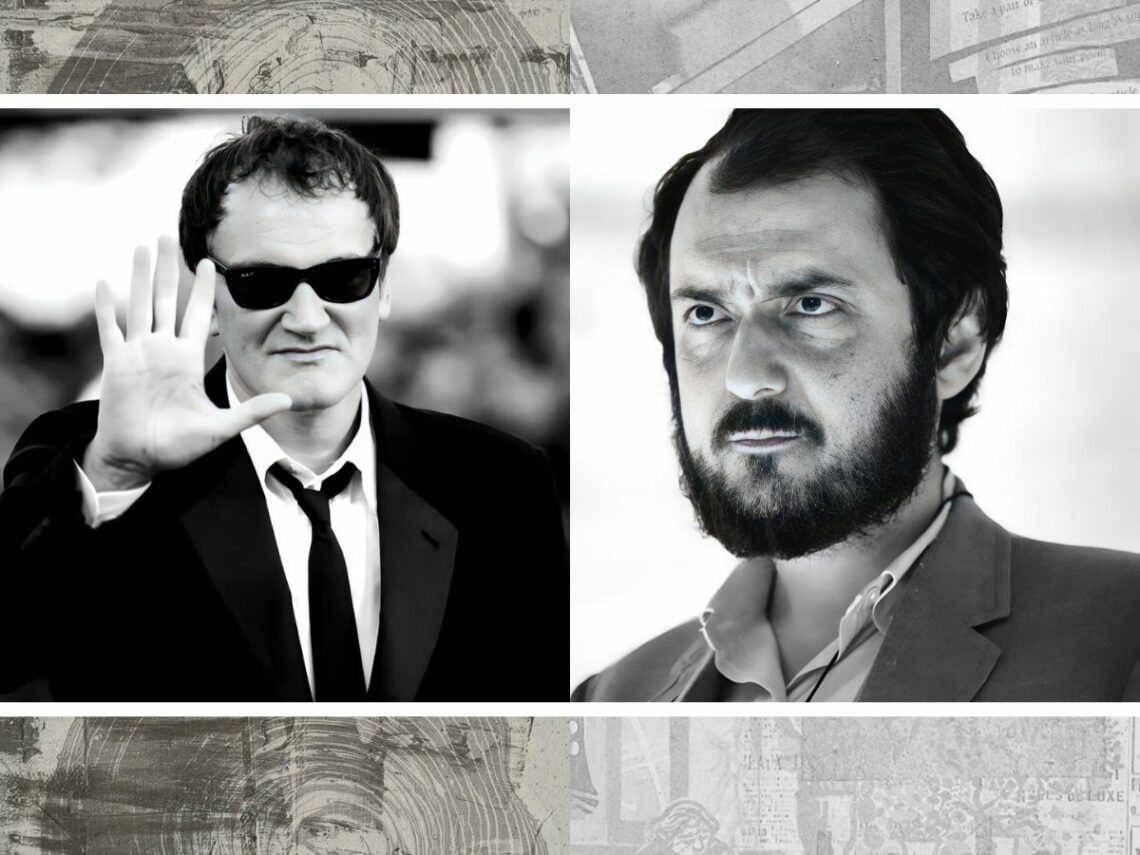
The remake Quentin Tarantino prefers to the Stanley Kubrick original: “A masterpiece”

There is one singular difference between Quentin Tarantino and most of his contemporaries: he never went to film school. The filmmaker spent his education in cinemas and in front of the TV screen, learning how to make movies through the process of osmosis. It means his viewpoint on movies is unique and unfettered and, thanks to his willingness to talk about his favourite and less-than-favourite films, unshared.
There are some directors who it’s simply impossible to criticise. There’s a sense that if someone was to cast doubt over the work of Martin Scorsese, Francis Ford Coppola or Alfred Hitchcock, they’d be quickly dispatched by the ‘classic film’ police. “Yeah, well, that’s just, like, your opinion, man,” they’d say, pushing you into the back of a transit van.
However, few are revered in the pantheon of great directors than Stanley Kubrick. His body of work, which includes films like 2001: A Space Odyssey, Barry Lyndon and Dr. Strangelove, is pretty much bullet-proof. That being said, Quentin Tarantino has never been particularly taken with Kubrick’s filmmaking, to the extent that he prefers a much-maligned remake of one of the director’s classic films.
As you would expect of the man responsible for such labyrinthine and self-referential films as Pulp Fiction and From Dusk Till Dawn, Tarantino is one-half film critic, and one-half director. Like new wave directors Jean-Luc Godard and Claude Chabrol, Tarantino’s filmography has a critical, journalistic edge. He’s never shied away from giving honest opinions about the work of other directors, especially that of Kubrick, whose 1997 version of Lolita rubbed him up the wrong way.
Back in 2003, Tarantino gave an interview published in The New Yorker, in which he opened up about the formalism of filmmakers like Stanley Kubrick, revealing that he had made a concerted effort to counteract with his own brand of cinema. Tarantino confessed that he’s always found the director’s work a little clinical and lacking in tenderness: “The first 20 minutes of A Clockwork Orange are absolutely perfect,” he began, going on to label Kubrick a hypocrite for his attempt to make a film “not about violence, but about condemning violence”.
Tarantino also revealed that he has always preferred Adrien Lyne’s 1997 version of Lolita to Kubrick’s 1962 film, even though the former was a huge flop on release. “I think Lolita by Adrian Lyne is a masterpiece,” he confessed. “When I saw it, I wondered if Kubrick had read the book. He took the book and turned it into this crazy comedy, which is pretty amazing.”
Tarantino went on to criticise Kubrick’s approach to Nabokov’s famously contraversion story about a man’s infatuation with a barely-pubescent girl: “The idea that you can make a Lolita movie without one disturbing image is crazy. It’s a scam! I mean, it’s missing the most fascinating part of the job, which is to look through the eyes of a paedophile and accept it.”
Kubrick’s mistake, according to Tarantino at least, was his failure to confront the darkest and most essential aspect of Nabokov’s original text: that we are forced to see the world through the unreliable gaze of a man society deems to be monstrous. Tarantino has rarely hidden his willingness to address the darkness of humanity, even if his stylistic choices often belie the seriousness of the conversation at hand, and it means he holds Kubrick’s picture up as an opportunity missed.

Never Miss A Take
The Far Out Quentin Tarantino Newsletter
All the latest Quentin Tarantino content from the independent voice of culture.
Straight to your inbox.