


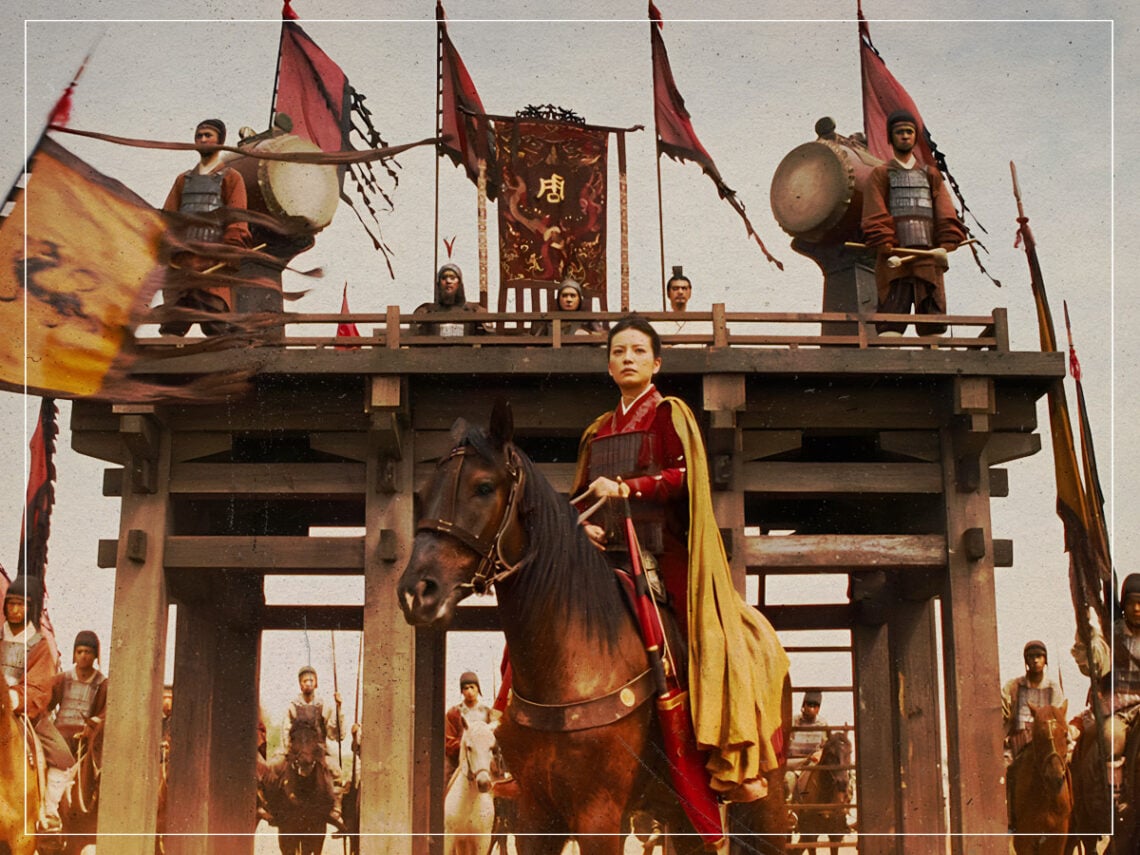
‘Red Cliff’: The staggering historical epic that out-earned ‘Titanic’

Even the staunchest of John Woo defenders are forced to admit his decade-long sabbatical to America didn’t pan out as expected for somebody lauded as one of the action genre’s greatest directors, but a return to home turf and a dive into the historical epic proved to be just the project to reenergise his creative juices.
It’s inarguable that Woo’s Hollywood career peaked with Face/Off after the middling Hard Target and Broken Arrow, before Mission: Impossible II brought his greatest commercial success. It came prior to stodgy Windtalkers and Paycheck necessitating a 20-year exile from Stateside screens until wordless revenge story Silent Night.
Not that Woo was going back to China to lick his wounds, though, considering he set about mounting one of the most expensive and ambitious productions the local industry had ever seen. Carrying a blockbuster-sized budget of $80million, Red Cliff was the single costliest movie in the history of Chinese cinema, placing immense pressure on Woo’s comeback to succeed.
Based on the Battle of Red Cliffs that was fought between 208 and 209 AD, the director admitted that only 50% of the events to unfold on-screen were factual. While that had the potential to ruffle some feathers in somewhere like China where historical events are regularly treated with the utmost reverence, authenticity, and realism, it can’t be argued that his approach didn’t work wonders for a film that was epic in every sense of the word.
Unfolding towards the end of the Han Dynasty and on the cusp of the Three Kingdoms period in Imperial China, Fengyi Zhang’s General Cao Cao issues a declaration of war against the southern provinces in an attempt to create a unified China. To combat the encroaching threat of his armies, Tony Leung’s Viceroy Zhou Yu forms an alliance with the warlords of the south, deploying his tactical nous and strategic genius to compensate for how heavily outnumbered his forces are.
An arduous production on either side of the camera, Ken Watanabe was originally cast as Cao Cao before being replaced by Fengyi, with the hiring of a Japanese actor to play an important figure in Chinese history causing an uproar. Woo’s former muse Chow Yun-fat was intended to play Zhou Yu, but he dropped out right before the start of shooting and was replaced two days after production had started by Leung, who he’d ironically co-starred with in Woo’s action masterpiece Hard Boiled.
Filming rumbled on for well over a year, and there was even a freak accident that killed a stuntman and injured six others when a fire broke out, with Red Cliff eventually being split into two parts and released in July 2008 and January 2009. The historical epic was in the midst of its own post-Gladiator renaissance, but Woo showcased in spectacular style that he remained more than capable of blowing Hollywood clean out of the water when he was operating on top form.
A triumphant return, Red Cliff boasts impressive visual effects, jaw-dropping production values, immersive backdrops, engaging characters, and of course, masterful action sequences. Woo had done period pieces before, but his long-awaited return to Chinese filmmaking afforded him to realise history on a scale comparable to his American films, with his experience gained in wrangling massive productions allowing him to craft an immersive, grandiose, blood-splattered, and visceral war story that put the likes of Troy, Alexander, Kingdom of Heaven, and the rest of Gladiator‘s spiritual successors to shame.
That applies to its commercial performance, too, with Red Cliff besting the record set by James Cameron’s all-conquering Titanic over a decade previously to become the highest-grossing release ever in mainland China. An abridged version was released internationally that boiled the whole thing down to a measly 148 minutes, but make no mistake about it, that’s the absolute worst way to experience the movie.
For the only Red Cliff viewing order that matters, there’s no other way than devouring Part I and Part II back-to-back, provided there’s 288 minutes to spare. It’s a monumental undertaking, without a doubt, but one that’s totally worth it.
