


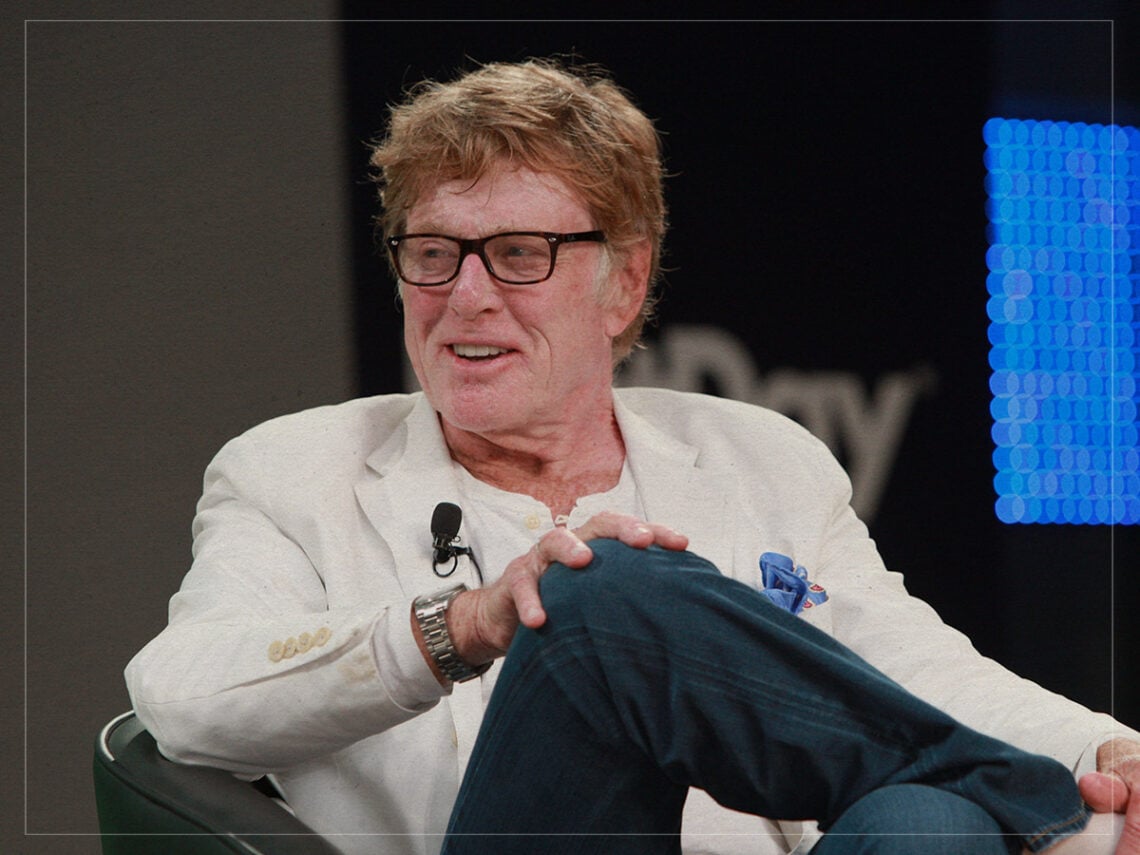
The reason Robert Redford avoided independent movies for 20 years: “I probably went way too far”

Whenever a famous actor dies, their obituaries are usually flooded with superficial information about awards and box office hits.
Marlon Brando, who revolutionised acting in the 1950s, was remembered for his performance in Superman, while Gena Rowlands, an actor’s actor who redefined screen acting in the 1970s, was remembered as the kindly nursing home dweller in The Notebook.
All of this is as inevitable as it is insulting, but Robert Redford got a rare reprieve, as when the ‘70s heartthrob and political activist died in 2025, headlines did indeed mention his roles in Butch Cassidy and the Sundance Kid and Out of Africa, but many of them also noted his contributions to indie cinema. As the founder of the Sundance Film Festival, Redford is possibly the single most important figure in independent movie history, simply by providing filmmakers with a starry platform to show their work.
It seems bizarre, then, that the man himself should have been so darned allergic to working in independent movies for a large portion of his career. He gained early stardom with glamorous Hollywood fare like Butch Cassidy and Barefoot in the Park, both of which were enormously successful with critics and at the box office, but after souring on the whole circus associated with such stratospheric heights of fame in the late 1970s, he retreated from public life and founded the Sundance Institute.
Instead of separating completely from Hollywood by embracing a new chapter as the star of independent movies, though, he did the opposite, where for a full two decades, he refused to star in any of them, choosing big-budget fare instead.
In a 2004 interview with SF Gate, the Indecent Proposal star explained that his reasons were self-aware rather than greedy, saying, “I had to be very careful in the beginning about anything that might appear to be self-serving, where I’d be [using] my own festival to satisfy my own needs.” In other words, he didn’t want the Sundance Film Festival to end up being a showcase for movies that he starred in.
He admitted that he “probably went way too far” with the whole thing by completely shutting out small-scale projects, but again, it’s hard to fault him for that, for, if anything, he was guilty of doing it too well rather than not well enough.
Between 1980 and 2004, Redford’s filmography was eclectic but decidedly mainstream, showing up in the baseball movie, The Natural, the erotic thriller, Indecent Proposal, the espionage thriller with Brad Pitt, Spy Game, and in his generation’s version of Titanic, Out of Africa, but even then, he only starred in nine films over the 24 years, suggesting that, he was actually devoting most of his time the behind-the-scenes of indie cinema. He also leaned into directing, earning his only Oscar for helming the gut-wrenching family drama Ordinary People.
By the early 2000s, Redford was ready to stick his head above the parapet again and take on some small-scale projects, finding something of a late career renaissance in the area with movies like All is Lost and The Old Man & the Gun. Sadly, his last screen credit was an Avengers movie, but we can all collectively agree that it didn’t happen.
