

Life and death: The critical impact Danny Whitten had on Neil Young
Read More


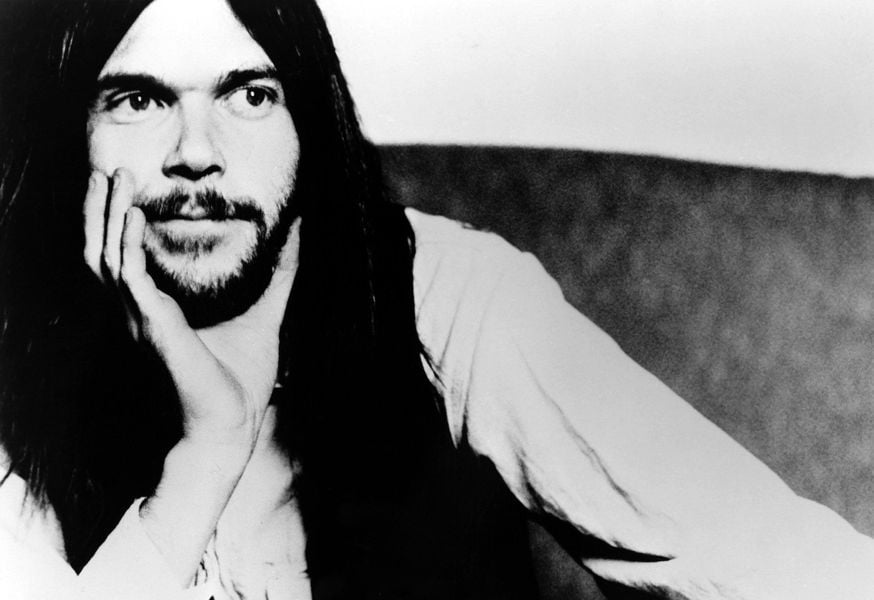
Neil Young is one of the most significant musicians of all time. Without his pioneering work, alternative music today would not be the same. Celebrated as the ‘Godfather of Grunge’, Young’s detuned and expansive guitar work paved the way for the likes of Sonic Youth, Nirvana and Radiohead, to name but a few.
He, like his contemporary Jimi Hendrix, saw the guitar for what it is: a piece of wood that is best used as a mouthpiece for the heart. Young was one of the first figures to popularise expressive, emotionally driven playing, rather than placing technical peacocking at the front and centre, and it was this that endeared him to so many.
Duly, Young instils all of his work with his complex emotions. Whether it be the classic 1969 record Everybody Knows This Is Nowhere, 1975’s Zuma or otherwise, Young’s music has a tangible bite, something that resonates with all of us, even if we can’t quite figure out why. Young has lived a life filled with many ups and downs, and given that he is a mainly autobiographical songwriter, these moments have influenced his music. We know that when we’re listening to his work, the sentiment is organic, be it happy, sad or angry.
One of the most notable points in Young’s life was the death of former Crazy Horse lead guitarist Danny Whitten. A close friend of Young’s, Whitten helped the Canadian maestro to take his proto-grunge steps on Everybody Knows This Is Nowhere, and it is likely that without his help, Young would not be hailed as the ‘Godfather of Grunge’. After Whitten fatally overdosed on heroin in 1972, this led to a period of darkness for Young, imbuing his records with pathos and regret. Whitten’s death affected Young’s life and career markedly, and it would take him a while to recover.
Young had never enjoyed interviews, as he explained in a 1975 conversation with Rolling Stone alongside Cameron Crowe, but Whitten’s death pushed him even further away from his fans. Asked why he had finally decided to talk, Young set the record straight. He said: “There’s a lot I have to say. I never did interviews because they always got me in trouble. Always. They never came out right. I just don’t like them”.
Young added: “As a matter of fact, the more I didn’t do them the more they wanted them; the more I said by not saying anything. But things change, you know. I feel very free now. I don’t have an old lady anymore. I relate it a lot to that. I’m back living in Southern California. I feel more open than I have in a long while. I’m coming out and speaking to a lot of people. I feel like something new is happening in my life”.
He continued: “I’m really turned on by the new music I’m making now, back with Crazy Horse. Today, even as I’m talking, the songs are running through my head. I’m excited. I think everything I’ve done is valid or else I wouldn’t have released it, but I do realise the last three albums have been a certain way. I know I’ve gotten a lot of bad publicity for them. Somehow I feel like I’ve surfaced out of some kind of murk. And the proof will be in my next album. Tonight’s the Night, I would say, is the final chapter of a period I went through.”
Crowe then asked Young about the murky period, to which he responded with the candour that we’ve always loved him for. He opined: “Oh, I don’t know. Danny’s death probably tripped it off. Danny Whitten [leader of Crazy Horse and Young’s rhythm guitarist/second vocalist]. It happened right before the Time Fades Away tour. He was supposed to be in the group. We [Ben Keith, steel guitar; Jack Nitzsche, piano; Tim Drummond, bass; Kenny Buttrey, drums; and Young] were rehearsing with him and he just couldn’t cut it”.
Remembering the last time he saw his old friend, Young expressed deep regret at the way things ended: “He couldn’t remember anything. He was too out of it. Too far gone. I had to tell him to go back to L.A. ‘It’s not happening, man. You’re not together enough.’ He just said, ‘I’ve got nowhere else to go, man. How am I gonna tell my friends?’ And he split. That night the coroner called me from L.A. and told me he’d OD’d. That blew my mind. Fucking blew my mind. I loved Danny. I felt responsible. And from there, I had to go right out on this huge tour of huge arenas. I was very nervous and… insecure”.
Luckily for Neil Young and his fans, he would emerge from the period of murk triumphantly on the back of 1975’s Tonight’s the Night and Zuma. However, the rest of the ’70s wouldn’t be straightforward, as he was forced to confront the infidelities of his partner Carrie Snodgress and grappled with his perceived irrelevance towards the end of the decade. Despite this though, he ploughed on, and against all odds, continued to be revered even as the musical landscape changed around him.
He’d also become more prominent in the media, and today, he’s unstoppable when it comes to speaking his mind. Just ask Joe Rogan and Spotify.
