


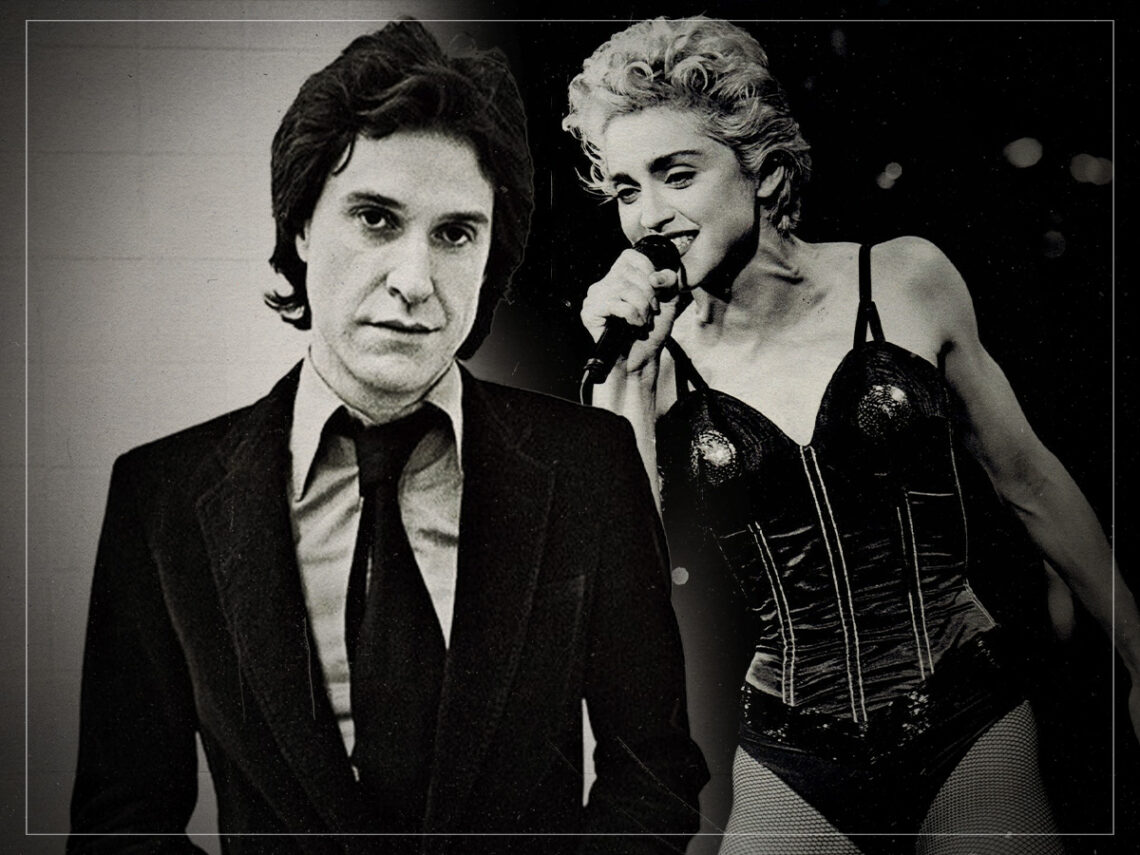
‘Vogue’: Exploring Ray Davies’ unlikely appreciation for Madonna

Rock and roll would be a very different world without the pioneering efforts of Ray Davies and The Kinks back in the 1960s, building upon their adoration of old-school blues and American R&B to create the definitive, adrenaline-fueled sound of Britain’s post-war youth. By virtually every metric, then, Davies’ output is about as far away as you can get from the pop stardom of Madonna.
Even if you are not a particular fan of Madonna Louise Ciccone, it is difficult to dispute her pop credentials. A cultural icon and regular fixture of the singles charts, her output typified the pop sounds of the 1980s and beyond, leading to a deluge of poor imitators and – without wishing to oversell it – changing the entire landscape of pop music. Similarly, The Kinks changed the landscape of rock and roll during their early years, but that is where the similarities between those two artists cease.
Davies, for instance, has never really fit into the ‘pop’ realm, even during the time in which his compositions were riding high in the transatlantic singles charts. Despite amassing his fair share of hits, the songwriter always seemed to be striving for something deeper, spurring on the profound genius of social realist concept albums like The Village Green Preservation Society or Arthur; albums that didn’t fare too well commercially, but presented Ray Davies among the greatest songwriters of the era.
Throughout all of his expansive, constantly evolving litany of projects, though, it has always been fairly easy to see where Davies gets his musical inspiration from. In the early days, particularly, The Kinks’ sound was endlessly indebted to American blues, R&B, and soul music, and those influences always remained key to the core of the group. You will notice, of course, that Madonna does not fit into any of those categories.
Nevertheless, when Davies appeared on BBC 6 Music to highlight five of his all-time favourite songs, among the likes of Otis Redding, Dizzy Gillespie, and The Temptations, he plucked out Madonna and her 1990 hit ‘Vogue’.
Bizarrely, Davies didn’t seem to expand upon exactly why ‘Vogue’ struck a chord with him, much less why he placed it at par with Redding’s ‘Ole Man Trouble’. It is worth noting, too, that the songwriter would have been 46 years old when Madonna released that chart-topping track back in 1990, and very much in the twilight of his years with The Kinks – in other words, he was hardly the target audience of the song.
Perhaps, from one songwriter to another, Davies appreciated Madonna’s ability to create an escapist anthem that blends a multitude of different genres and niche scenes together in a way that is digestible for mass audiences – something that The Kinks did very well during their heyday. Alternatively, it could be as simple as Davies, like everybody else, being unable to resist the infectious groove at the heart of ‘Vogue’.

Elsewhere, Ray Davies hasn’t discussed Madonna’s output at any great length; in fact, the extent of his discussion surrounding the ‘Queen of Pop’ is limited to a quote he gave The Guardian in 2015, in which he claimed, “I saw Madonna in Waitrose once.”
Whether or not the two songwriting behemoths stopped to speak to each other over that middle-class produce remains a mystery, but the image of a Sixties icon admitting his adoration for ‘Vogue’ in the fruit and veg aisle of a local Waitrose is certainly an entertaining image.
