


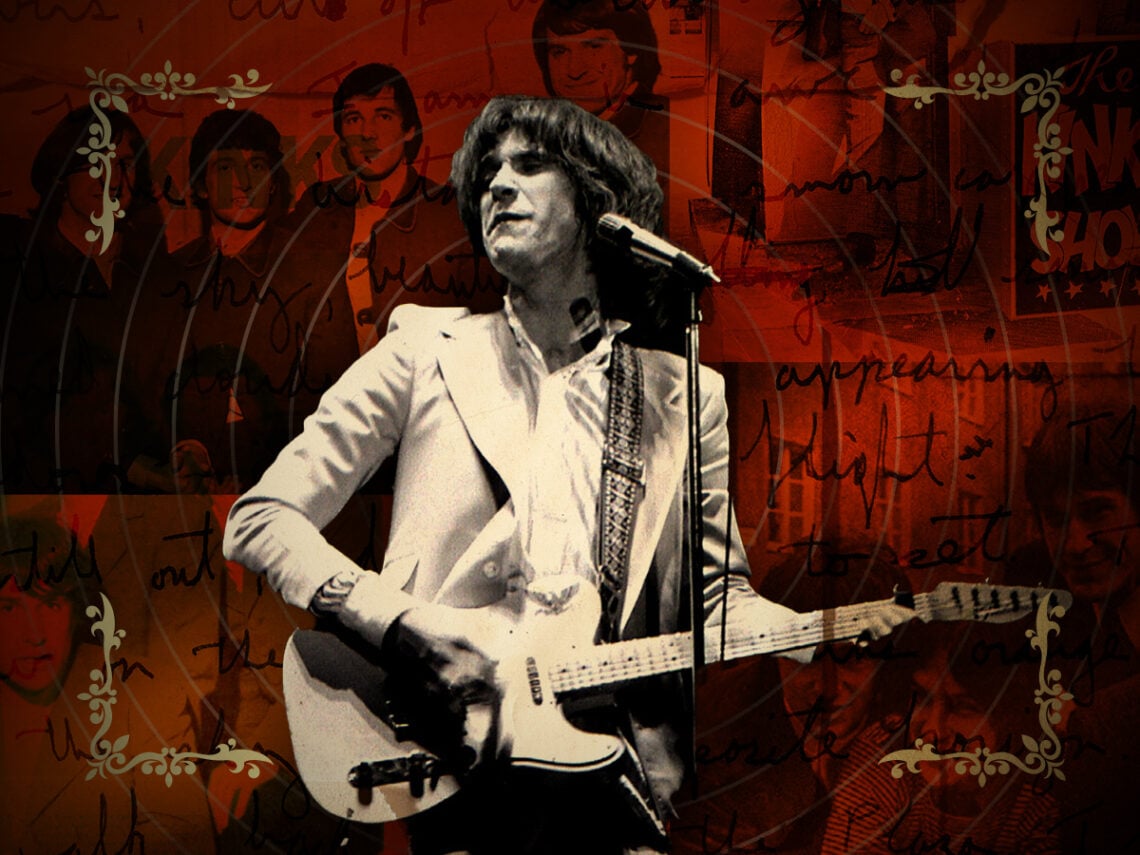
How Ray Davies used painting as his springboard to songwriting

Just a few years into The Kinks’ existence, it had already become quite apparent that frontman Ray Davies was operating on a slightly more complex intellectual level as a songwriter than the majority of his mop-topped contemporaries from the initial British invasion era.
1968’s The Kinks are the Village Green Preservation Society and its follow-up, Arthur, were vivid explorations of characters and scenes from Davies’ personal pocket of post-war London, and they became foundational reference points for countless “concept albums” that followed, both in the UK and abroad.
As a songwriter and lyricist, one might have guessed that Ray Davies was pulling much of his influence from British “kitchen sink” dramas and stage plays of the time, and indeed, Arthur was originally envisioned as both an album and a corresponding television drama, which was fully cast and developed by Davies, but cancelled at the last minute in 1969 due to a lack of funding.
According to Ray himself, though, his actual approach to writing songs was less akin to a screenwriter or playwright and more like a painter. He had, after all, studied at London’s Hornsey College of Art in the early ‘60s, and had flirted with the idea of becoming an artist before music caught his fancy. Lessons he’d learned in that first medium carried over to the other in surprising ways.
“It stems from when I was in art college,” Davies told the Philadelphia Daily News in 1970, explaining where he developed his joy for songwriting. “I was a painter. I used to think I’d finished something, and the teacher’d say, ‘You’ve finished? You’ve just started!’ And I’d say, ‘Yeah, you’re right. I could’ve done lots of things with it.’ So I’d paint over something and end up doing the whole thing again. The whole picture would take on a new image.”

As Davies started jamming with other musicians during this same period, he also realised that songwriting opened up a new world of expression for him that his visual art sometimes couldn’t achieve.
“Something that I couldn’t do with paints, I’d write a song about,” he said.
Songs like ‘Shangri-La’ on Arthur showcase Ray Davies’ ability to paint a picture with words, undercutting idyllic British scenes and lifestyle goals with a cynical eye.
“And all the houses in the street have got a name / ‘Cause all the houses in the street, they look the same / Same chimney puff, same little car, same window panes / The neighbors call to tell you things that you should know / They say their lines, they drink their tea, and then they go / And they tell your business in another Shangri-La.”
If Ray was now the young bard of swinging London, it wasn’t necessarily by design.
“I don’t ever have a plan,” he said in 1969. “I just get very interested in something and then I think about the different ways I can write about it; from that angle or from another angle, and it’s all one. That’s why some songs sound funny when you first hear them.”
As for why explorations of working-class English life – rather than hippie revolution talk – were the focus of his lyrics at the time, the 25-year-old Davies had a simple explanation.
“I probably do it because I’m English and can’t help but be involved in class, fields, country,” he said. “It’s very important. Just because I’m not a traditionalist doesn’t mean I don’t appreciate certain things and feel like they should carry on. Why, even draft beer isn’t the real thing anymore!”
