


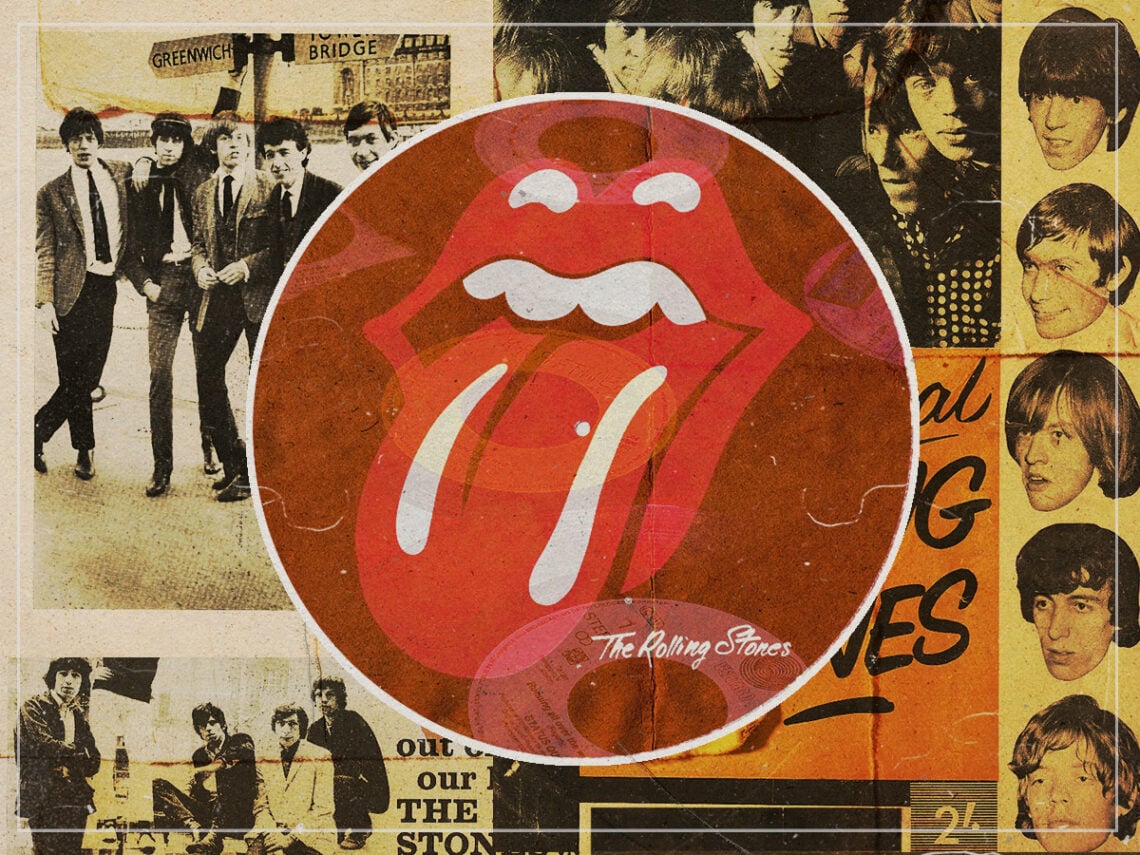
Ranking every number one song by The Rolling Stones

Maybe the biggest rock and roll band of all time, The Rolling Stones have been making records and selling out stadiums for over 60 years. Led by the booming voice of Mick Jagger and the effortlessly skilled guitar stylings of Keith Richards, the band have reached a level of success and critical acclaim that very few artists could even dream about.
Having thousands of people cheer for you as gods for upwards of six decades has undoubtedly changed the group. The rag-tag band of misfits that horrified parents and authority figures in the 1960s now sit firmly on the upper echelon of rock and roll statesmen. Nevertheless, the Stones continue to write and record new material, releasing the fairly successful Hackney Diamonds in October of this year.
Despite their intense level of success, even being viewed as rivals to The Beatles in the 1960s, The Rolling Stones have managed only eight number one singles across their reign. Although they boast an impressive 44 top 40 singles, only eight of their tracks have managed to clamber their way to the very top of the charts.
These eight tracks are not necessarily indicative of the Stones’ greatest work, especially considering that some of their material, Exile on Main St., for instance, favours the album format as opposed to a single release.
So, bearing that in mind, let us count down the eight Rolling Stones tracks that the British music-buying public responded to most favourably.
The Rolling Stones number one songs ranked:
8. ‘Honky Tonk Woman’
Peaking at number one in July 1969 and staying there for five weeks, ‘Honky Tonk Woman’ was the Stones’ last number one single to date. Written by Jagger and Richards, the song is apparently inspired by Brazilian Caipiras encountered by the songwriters during a holiday in São Paulo. Thematically, though, ‘Honky Tonk Woman’ shares much more in common with North America than the South.
With lyrics revolving around a ‘bar-room queen in Memphis’ and a distinctly country and western feel to the track, it stands out against the out-and-out rock and roll that was purported by the Stones for much of their career before this song.
Unfortunately, the country influence and recurring themes of the US south make ‘Honky Tonk Woman’ feel almost like a novelty track. Perhaps it has simply not aged well, but it seems unbelievable that the band could go from the innovative psychedelia of Their Satanic Majesties to this overblown country and western tribute number only two years later.
7. ‘It’s All Over Now’
From their most recent number one to their first, ‘It’s All Over Now’ provided the band with their inaugural number one back in July 1964. Written by Bobby and Shirley Womack, the song was initially released by the family R&B group The Valentinos. Quickly recording and releasing a cover version, the Stones found their first major success with the track.
Spending 15 weeks in the singles chart, though only one of those weeks at the top spot, ‘It’s All Over Now’ encapsulates the early sound of the band. With Jagger attempting to mimic the R&B style that the song was originally written for, the single sounds somewhat quaint in comparison to the ones that followed. It is the sound of a band still finding their feet and attempting to establish themselves on the over-saturated music scene of mid-1960s England.
6. ‘Little Red Rooster’
It is no secret that rock ‘n’ roll, as a genre, borrowed heavily from blues. The genre’s influence is present throughout all material recorded by the Stones, but it is perhaps most obvious on ‘Little Red Rooster’. The blues standard, first recorded by Howlin’ Wolf, provided the band with their second number one single, coming at the end of 1964.
Although the single is not necessarily the Rolling Stones sound that we all know and love, it is refreshing to hear them play out-and-out blues music without too much fanfare. The fantastic guitar playing of the late Brian Jones forms the heart of this track. Sure, it is not reinventing the musical wheel; in fact, it contributes to widespread criticism that the Stones stole their sound from under-appreciated Black artists, but it certainly acts as an early career highlight for the group.
5. ‘The Last Time’
Another notable example of the group’s musical colonialism, ‘The Last Time’ was the band’s first number one that was written by Jagger and Richards themselves. Except it wasn’t. ‘The Last Time’ is almost identical to the traditional gospel track ‘This May Be the Last Time’ recorded by the Staple Singers over a decade prior to the Stones’ version. Nevertheless, Jagger and Richards continue to claim the royalties from the time of its writing to this day.
Putting aside its problematic context, ‘The Last Time’ is surely one of the most iconic early Stones tracks. With one of the most recognisable opening bars of any song from the period, it builds upon the sound of ‘It’s All Over Now’, sounding more self-assured and mature in sound. Spending three weeks at number one, ‘The Last Time’ was a sign of things to come from the band, beginning a streak of three consecutive number one singles throughout the summer of 1965.
4. ‘Get Off Of My Cloud’
The final instalment in that trio of number ones comes in the form of ‘Get Off Of My Cloud’. Reportedly composed in response to critics questioning how the band could possibly follow up their smash hit ‘(I Can’t Get No) Satisfaction’, the track is characterised by Jagger’s sneering, strained vocals and the call-and-response chorus. Much like the previous track on this list, ‘Get Off Of My Cloud’ spent three weeks at number one in November of 1965.
Musically, this single is fairly similar to ‘The Last Time’, with the signature Stones guitar tones and machine gun-style drumming of Charlie Watts. Although not Jagger’s most impressive work lyrically, his performance of the song more than makes up for it. It is said that the anger inherent in his shouting on this track was later a big influence on the punk and new wave scene.
3. ‘Jumpin’ Jack Flash’
Two years after their last number one single, The Rolling Stones returned to the top spot with their classic hit ‘Jumpin’ Jack Flash’. Returning to a more signature sound after a brief but brilliant flirt with psychedelic rock, the single harks back to their earlier work, incorporating the influences they have gained in the intervening years. Their penultimate number one also hints at the band’s magnum opus, ‘Sympathy for the Devil’, and their later favour with the growing counter-cultural and anti-war movements in the US.
Spending two weeks as top of the pops in 1968, the single has since become one of the group’s most popular. Welding together their early blues influences with psychedelia and that signature swinging ’60s sound, the track is a stalwart of Stones live performances, currently holding the record for their most played track. In addition to its success, the song has also sparked cover versions by legendary artists such as Aretha Franklin, Tina Turner and Thelma Houston.
2. ‘(I Can’t Get No) Satisfaction’
With one of the most recognisable hooks in all of music, ‘Satisfaction’ is the classic Rolling Stones tune. Although originally receiving airtime only on early pirate radio stations, due to the sexual content of the lyrics, the single later beat Sonny and Cher’s ‘I Got You Babe’ and the classic Beatles track ‘Help!’ to take the number one spot in September 1965. Recorded at RCA in Hollywood, the song signified the growing popularity of ‘British invasion’ bands in the States by providing the Stones with their first number one single in the USA.
Covering topics of sexual frustration and commercialism, the single was distinctly ahead of its time. Musically, the track features the usual blues rock influence of the early Stones sound, but Richards’ iconic guitar riff is the real star of the show. Reportedly, Richards wrote the riff in his sleep whilst he happened to be recording an audio cassette. Whilst that tale does have the ring of a story concocted much later by someone trying to flog an autobiography, the brilliance of Richards’ writing on this track cannot be overstated.
Widely considered among the greatest songs of all time, ‘(I Can’t Get No) Satisfaction’ represents the moment the band moved from being a popular 1960s rock band to certified rock and roll stars with an enduring legacy. Contributing to its legendary status, the single has also been covered by a wide variety of artists. Britney Spears, Otis Redding, and Dolly Parton have all taken a crack at the classic hit, but the most notable cover comes from new wave heroes Devo, whose reimagining of the Stones hit gained popularity in the late 1970s.
1. ‘Paint It Black’
So, what song is worthy of beating ‘(I Can’t Get No) Satisfaction’ to the top spot? Well, ‘Paint It Black’ spent a modest one week at the top of the charts before being knocked off by Frank Sinatra. However, despite its lower level of commercial success in comparison to some other tracks on this list, ‘Paint It Black’ represents an incredibly exciting time in the Stones’ discography in which they moved away from playing exclusively blues rock and began to experiment with broader influences. The track features a heavy influence from India and the Middle East, with Brian Jones playing the sitar, as opposed to his usual teardrop Vox.
It is this experimentation and incorporation of different influences that make this track so thrilling. Beginning with the enchanting sounds of the sitar and driving beat before erupting into a glorious menagerie of sound, the song is perhaps the greatest encapsulation of the 1960s in one song. As well as that, though, it has a timeless quality to it, as shown by the fact it reentered the charts upon its 2007 reissue. The moody, volatile performance by Jagger on this track endeared the band more towards the rebellious youth of the ’60s, with this track becoming almost synonymous with the hippie counter-cultural movement and anti-war protests against US involvement in Vietnam.
Predicting the band’s move more towards psychedelic rock and experimental, ‘sophisticated’ music, rather than the cookie-cutter blues rock they had found fame with up until that point, ‘Paint It Black’ is the quintessential Stones track. Whilst it may not have been their most successful number one single, it certainly tops our list of the greatest.
