


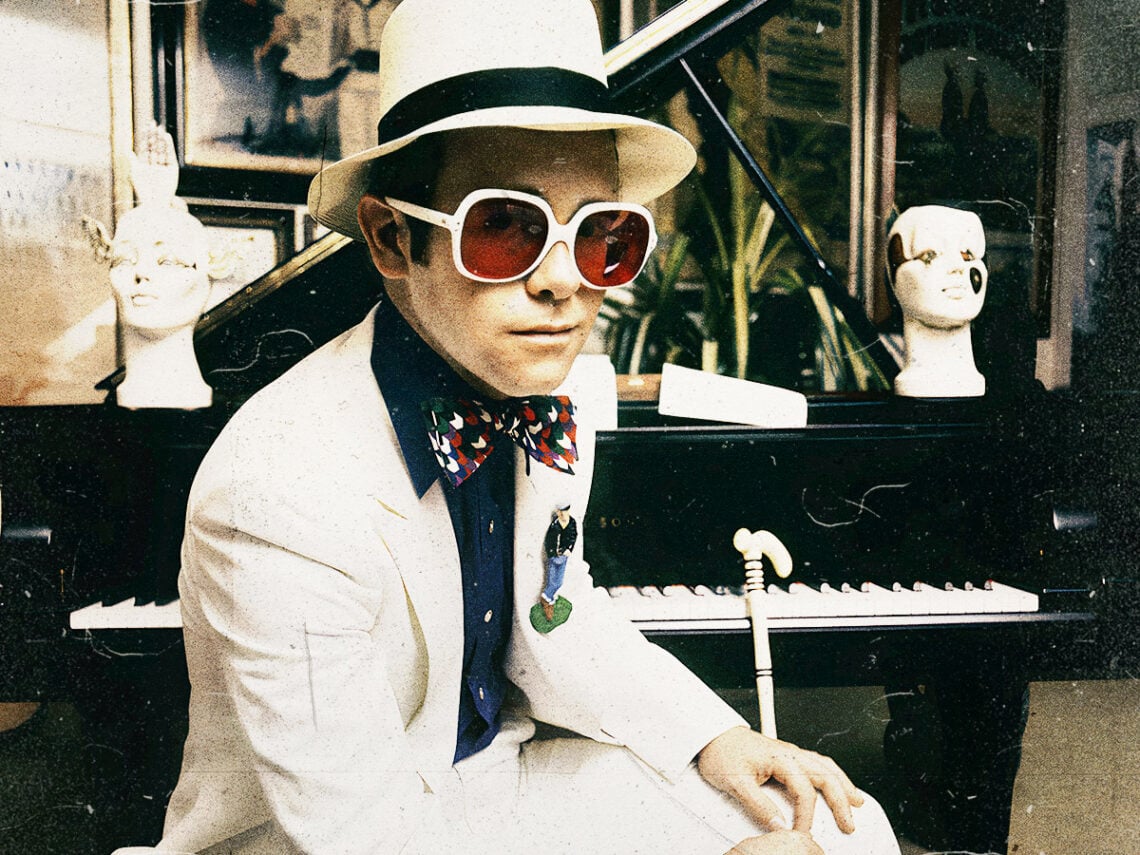
Ranking the albums in Elton John’s golden run of seven straight number ones

Elton John‘s legendary status is undeniable, his influence stretching far beyond British music history to profoundly impact the global music scene. With his unique style, he transformed honky-tonk piano into timeless hits that have resonated for decades. However, there was a pivotal moment when John’s ascent to stardom reached its peak, dominating the charts with a string of hits throughout the 1970s.
It started in 1972 with Honky Chateau. His success had been building for a while, with older tracks like ‘Your Song’ and ‘Tiny Dancer’ gaining him attention. It was a steady climb as John moved out of the piano bars and onto bigger stages. But when his fifth album came out, everything suddenly fell into place, and Honky Chateau gave him his first number one hit.
Maybe it was adding a bigger and more thorough band as he introduced electric and acoustic guitars to the mix permanently and brought in new bass and drum players to record a vaster sound. Maybe it was all down to the hit ‘Rocket Man’. But whatever the recipe to success was, it worked. From that moment on, his next six albums made it straight to number one, too.
From 1972 to 1975, every album John released soared to the top of the chart. It was the golden run that made him a legend. Seeing the release of his biggest and most enduring tracks, this era cemented his lofty position in the music world.
The golden era also traced his evolution from piano man to all-out star as his sound expanded. But not all albums are built the same. Even in a run of number ones, some releases are better than others. Marking the best of the best when it comes to John’s discography, which release comes out on top?
Ranking Elton John’s seven straight number ones:
7. Don’t Shoot Me I’m Only the Piano Player (1973)
As the title suggests, Elton John is only a piano player on this album. This release feels like a closing remark on John’s earlier period as he began to kiss the piano bars goodbye and move on to bigger sounds. But for this record, every piece could be staged on an out-of-tune piano in some basement bar.
If you’re a fan of his lyricism, this release is a treat, as there’s nothing to distract from. The tracks are predominantly driven by his old-school piano styling, with minimal production. While there are some enjoyable big band moments, as seen on ‘I’m Going To Be A Teenage Idol’, they feel somewhat restrained, especially for a song about Marc Bolan. Of course, ‘Crocodile Rock’ showcases John at his shimmying best, but for the remainder of the record, you may find yourself better served by listening to Billy Joel.
6. Rock Of The Westies (1975)
Recorded at Caribou Ranch in the Rocky Mountains of Colorado, Elton John suddenly fancied himself a countryman. From the opening section of the expansive ‘Yell Help’, ‘Wednesday Night’ and ‘Ugly’ medley, John seems to be putting on his finest redneck accent. Burying his piano under a classic rock instrumental for much of the record, he fancied a full stylistic switch.
There are obviously high points. As with the rest of these releases, this record is another snapshot of John at his most theatrical and creative. Nobody can deliver outright, overblown dramatics quite like Elton John. But in comparison to the other releases and the hits they hold, this final release in the run doesn’t quite match up to the watermark, even if ‘Don’t Go Breaking My Heart’ is a timeless hit.
5. Caribou (1974)
Starting your album with a piece called ‘The Bitch Is Back’ is undeniably brilliant. Even without hitting play on the song, it’s a bright, silly move that is so fabulously Elton John. The track lives up to the sassy title, still standing as one of his most underrated cuts. Even on his final tour, with an ageing audience, the spittle-flecked scream of the famous swear word was widely enjoyed.
But from that moment on, Caribou is a strange release. It lacks a thread to pull the pieces together. Instead, it just feels like a home for three hits; ‘The Bitch Is Back’, the timeless power ballad ‘Don’t Let The Sun Go Down On Me’ and John’s theatrical take on The Who’s ‘Pinball Wizard’. To make the mish-mash album worse, for some reason, the remastered version on streaming sites also includes the Christmas hit, ‘Step Into Christmas’, which does nothing for the lack of cohesion.
4. Honky Chateau (1972)
As ‘Honky Cat’ starts up, the fun rhythms and melodies have toes tapping and heads bobbing. Within one song, you know you’re in for a good time, and that feeling hangs around right through to the end.
The album marked a change for John as he let a bigger band into the process. By this point, the group were still sticking true to his early style, though influenced more by jazz or rockabilly than the classic rock and roll that was hitting the big time. It’s easy to hear how artists like Jerry Lee Lewis and Little Richards inspired him as he merges real musicality with showmanship.
As a collection of tracks, Honky Chateau feels neat and precise. Recorded just as John was starting to reach his stardom, he didn’t have the luxury of truly running away with himself as he did on later albums. Instead, these works are satisfying in their perfectly done packaging, taking them to a big climax without dragging their feet. John, at this point, is still a piano man through and through, and complete with Bernie Taupin’s growing lyrical prowess, all the stage is set for his rise.
3. Captain Fantastic and the Brown Dirt Cowboy (1975)
Potentially one of the worst album titles ever, but we can ignore that fact. While Elton John is a legend, ‘cool’ is a term rarely associated with his work, as his attempt at a concept album strayed perhaps more into musical theatre territory than anything Pink Floyd or Kate Bush ever tuned in. In 1975, John and his long-term collaborator Bernie Taupin turned their life stories into a musical adventure, tracking their story from the start to the present day. It’s a beautiful mark in the sand, reminiscing on their early days as struggling artists trying hard to make the music work. As the record gave them their fifth consecutive number one, it must have been an incredible moment for the duo.
You can hear that labour of love in every song. The opening track writes them a theme tune, while ‘(Gotta Get) A Meal Ticket’ is a roaring anthem for starving musicians everywhere. While the pieces are as big and boisterous as any other of John’s hits, the record has a clear storytelling purpose that makes it a satisfying listen. It also makes it moving and heartfelt, especially as ‘Somebody Saved My Life Tonight’ gets underway. ‘We All Fall In Love Sometimes’ stands as another major highlight as the kind of track that makes you want to put your lighter in the air and sway.
From start to finish, Captain Fantastic and the Brown Dirt Cowboy is a thorough record with thought, heart and just enough hits to keep even the casual listener interested.
2. Elton John’s Greatest Hits (1974)
It’s the greatest hits for a reason. As a statement for just how incredible Elton John was in this early period, he released his first ‘Best Of’ album in the mid-1970s, scoring him another number one just like the albums that originally housed these songs. That’s how beloved these pieces already were.
As a testament to his potency during this period, this compilation features all the works you want to hear from the artist, capturing him at his most exciting and tracing him from piano man to global star. There is no point denying that his best songs are his best for a reason. While his album tracks are still good and worthy, they will never hold a candle to the hits.
1. Goodbye Yellow Brick Road (1973)
What a rip-roaring tour of hits this album is. Between Don’t Shoot Me I’m Only The Piano Player and this record, something drastic must have shaken the singer up because, on this 1973 record, he emerges, suddenly, as the Elton John we know and love. He comes out all singing and glitter, kicking his piano to the side to rock out on huge hits like ‘Saturday Night’s Alright (For Fighting)’.
His piano-man spirit is still there but is in perfect balance with the larger-than-life pop-rock star he was always destined to be.
This record is rightfully considered his magnum opus. Housing ‘Bennie and the Jets’, ‘Candle In The Wind’ and the soaring title track, ‘Goodbye Yellow Brick Road’, the brief months between his previous album and this one were prolific as he penned some of his best works. All given the full Elton John treatment with mighty and theatrical production, it’s over the top in the best way without being too much. In short, it’s a masterpiece.
