


Radio Birdman: the band who toured with a “real human skull”

Taking their name from a mondegreen of a lyric from The Stooges’ song ‘1970’ (“Radio burnin’ up above”), Radio Birdman harnessed the raw energy of Detroit punk and brought it to Australia, becoming the country’s first and most influential punk band.
Radio Birdman’s short-lived chaos sprang from the brain of their American-born guitarist, Deniz Tek. Born and raised in Ann Arbor, Michigan (also the hometown of the aforementioned Stooges), Tek picked up a guitar at 12 years old, playing with basement bands and performing Kinks covers. But the burgeoning, then-unnamed punk sound that Michigan bands like The Stooges and MC5 were innovating reverberated the loudest in Tek’s mind.
“The early Stooges were a revelation,” Tek recalled to Classic Rock. “It was more performance art. They used to call the music ‘energy freak-outs’. Scotty [Asheton, Stooges drummer] was beating on oil drums with steel pipes.”
For Tek, Detroit was a source of inspiration, but the city became stagnant, and after he was kicked out of his then-band, he looked elsewhere. Leaving Detroit behind, Tek enrolled in medical studies at the University of New South Wales in Sydney, Australia, a country he’d visited in 1967 with his parents. Australia was a radical change from Tek’s hometown, as he remembers, “The contrast was striking: Australia was young, growing, everything was cheap, plenty of jobs and hardly any crime.”
Arriving with just his backpack and guitar, Tek immersed himself in the music scene, which was going through a strange transitional period. Gone were the days of Beat and psychedelic groups from earlier in the decade, and in their place were “post-hippie stoned electric boogie music, or weird Celtic druid stuff,” as Tek describes.
Tek found a rock ‘n’ roll kindred spirit in Philip ‘Pip’ Hoyle, a fellow student and classically trained keyboard player, who would eventually join him in forming Radio Birdman. Tek had been playing with a band called TV Jones, while drummer Rob Keeley and singer Rob Younger played in their own band, The Rats. When Tek was kicked out of his band and The Rats folded, the four musicians merged to create their own group, alongside bassist Warwick Gilbert and second guitarist Chris Masuak.
Emerging from their respective turmoils, Radio Birdman were grounded in mayhem. Their first year as a band saw them barely perform live, with their adrenaline-fueled performances often yielding violence from the crowds that would get them shut down after just two songs.
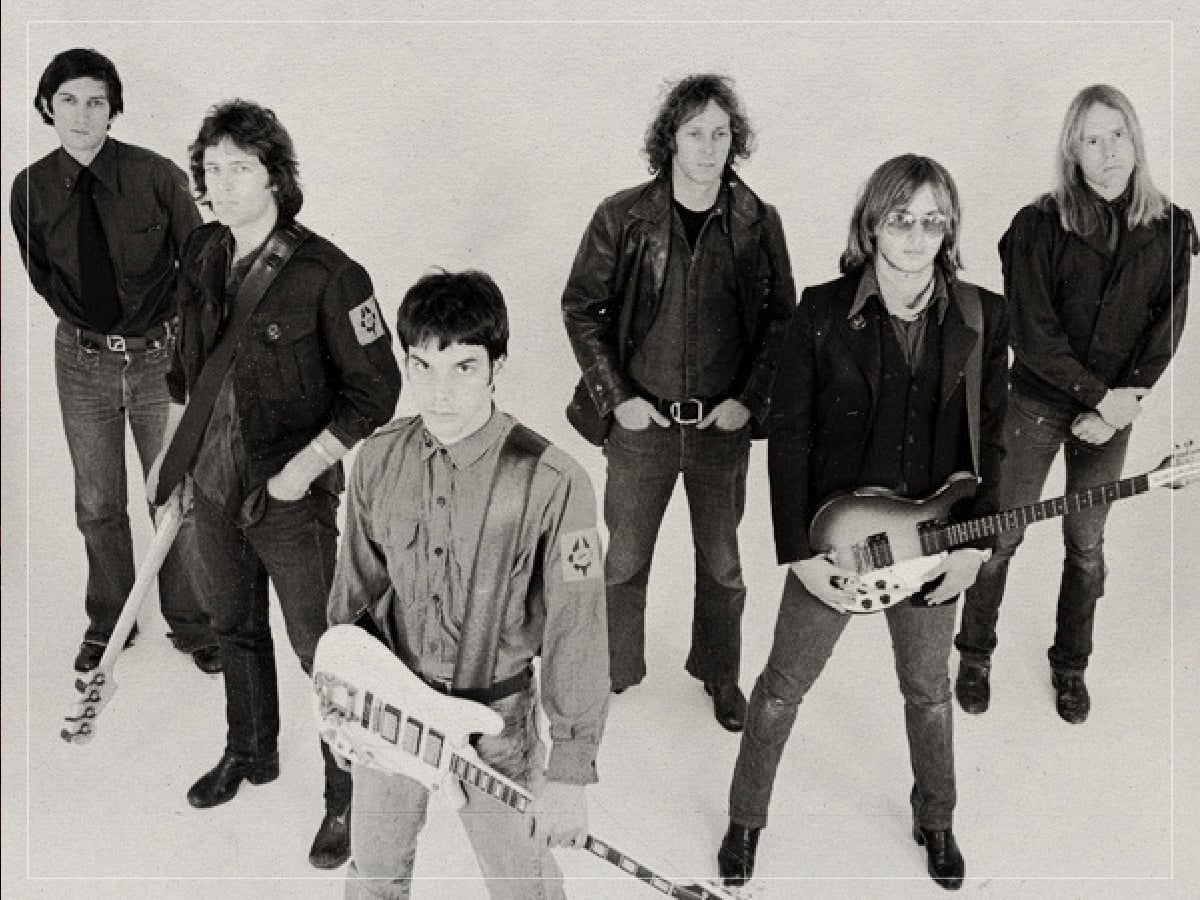
“Defend yourself with a mic stand and end up in the back of a police car,” Tek recounts. “Always had something happening.”
Eventually, Radio Birdman planted their roots at the Oxford Tavern, a Sydney bar that granted the band a residency – albeit under somewhat accidental circumstances. The band had waited for none other than Lou Reed at Sydney Airport, hearing that he’d be flying in for a show, and gifted the musician a Radio Birdman T-shirt.
When Reed told them he’d like to see them play live, the band rushed to arrange a gig for that night, convincing the Oxford to let them perform for free. Reed was a no-show, but the band made the pub so much money in beer sales that Radio Birdman became a regular act, soon managing and renaming the space as the Oxford Funhouse, the epicentre of the Sydney punk scene.
Veering into the extreme, Radio Birdman became increasingly known for their controversial stage antics, often adopting a bizarre performance art.
“We were always on the lookout for some new way to freak people out”.
Deniz Tek
“Pip had a real human skull. Its name was Govinda, and it used to sit on top of a mic stand at gigs, like a mascot,” Tek added. The band purchased sheep brains from a butcher to put into the skull, which then Younger would consume and spit out off the front of the stage.
“The place cleared out in an instant,” Yek recalls. “It seemed like a great idea at the time.”
Radio Birdman’s sound had an undeniable punk influence, with its fast-paced groove and galvanising energy. But their efforts showed a musicianship that went beyond the DIY ethos of their roots. “Obviously we weren’t a punk band,” Tek asserts. “Rob had long hair. We didn’t like safety pins. We hated gobbing. Musically, we had six guys, relatively complex arrangements and improvised interacting solos. The hardcore Brit punks were more into a political fashion than anything to do with music. We were all about music.”
Their discography was brief: beginning with their first EP, 1976’s Burn My Eye and followed by two albums, 1977’s Radios Appear and 1981’s Living Eyes, all were largely recorded on a tight budget and increasing tensions within the group. Furthering this were their stifled efforts to properly tour: their European dates with the Flamin’ Groovies were halted after just two days (though they did get to open for Van Halen in Amsterdam), while their planned American dates with the Ramones were cancelled.
Returning to Australia in 1978, Radio Birdman were finished, playing their final show at Oxford University that June. Living Eyes would debut in 1981 (thanks to Tek, whose copy of the final mix of the album saw its release in Australia and New Zealand), and the band would reunite numerous times in the years since, with various lineup iterations, recording a third album, Zeno Beach, in 2006 and were inducted into the ARIA Hall of Fame in 2007 by Silverchair frontman Daniel Johns, and most recently in 2024, they toured Australia in honour of their 50th anniversary.
Radio Birdman’s initial spark may have burned quickly, but in a fleeting three-and-a-half years, they brought an exciting musicianship and unparalleled shock value to Australian music that permanently changed the course of its history.

Never Miss A Beat
The Far Out Punk Newsletter
All the latest Punk content from the independent voice of culture.
Straight to your inbox.