


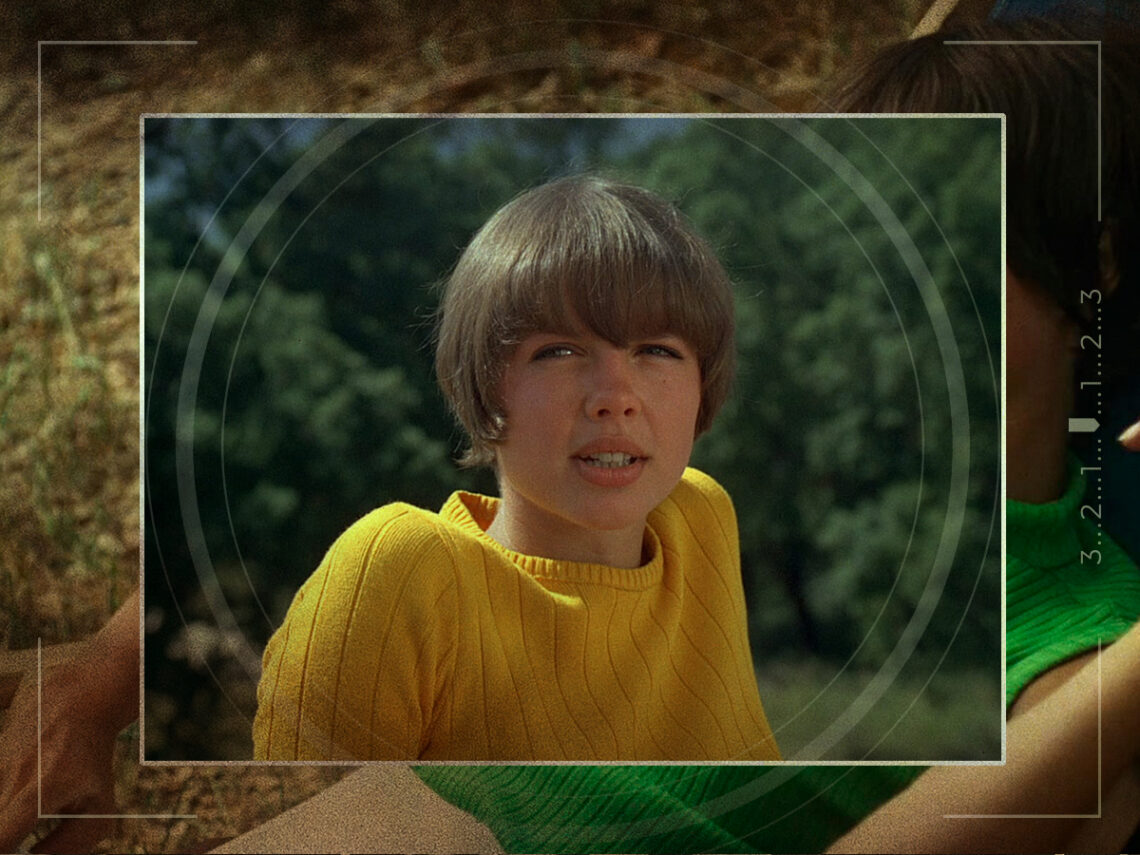
The quiet brilliance of Eric Rohmer’s ‘La Collectionneuse’

La Collectionneuse was Eric Rohmer’s first feature-length entry into his Six Moral Tales series, following two black-and-white shorts, The Bakery Girl of Monceau and Suzanne’s Career. While these shorts are smart snippets of male entitlement and gender dynamics in early 1960s France, Rohmer takes us on a much longer and more complex summer holiday for the next instalment, dragging himself away from the Parisian city streets in favour of the south of France, where azure water glistens and his characters do a whole lot of nothing besides talking, reading, and having sex.
Untethered from work and the endless demands of day-to-day life, Patrick Bauchau’s protagonist Adrien is left with plenty of time to contemplate his life, subsequently driving himself into the depths of a moral dilemma. Having decided to stay in his friend Rodolphe’s summer house for the season while his fiancée goes to London, Adrien finds himself uncertain of their relationship’s future. Left in the house with only his friend Daniel and a mysterious young woman named Haydée, one of Rudolphe’s conquests, he begins pondering the temptations of sex.
The dynamic between the men and Haydée, who is considerably younger than them, is fascinating, and the influence of the burgeoning women’s rights movement and the 1960s’ interest in sexual freedom plays a prominent role here. While the men are interested in sleeping with whoever they like, they deem Haydée a “slut” for bringing back a different man every night. They’re even both open to sleeping with her, but the men can’t see the double standard – they revel in their ignorant chauvinism.
Rohmer went on to become a rather feminist filmmaker as his career progressed. With his films from the 1980s, like The Four Adventures of Reinette and Mirabelle and The Green Ray in particular, the director hired predominantly female crew members and gave his female protagonists a large degree of freedom in improvising their lines. He presented the complexities of female friendship and the struggle to find security and peace as a woman adrift with a real sense of authenticity because of his decision to actively include women in his creative process, making him one of the few male filmmakers of the time who was making films that you could truly consider feminist.
With the Six Moral Tales, Rohmer exhibited some early feminist ideas, although Haydée isn’t given as much agency as the female characters that came to define his oeuvre later on. Still, she is presented as the only character with sense, while the men are quietly ridiculed by Rohmer for their misogynistic attitudes and childishness. While Adrien narrates the story as he sunbathes and interacts with Haydée, whom he just can’t seem to make up his mind about, she minds her own business, spending much of her time reading or hanging out with friends.

The difference in age between Adrien and Haydée – as well as his engagement to another woman – causes him to resist making the first move on her, although he is hopeful that she will do so instead. Perhaps Adrien is jealous of Haydée’s ability to move freely from one lover to another, her youthfulness allowing her to act rather hedonistically, unburdened from the demands of another. It’s this tension that carries the film forwards, with Adrien ultimately getting Haydée to himself, only for her to instantly prefer the company of some male friends her own age.
Rohmer presents Adrien through a rather pathetic and unforgiving lens, depicting his situation as one that exemplifies the cycle of greed and unfulfillment that many people experience. He wants something he shouldn’t have, spends his holiday having a moral argument with himself, and then he ultimately acts out of sexual and impulsive desires. Yet, he’s soon left with the realization that he should never have wanted Haydée in the first place.
Haydée is one of the first of Rohmer’s female characters to show an active distaste for the irritating male characters around her, whom she sees as immature despite them being older. By the time Rohmer made 1972’s Love in the Afternoon, with the confident and sexually-free Chloé, his move towards well-rounded female characters was becoming more apparent.
La Collectionneuse is an interesting study from Rohmer, who has cinematographer Néstor Almendros hone in on the characters’ tanned bodies, which are placed on display like beautiful objects of fascination. Their skin radiates a sense of desperation and building sexual energy, with Adrien finding Haydée’s bikini-clad figure hard to resist as she sits in the sun or paddles in the sea. You can feel the heat and the contemplation emanating from every scene, and it feels as though Rohmer has dropped these characters into a microcosmic world where generations and gender collide and moral questions are contemplated by the film’s unsympathetic protagonist.
Rohmer loved to analyse the interactions between different kinds of people, which he does terrifically here. To many, this might be a film where little happens, but that’s the genius of its quiet brilliance. With a lack of music or particularly riveting action, the sensual pull of summer makes for the perfect backdrop for the director to explore his innately human themes, making it a quintessential entry into Rohmer’s filmography.
