


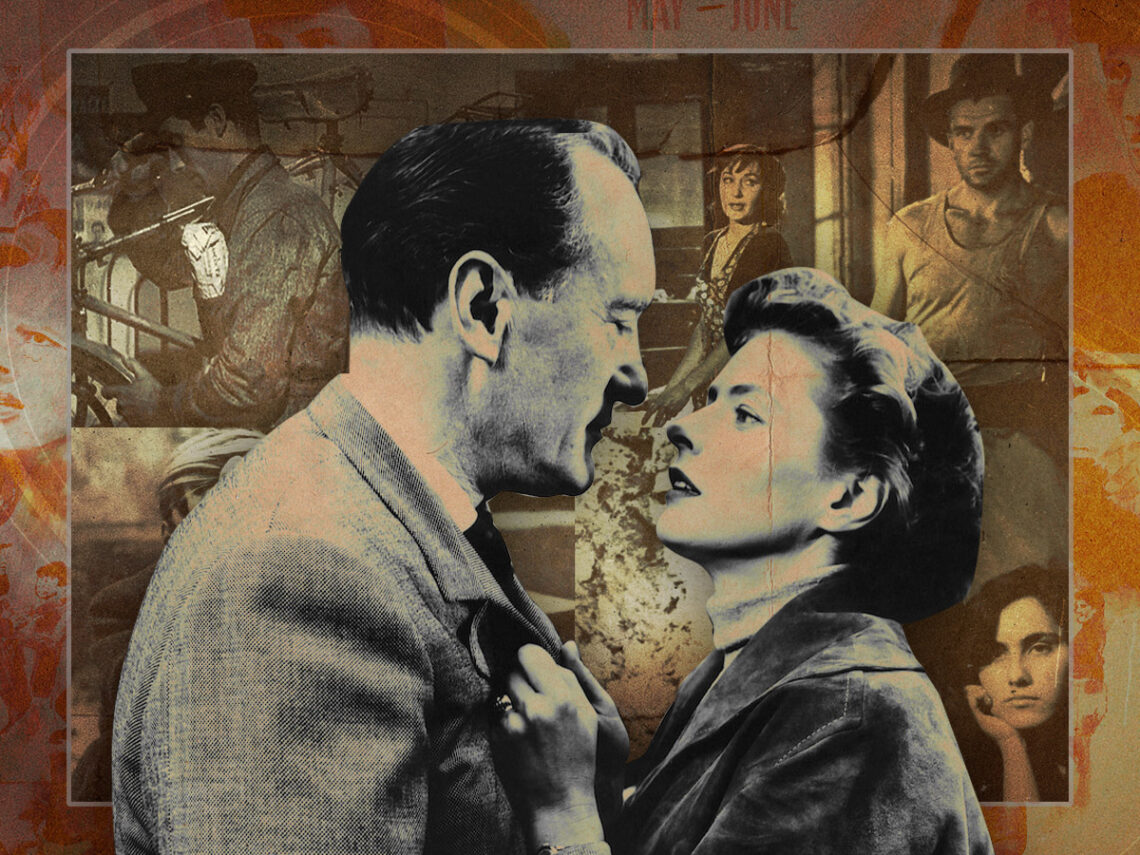
Questioning authenticity: Breaking down the myths of Italian neorealism

There’s a reason why Martin Scorsese called the Italian neorealist movement of the 1940s and 1950s “the most precious moment in film history,” with the era reflecting cinema’s ability to access the very heart of the human soul. Having been under the thumb of Benito Mussolini for decades, once the Second World War drew to a close at the end of the ‘40s, the Italian people reclaimed cinema for themselves and began to reflect their own relatable struggles in celluloid rather than indulging in the frivolity of fantasy.
Speaking to the mental and physical turmoil that swirled in the wake of WWII, the likes of Roberto Rossellini, Vittorio De Sica and Federico Fellini created films that would become iconic across the world for their simplicity and poetic beauty, placing the Italian working class at the very centre of cinema history. While the ‘Grand Prize’ Cannes winner Rome, Open City explored the unshakeable spirit of the country during the closing stages of the war, the Oscar-nominated Bicycle Thieves spoke of the financial struggles that crippled the lives of many in the years after its devastation.
Focusing intently on humanity and how it was battered and bruised by decades of living under a dictatorship, neorealism was considered a literal breath of fresh air where artistic freedoms were once again allowed to flourish. This explosion of colour and creativity has since been celebrated across the world, having such a significant impact that even contemporary filmmakers like Kelly Reichardt, Hirokazu Koreeda and the Safide brothers are still influenced by its lyricism.
Yet, several decades following its inception, neorealism is romanticised in such a way that its complexity is overshadowed, with each classic from the genre being stitched together with a careful delicacy that pulled from multiple influences and sources. An eclectic movement of cinema, neorealism wasn’t quite as regimented as modern cinephiles would have you believe.

Neorealism was not entirely authentic
The most popular trait that is attributed to neorealism is its dedication towards authenticity in every manner. While this is, by and large, true, with the majority of films that identify with the movement telling stories of working-class characters working through contemporary struggles, not every single film from the era was quite as devoted to matching its authentic narrative to a rigid, documentary-like visual aesthetic.
The films of the neorealist pioneer Luchino Visconti well illustrate this fact, with his influential 1943 debut Obsession, an unauthorised adaptation of James M. Cain’s novel The Postman Always Rings Twice, which tells the story of a lost man who, after falling in love with the owner of an inn, plots to kill the woman’s husband. A sensationalist narrative steeped in melodrama and tricklings of noir influence from America, while Visconti captures the bleak reality of post-war Italy, he does so in a way that few neorealists would later replicate.
Similarly, his equally celebrated 1948 follow-up, La Terra Trema, also demonstrated that Visconti wasn’t shy about differing from his peers. While a humble tale about Sicilian fishermen who risk financial stability for independence over the wholesalers who lord over the harbour, Visconti contrasts this by shooting it as if it’s an operatic epic, with the director using elegiac cinematography that tries to extract a poetic truth behind the story.
Visconti certainly wasn’t the only one of his kind either, with Rossellini also being known for his fondness for artistic expression. While much of Italian neorealism used protagonists as springboards for outward-looking tales about the wider society, Rossellini was partial to psychological deep-dives, such as with Germany, Year Zero, which plunges into a structured breakdown of a young boy’s mentality in the final months of WWII.

Neorealism used professional actors as well as amateurs
Many believe that one of the key features of Italian neorealism is its prevalent use of non-professional actors, and while this remains true for a large number of classics from the movement, it was not a blanket rule. This myth may have been triggered thanks to the international acclaim of De Sica’s Bicycle Thieves, which famously cast strictly untrained actors during its production, leading to the discovery of lead stars Lamberto Maggiorani and Enzo Staiola.
Indeed, some of neorealism’s greatest movies were created with a mix of professional and amateur actors, such as the aforementioned Rossellini classic Rome, Open City. A raw, powerful piece of filmmaking that speaks to the solidarity of the Italian people in the face of the German forces, the film was all the better for the performances of the likes of Aldo Fabrizi and the great Anna Magnani, who came to represent the quintessentially potent neorealist protagonist.
Rossellini continued to use a mix of professional and amateur actors throughout much of his filmography, with the style playing into his own dedication towards authenticity. “I select my performers on the basis of their physical appearance,” he stated in Passion and Defiance: Film in Italy from 1942 to the Present, “I watch a man in his day-to-day life and get him embedded in my memory. Facing the camera, he will no longer be himself…He forgets who he is, thinking that he was chosen for the role because he has become an exceptional human being. I have to bring him back to his real nature, to reconstruct him, to teach him his usual gestures again”.
Yet, despite this, the use of non-professional actors was certainly considered to be a key ethos of Italian neorealism, with many considering amateur performers to have an innate honesty that better reveals the movement’s truth. Films like 1948’s La Terra Trema, for example, were championed because amateur actors were cast speaking their local tongue.

Neorealist films were not totally independent
Italian neorealism is rightfully considered to be one of the most valuable cinematic movements of all time for good reason: focusing solely on the human consequences of war and on a society repairing itself from generations of dictatorial rule. However, despite being proudly anti-establishment in nature, turning the camera on the Italian people rather than focusing on patriotic propaganda doesn’t mean that such films were made totally independently of the government.
Many filmmakers proudly operated far from any kind of studio control, but considering funding was a key obstacle in getting a movie across the line, others sought financing from more reputable production companies. In addition, once a film was shot, facilities such as post-production houses or sound recording booths were regularly used by filmmakers needing to give their final project a necessary flourish.
Recognising the significance of the neorealism movement, government organisations also offered funding, with the art school, Centro Sperimentale di Cinematografia, helping to finance some of the era’s most prominent successes. The Ente Nazionale Industrie Cinematografiche was also available to help filmmakers such as Michelangelo Antonioni, whose 1953 film The Lady Without Camellias was produced and distributed by the company.
Neorealism was a proudly independent protest against decades of cinematic propaganda, but, just like many pioneering artistic movements, it didn’t flourish without a helping hand from outside influence. Truly a movement created for and with the power of the people, neorealism started as a low-key protest before steadily becoming a social campaign that reflected the might and solidarity of the Italian people.
Chasing the Real: Italian Neorealism is at BFI Southbank from May 1st – June 30th, with selected films also available to watch on BFI Player
Rome, Open City is re-released by the BFI in selected cinemas from May 17th.
